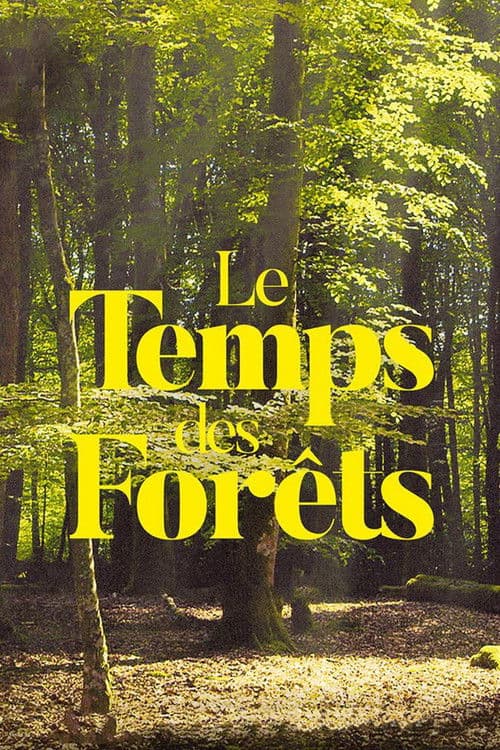
The Time of Forests
Does this age rating seem accurate to you?
Detailed parental analysis
The Time of Forests is a contemplative and committed documentary that immerses the viewer in the heart of French forests and the people who manage them on a daily basis. The film follows several foresters with contrasting practices and convictions, questioning the tension between industrial exploitation and sustainable management of wooded areas. Its slow pace, carefully crafted images and the gravity of certain subjects addressed make it a film intended for an adult or adolescent audience sensitive to environmental and professional issues.
Social Themes
Forest ecology is the beating heart of the film. It documents with precision the ravages of intensive forestry: massive deforestation, pesticide use, potential groundwater pollution from the passage of heavy machinery, and sonic and visual destruction of entire ecosystems. These images are sometimes harsh, particularly sequences of wood chippers and razed forests described as open wounds in the landscape. The film clearly takes a stance in favour of biodiversity-conscious management, which leads some to perceive it as biased. This is a useful angle for discussion with an adolescent: can a documentary be objective, and how do we distinguish advocacy from information?
Underlying Values
The film structures its argument around an explicit critique of the productivist model applied to forests, opposing maximum profitability to an ethic of care and long-term thinking. Foresters who resist demands for intensive production are presented as positive moral figures, bearers of a more respectful relationship with the living world. This opposition is deliberate and gives the film a clear ideological backbone. It is worth discussing with an adolescent: the film values simplicity and work well done against economic performance, which deserves to be questioned rather than passively accepted.
Violence
The violence present in the film is exclusively environmental and mechanical: machines felling trees with a crash, wood chippers with aggressive noise, devastated landscapes filmed without restraint. These images can be disturbing for young children, not because of human brutality but because of the desolation they convey. They are used with a clear narrative intention, that of provoking an emotional reaction to the destruction of the living world.
Strengths
The film offers photography of the French forest of great beauty, alternating wide shots of the canopy with close-ups of living matter, mosses, insects and tree trunks. This visual attention to detail gives the documentary a rare sensory density. From an educational standpoint, it introduces concrete notions of forestry, soil ecology and forest cycles accessible to a curious adolescent. The structure built around portraits of foresters with different approaches allows an abstract debate to be embodied, and gives the film a human dimension that goes beyond simple environmental polemic.
Age recommendation and discussion points
The film is best suited for viewing from age 12 onwards, for a calm viewing experience with an adolescent sensitive to environmental issues and capable of engaging with professional hardship without being destabilised. Two angles for discussion emerge after viewing: first, the question of bias in a committed documentary and the way in which the choice of images and testimonies constructs a point of view; secondly, the link between working conditions, economic pressure and mental health, which the film illustrates in a concrete and forthright manner.
Synopsis
Symbol in the eyes of urbanites of an authentic nature, the French forest is going through an unprecedented phase of industrialization. Heavy mechanization, monocultures, fertilizers and pesticides, forest management follows the intensive agricultural model at high speed. From Limousin to Landes, from Morvan to Vosges, Le Temps des Forêts offers a journey to the heart of industrial forestry and its alternatives. Living forest or wooded desert, today's choices will shape the landscape of tomorrow.
About this title
- Format
- Feature film
- Year
- 2018
- Runtime
- 1h 43m
- Countries
- France
- Original language
- FR
- Directed by
- François-Xavier Drouet
- Studios
- l’atelier documentaire
Content barometer
- Violence2/5Moderate
- Fear2/5A few scenes
- Sexuality0/5None
- Language0/5None
- Narrative complexity3/5Complex
- Adult themes1/5Mild
Values conveyed
- Perseverance
- ecology
- transmission
- critical thinking
- nature protection