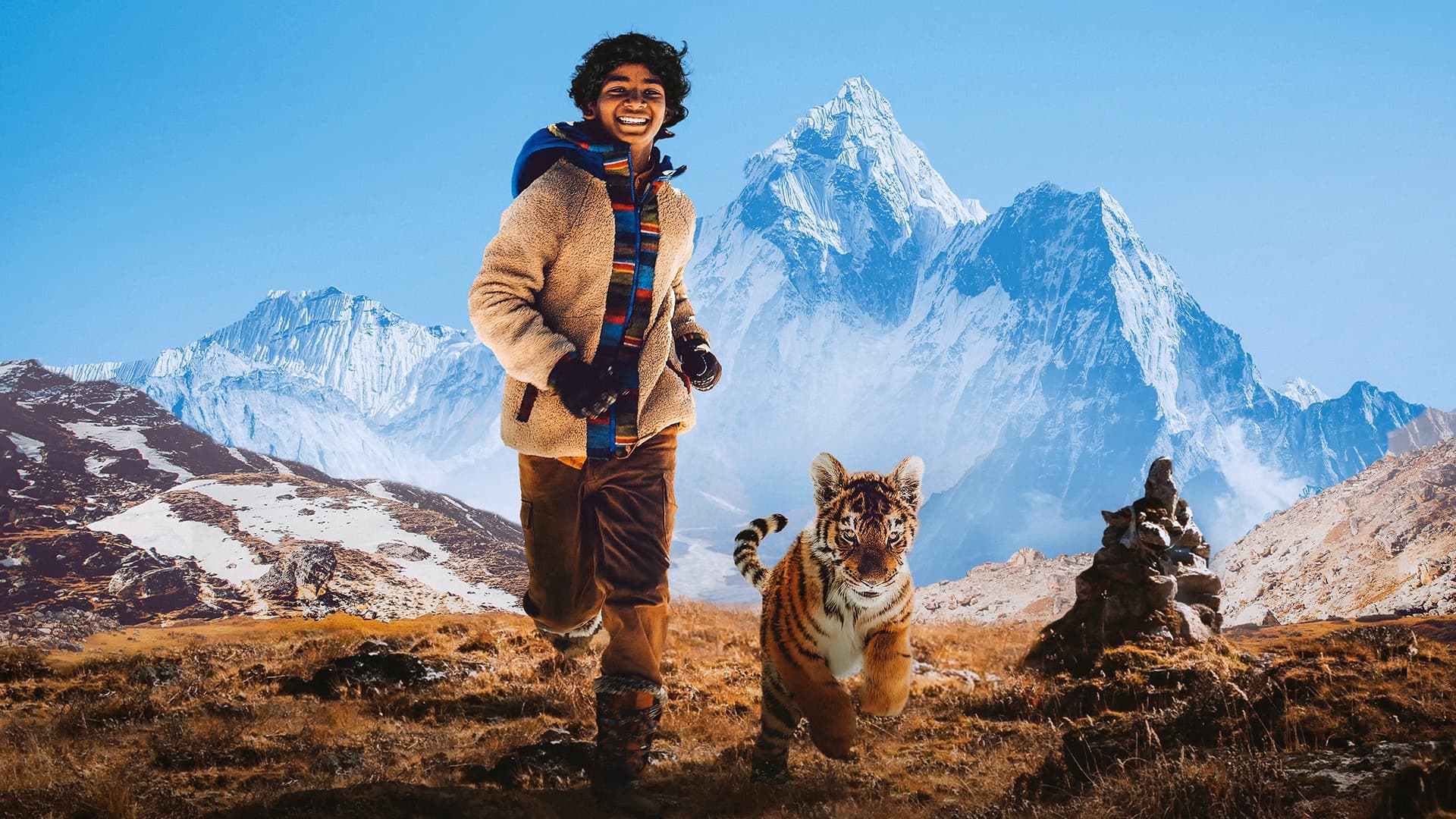


The Tiger's Nest
Does this age rating seem accurate to you?
Detailed parental analysis
Tiger's Nest is a family adventure film with a contemplative atmosphere and gentle emotional tone, carried by a breathtaking Himalayan natural setting. A recently orphaned boy forms a deep bond with an endangered Bengal tiger throughout a story centred on species protection and rebuilding after loss. The film is primarily aimed at children from around eight or nine years old and their parents, with a sensibility that will appeal more to patient viewers than to those seeking sustained action.
Social Themes
The fight against poaching is the film's main narrative driver, underpinned by an explicit commitment to the conservation of Bengal tigers, a species classified as critically endangered. The story does not simply present poachers as straightforward antagonists: it grounds the threat in documented reality, which gives the film a concrete educational dimension. It is a good starting point for discussing with a child the disappearance of wild species, illegal animal trafficking, and the role of wildlife protection organisations.
Violence
Violence is present but always serves the narrative. An adult tigress is killed by poachers and her body is shown on screen, which constitutes the film's harshest scene and may affect sensitive children. The boy is pursued, shoved about, and loses consciousness in a snowstorm. Gunshots are heard and animals are shot off screen. An adult falls into a void after an attack and his body is briefly shown. These elements are treated with restraint and never tip into gratuitous spectacle: the tension they generate is that of a family adventure film calibrated for a young audience, not an adult genre film.
Parental and Family Portrayals
The parental figure is doubly absent: the young hero has lost his mother in an earthquake, and the adult character who accompanies him is himself an orphan. Grief is therefore at the heart of the film, treated with sobriety but without being sidestepped. Flashbacks recall the disaster and the mother's death. For a child who has experienced a close loss, certain scenes may resonate strongly: it is better to anticipate this dimension before viewing.
Underlying Values
The film values quiet courage, perseverance, and trust placed in the other, whether human or animal. The bond between the child and the tiger is built on a logic of mutual care rather than domination or possession. Resilience in the face of grief is presented as a slow journey rather than as spectacular healing, which gives the transmitted values a realistic and nuanced texture.
Substances
A secondary character, presented as an antagonist, smokes several cigarettes throughout the film and is seen holding a beer bottle. These elements contribute to his negative characterisation and are not valorised. Their impact is limited, but they merit flagging for parents of very young children.
Language
The verbal register is broadly clean. There are a few religious exclamations without insulting weight, the word 'dumb' used amongst children in a teasing context, and the word 'Hell' appearing in written form. Nothing that warrants particular caution beyond very young age.
Strengths
The film makes striking use of Himalayan landscapes and builds its emotion over time rather than through a succession of effects. The Bengal tiger is filmed with care and the bond that develops between the animal and the child is credible, never saccharine. The educational dimension on species conservation is woven into the narrative without heavy-handed didacticism, which is rarer than it might appear. The treatment of grief, sober and respectful, offers authentic emotional material for children at an age to begin coming to terms with the idea of loss. The film suffers from a slow pace that may lose younger viewers or those accustomed to more dynamic formats, but this slowness is consistent with the contemplative nature of the story.
Age recommendation and discussion points
The film is suitable from around eight years old, with particular attention for children sensitive to the subject of grief or animal death, for whom accompanied viewing is preferable. Two conversations are worth having after the film: why do poachers hunt tigers despite the laws, and what does it really cost the planet when a species disappears? And more intimately: how does the boy in the film learn to continue living after losing his mother, and what helps him move forward?
Synopsis
In the valleys of the Himalayas, an orphan boy saves a Bengal tiger cub from the ruthless poachers who killed the tiger's mother. Together they set out in the Himalayan mountains to the Taktsang monastery in Bhutan known as "The Tiger's Nest" where Buddhist monks took refuge after the 1950 Chinese invasion of Tibet and protect the big cats. A new great film for the whole family that talks about the importance of defending animals through the story of the friendship between two orphans, a tiger cub and a child, in a tale of brotherhood and the discovery of life.
About this title
- Format
- Feature film
- Year
- 2022
- Runtime
- 1h 34m
- Countries
- Canada, Italy, United Kingdom, Spain
- Original language
- EN
- Studios
- HD Productions, Medusa Film
Content barometer
- Violence2/5Moderate
- Fear2/5A few scenes
- Sexuality0/5None
- Language1/5Mild
- Narrative complexity1/5Accessible
- Adult themes1/5Mild
Values conveyed
- Courage
- Friendship
- Perseverance
- Compassion
- Autonomy
- animal protection