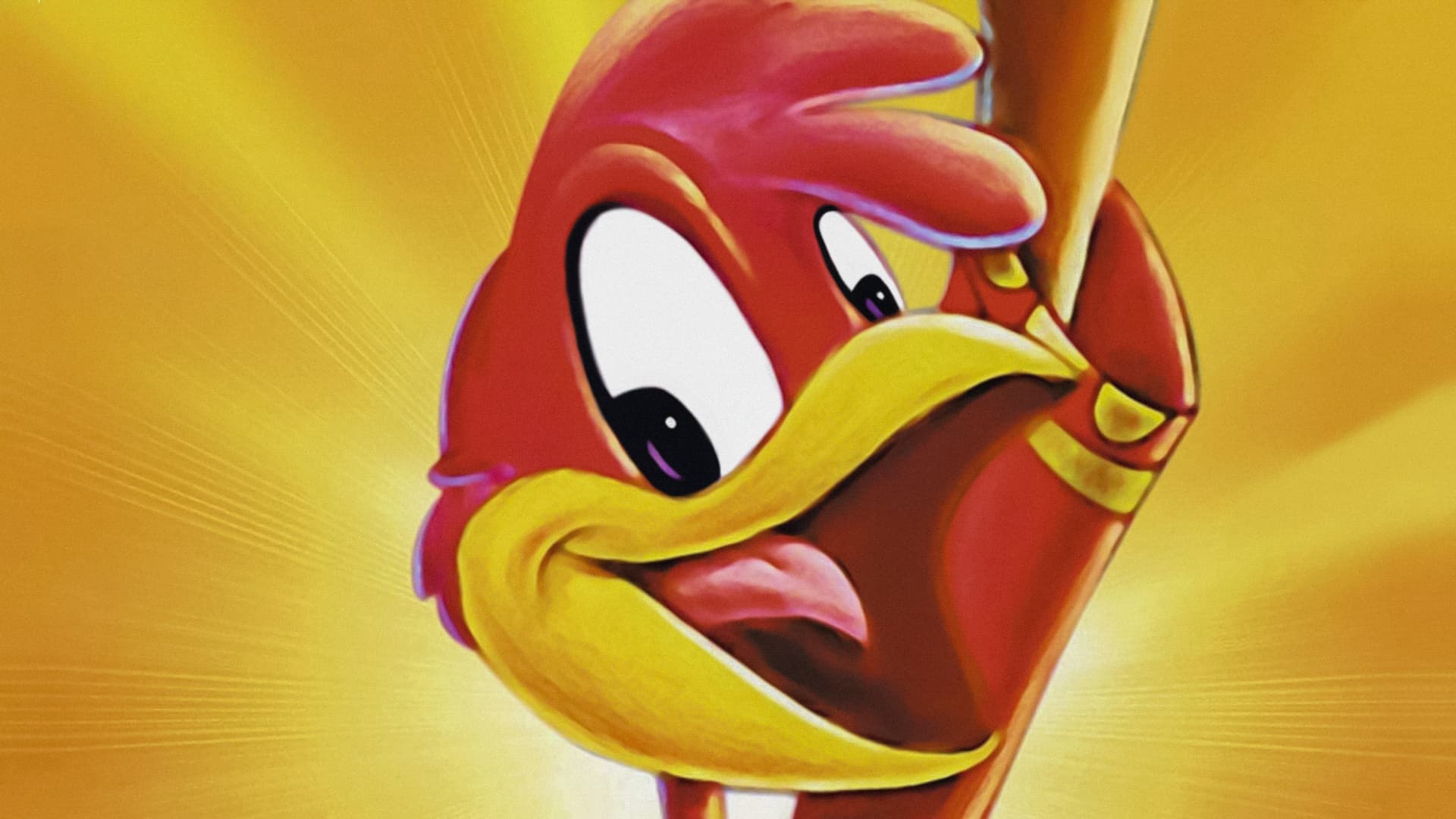

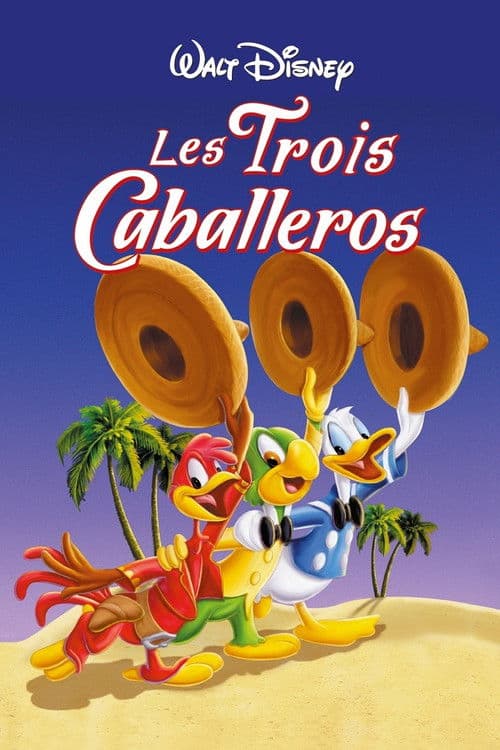
The Three Caballeros
Does this age rating seem accurate to you?
Detailed parental analysis
The Three Caballeros is a Disney animated film with a festive and exuberant tone, blending animated sequences and live-action footage in a succession of musical sketches inspired by Latin America. The plot, very loose, follows Donald Duck as he receives birthday gifts that lead him on imaginary journeys to Brazil and Mexico in the company of his friends José Carioca and Panchito Pistoles. The film is aimed primarily at young children, but its fragmented structure and particularly disorganised third act may lose the youngest viewers.
Sex and Nudity
The third act shifts into Donald's romantic obsession with real women that eventually dominates the film. Donald whistles, ogles and chases women in swimwear on a Mexican beach, receives a kiss from a dancer and is literally consumed by desire in psychedelic sequences. The narrator describes these women as 'hot stuff'. This representation, normalised in the context of the time, presents women as objects of desire without any critical distance. This is the most salient point to anticipate with a child, as it occupies a significant portion of the film.
Substances
José Carioca smokes a cigar throughout the film, without this ever being commented on or presented as problematic. Donald becomes drunk after a single cocktail in a comedic scene, and adults drink wine in another sequence. These elements are treated lightly and integrated into the film's festive register, which makes them precisely a point to address with a young child.
Violence
Violence is light and comedic, in the cartoon tradition. Panchito fires shots into the air to express his enthusiasm, without consequence. A scene of vertigo on a mountain bridge and an episode where a small aeroplane nearly crashes may surprise very young children, but remain in a register of gentle tension without any real brutality.
Social Themes
The film was born from an American diplomatic policy during the Second World War aimed at strengthening ties with Latin America and countering the influence of Axis powers in the region. This origin explains the deliberately warm and idealised tone of the representations of Brazil and Mexico. For an older child or teenager, this is an interesting entry point for understanding how cinema can be a tool of soft propaganda, even if benevolent in its intentions.
Discrimination
The representations of Brazil and Mexico are enthusiastic but reductive: they are limited to music, dance, folk costumes and picturesque landscapes. Latin American characters are warm and expressive, but constructed on simplified cultural archetypes rather than on complex reality. This is not malicious caricature, but an exoticising vision that deserves to be named with a curious child.
Underlying Values
The film values curiosity, friendship and openness to other cultures through music and celebration. These intentions are sincere and constitute the best of the film. On the other hand, Donald's fascination with women, treated as a recurring joke, conveys without distance a vision of male desire as amusing spectacle rather than as behaviour to be questioned.
Strengths
The film offers a genuine musical immersion in Brazilian and Mexican sound traditions of the era, with samba and ranchera music sequences that retain authenticity and communicative energy. The fusion between animation and live-action footage is visually inventive and produces effects of surprise that still work. Certain sequences, notably the journey to Brazil with José Carioca, have a grace and rhythm that stand the test of time. For a child sensitive to music, it is a gateway to rich musical cultures.
Age recommendation and discussion points
The film is accessible from age 6 for the musical sequences and cartoon humour, but the insistent flirting scenes of the third act and the presence of tobacco and alcohol merit being anticipated. A good angle for discussion after viewing: why does Donald behave this way with women, and is it funny or uncomfortable? For an older child, the question of why this film was made during the war and what that changes about the way it shows Brazil and Mexico is particularly fertile.
Synopsis
For Donald's birthday he receives a box with three gifts inside. The gifts, a movie projector, a pop-up book, and a pinata, each take Donald on wild adventures through Mexico and South America.
About this title
- Format
- Feature film
- Year
- 1944
- Runtime
- 1h 11m
- Countries
- United States of America
- Original language
- EN
- Directed by
- Norman Ferguson, Jack Kinney, Clyde Geronimi, Bill Roberts, Harold Young
- Main cast
- Clarence Nash, Sterling Holloway, Joaquin Garay, José Oliveira, Aurora Miranda, Carmen Molina, Dora Luz, Frank Graham, Fred Shields, Nestor Amaral
- Studios
- Walt Disney Productions
Content barometer
- Violence1/5Mild
- Fear1/5Mild
- Sexuality2/5Mild
- Language0/5None
- Narrative complexity0/5Simple
- Adult themes2/5Present
Watch-outs
- Alcohol
- Ethnic or racial stereotypes
- Sexuality
Values conveyed
- Friendship
- Loyalty
- Autonomy
- cultural discovery
- celebration
- travel
- music
- solidarity