The Tale of The Princess Kaguya
かぐや姫の物語
Does this age rating seem accurate to you?
Detailed parental analysis
The Tale of the Princess Kaguya is a contemplative and melancholic animated film, characterised by a delicate aesthetic that stands apart from visually saturated productions. It traces the life of a mysterious young girl found within a bamboo stem, raised by adoptive parents who dream of a noble destiny for her, yet never truly listen to her. The film is primarily intended for a mature audience, teenagers and adults, though it is presented in the guise of a fairy tale. It is a Studio Ghibli production, which serves as a strong landmark for parents already familiar with the world of Spirited Away or Howl's Moving Castle.
Underlying Values
This is the heart of the film. The narrative constructs a structured critique of the social expectations imposed on women: wealth, rank, codified beauty and advantageous marriage are presented as gilded cages, not as fulfillments. Kaguya yearns to run, to laugh, to live in nature, and each stage of her noble education wounds her a little more. The film does not valorise individualism for its own sake; it interrogates the true cost of conformity. Happiness is presented as incompatible with imposed status, which is a powerful and structuring message for a young viewer. It is worth noting that the adoptive father is not depicted as malevolent: his love is genuine but blind, which complicates the moral reading and opens a valuable space for discussion.
Parental and Family Portrayals
The two adoptive parents occupy a central place and are treated with rare nuance. The mother is close, loving and attentive to Kaguya's emotions. The father, meanwhile, is driven by genuine love but entirely oriented towards social projection: he wants the best for his daughter, but this 'best' is defined by the norms of his milieu, never by the child's desires. This gap between benevolent intention and painful impact is the true dramatic engine of the film. It is a profound subject to explore with an adolescent: can one cause harm to someone you love out of love, and how can one recognise the difference between protecting and constraining?
Social Themes
The film is rooted in classical Japanese culture and mythology, with a representation of feudal Japan and its social hierarchies. The constraints imposed on Kaguya, the plucking of eyebrows, blackening of teeth, immobility and enforced silence required of a woman of high rank, are not fanciful: they describe actual practices of the Heian aristocracy. For a young Western viewer, the film functions as a window onto a historical and foreign system of values, which can nourish reflection on cultural relativism and the universality of human aspirations.
Sex and Nudity
The nudity present in the film is exclusively non-sexual and situated within a natural or cultural context: naked babies, children playing, a breastfeeding scene showing the mother's breast. Nothing suggestive or hypersexualised. These elements require no particular preparation for a child of eight years and above, and will likely pass unnoticed by younger ones.
Violence
Violence is minimal and without indulgence. A suitor is briefly struck, a few drops of blood appear after a fall, and a secondary character loses his life in his attempt to obtain an impossible treasure. These elements are treated with restraint and fit within the logic of the fairy tale narrative. They are neither graphic nor repeated. However, the ending of the film may provoke genuine emotional distress in some children, not because of physical violence, but because of the melancholic weight of what it represents.
Strengths
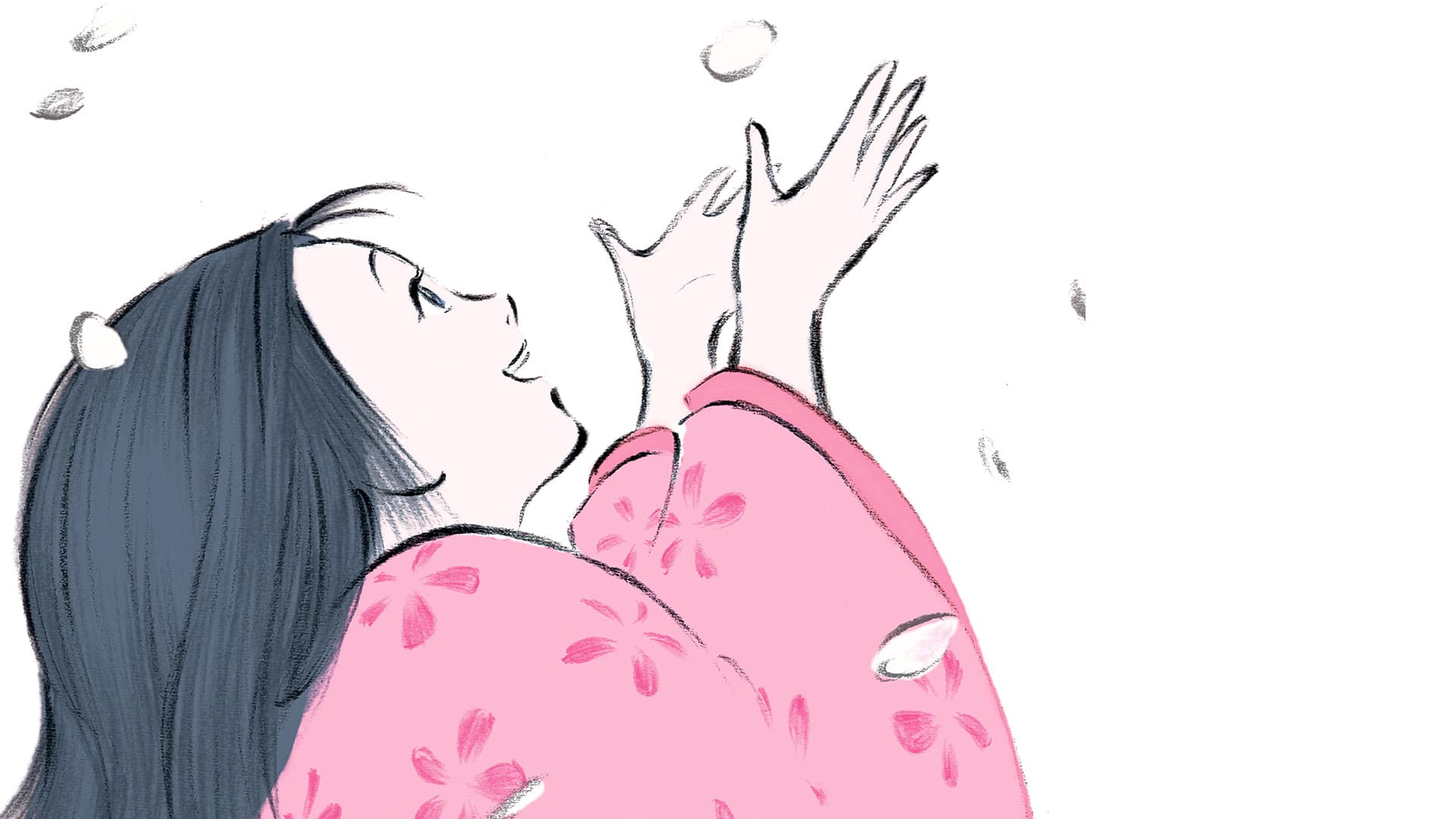
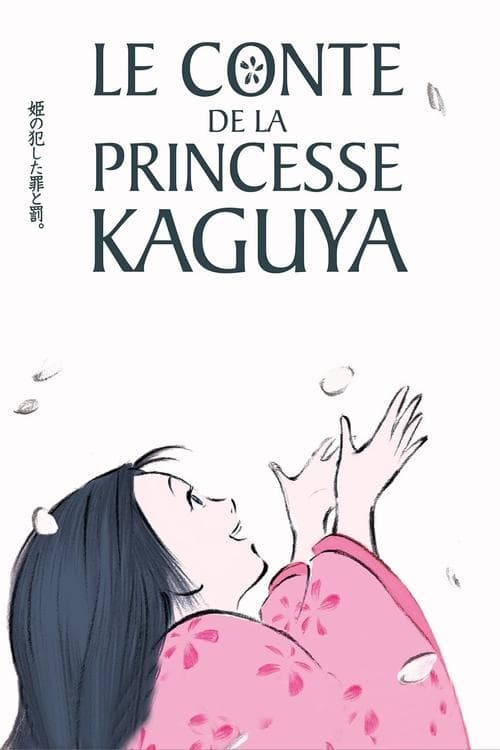
The film is of striking formal beauty, with drawing that is both spare and expressive, evoking silk painting and Japanese woodblock prints. Yet the true quality of the work is narrative and emotional: Kaguya is a rare character, whose entire life is lived from within, with a psychological subtlety that surpasses most films for adults. The film addresses freedom, the grief of relinquishing one's own desires and the acceptance of fate without ever slipping into moralism. It offers the adolescent viewer a demanding viewing experience, where no easy resolution comes to relieve the tension, which is itself formative. Its duration of two hours and seventeen minutes demands sustained attention and adequate emotional disposition.
Age recommendation and discussion points
The film is best reserved for children from around ten years of age, and even then provided they are comfortable with melancholic works without a happy resolution. For fully serene viewing, twelve years is a more suitable threshold. Two lines of discussion merit being opened after the film: firstly, can one truly love someone without seeking to understand what they genuinely desire, and what should one do when benevolent intentions cause suffering? Secondly, why does Kaguya's ending seem both sad and peaceful at once, and what does this say about the way the film envisions freedom?
Synopsis
Found inside a shining stalk of bamboo by an old bamboo cutter and his wife, a tiny girl grows rapidly into an exquisite young lady. The mysterious young princess enthrals all who encounter her. But, ultimately, she must confront her fate.
About this title
- Format
- Feature film
- Year
- 2013
- Runtime
- 2h 17m
- Countries
- Japan
- Original language
- JA
- Directed by
- Isao Takahata
- Main cast
- Aki Asakura, Takeo Chii, Nobuko Miyamoto, Kengo Kora, Atsuko Takahata, Tomoko Tabata, Shinosuke Tatekawa, Takaya Kamikawa, Hikaru Ijūin, Ryudo Uzaki
- Studios
- Studio Ghibli, Hakuhodo DY Media Partners, KDDI, Mitsubishi Shoji, Nippon Television Network Corporation, TOHO, T2 Studio
Content barometer
- Violence1/5Mild
- Fear2/5A few scenes
- Sexuality1/5Allusions
- Language0/5None
- Narrative complexity3/5Complex
- Adult themes0/5None
Watch-outs
- Death
- Gender stereotypes
Values conveyed
- Acceptance of difference
- Autonomy
- freedom
- family
- empathy
- resilience