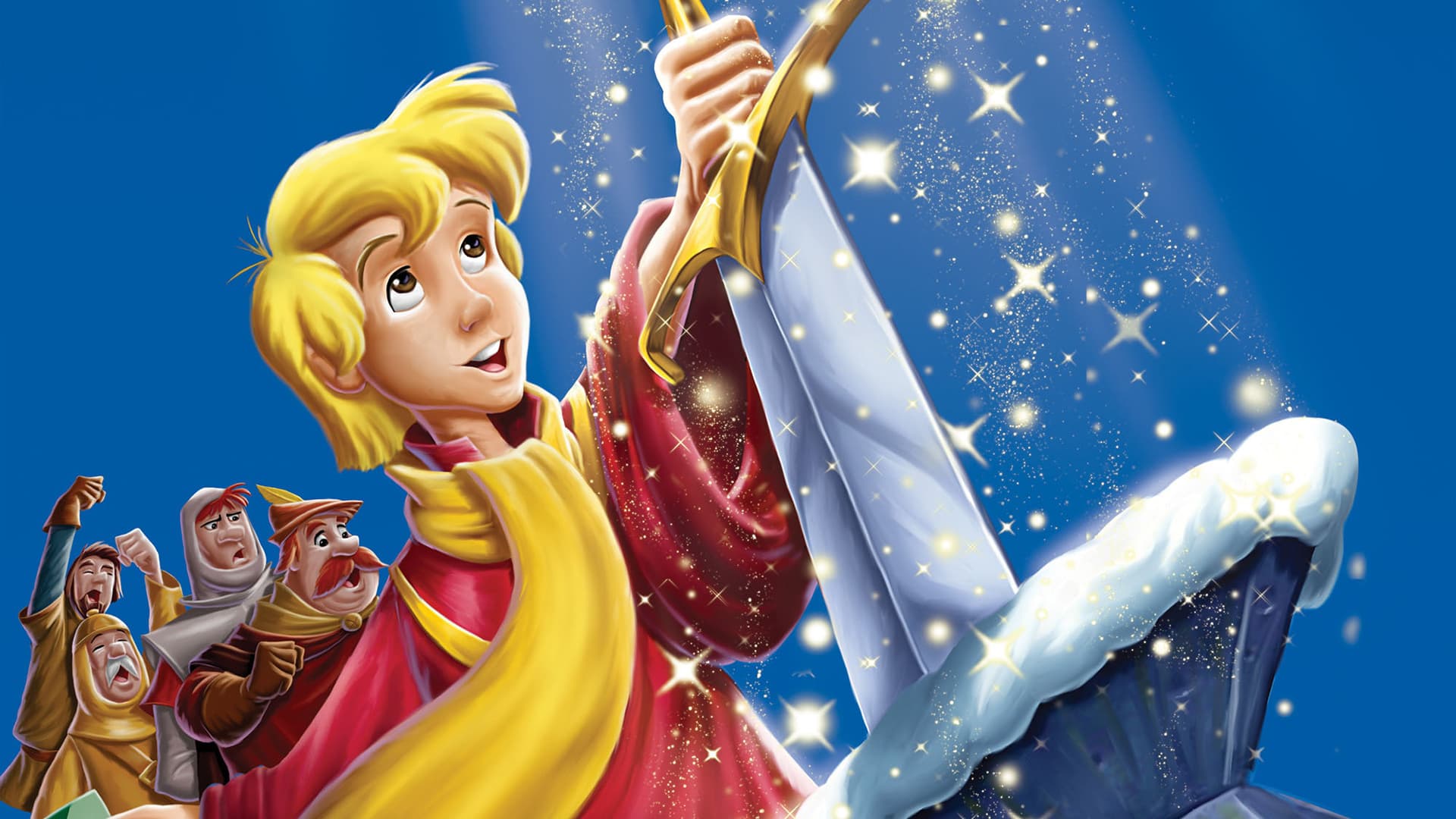

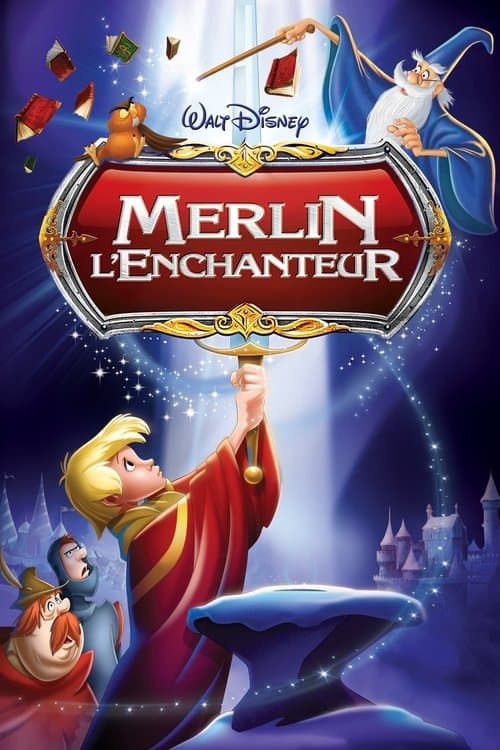
The Sword in the Stone
Does this age rating seem accurate to you?
Detailed parental analysis
The Sword in the Stone is a Disney animated film with a predominantly light and whimsical tone, tinged with a few unsettling sequences. The plot follows Arthur, a young boy of no status, whose meeting with the wizard Merlin will initiate him into knowledge, curiosity and his own destiny. The film is aimed at young children, although it contains some passages that may disturb the more sensitive among them.
Sex and Nudity
One scene stands out clearly from the rest of the film and deserves particular attention from parents: during a transformation into a squirrel, Arthur is pursued persistently and repeatedly by a female squirrel who attaches herself to him in a romantic and physical manner despite his manifest lack of interest. The character cannot escape her advances. The scene ends cruelly for the squirrel, who remains alone after Arthur's departure. Without ever being explicit, the sequence depicts something resembling unconsented harassment with no recourse, and its emotional outcome is quite heavy. This is the most questionable point of content in the film, and the most useful to address with the child before or after viewing.
Parental and Family Portrayals
Arthur grows up under the guardianship of an authoritarian caretaker and a condescending adoptive brother who treat him as a servant. The mistreatment is presented quite directly: Arthur is diminished, ignored and exploited in his own home. Merlin embodies a figure of benevolent and intellectually stimulating substitution, which underscores by contrast the absence of genuine family support. This pattern, classical in coming-of-age narratives, raises without naming it the question of what a benevolent adult can bring to a child whose immediate surroundings neglect him.
Violence
Violence remains within conventional registers for the genre: a joust sequence between knights includes an accidental sword blow to the head, and several animal transformations expose Arthur to predators, including a menacing wolf during the squirrel scene. The sequence with Madam Mim, an eccentric and frankly unsettling antagonist, constitutes the film's intensity peak with a sorcery duel where monstrous transformations succeed one another rapidly. These passages may frighten very young or sensitive children, even though the register remains clearly that of cartoon.
Substances
Merlin smokes a pipe recurrently and drinks wine, without these behaviours ever being questioned. They are part of his characterisation as an eccentric old sage. Consumption is not central but sufficiently visible to be noticed by an attentive child.
Underlying Values
The film carries a clear message in favour of education, intellectual curiosity and the value of knowledge over brute strength. Merlin explicitly defends the idea that the mind is worth more than muscle, which constitutes an appreciable counterpoint to narratives of purely physical heroism. Arthur's arc values perseverance in adversity and progressive self-confidence. The narrative nonetheless relies on the classical structure of the chosen one, which somewhat weakens the meritocratic message: Arthur does not rise entirely by his own merit but because his destiny is written in advance.
Strengths
The film possesses real charm in its relationship with knowledge and curiosity: Merlin teaches through direct experience rather than through didactic instruction, and the animal transformation sequences have genuine pedagogical inventiveness regarding nature and the condition of different creatures. The humour is often gentle and absurd, carried by a deliberately anachronistic Merlin whose whims counterpoint the rigidity of the medieval world surrounding him. The film also conveys an affective familiarity with the Arthurian cycle and with the idea that intellectual merit can open doors that social rank closes.
Age recommendation and discussion points
The film is suitable from age 6 or 7 for children without particular sensitivity to frightening scenes, with parental accompaniment advised for the youngest when facing Madam Mim and the squirrel sequence. Two angles of discussion are worth opening after viewing: why does the squirrel who loves Arthur end up alone and sad, and is that fair to her? And also: according to Merlin, what is worth more, being strong or being intelligent, and what does the child think about it?
Synopsis
Wart is a young boy who aspires to be a knight's squire. On a hunting trip he falls in on Merlin, a powerful but amnesiac wizard who has plans for him beyond mere squiredom. He starts by trying to give him an education, believing that once one has an education, one can go anywhere. Needless to say, it doesn't quite work out that way.
About this title
- Format
- Feature film
- Year
- 1963
- Runtime
- 1h 19m
- Countries
- United States of America
- Original language
- EN
- Directed by
- Wolfgang Reitherman
- Main cast
- Sebastian Cabot, Karl Swenson, Junius Matthews, Martha Wentworth, Norman Alden, Rickie Sorensen, Ginny Tyler, Alan Napier, Richard Reitherman, Robert Reitherman
- Studios
- Walt Disney Productions
Content barometer
- Violence2/5Moderate
- Fear3/5Notable tension
- Sexuality2/5Mild
- Language0/5None
- Narrative complexity1/5Accessible
- Adult themes1/5Mild
Values conveyed
- Courage
- Perseverance
- friendship
- learning
- humility