The Super Mario Galaxy Movie
Does this age rating seem accurate to you?
Detailed parental analysis
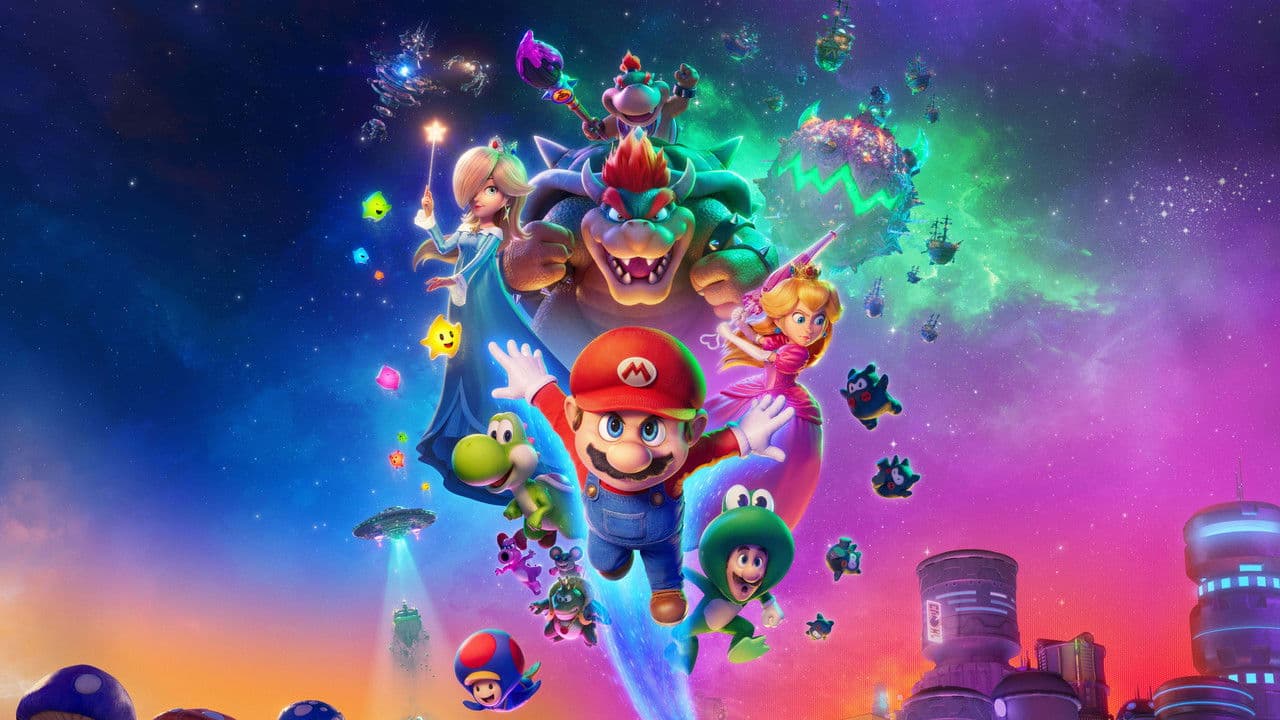
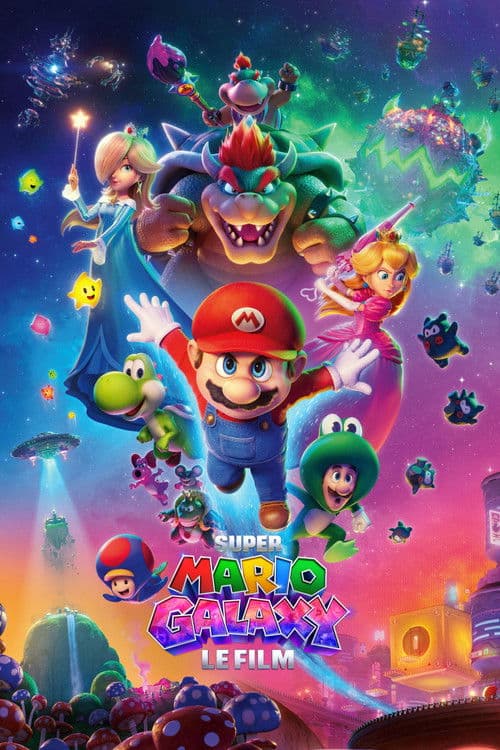
Super Mario Galaxy, the film is an animated family adventure that is energetic and colourful, directly inspired by the Nintendo video game franchise. The plot follows Mario on a cosmic odyssey to save a princess whose energy is being used as a weapon of destruction on a universal scale. The film primarily targets children from six or seven years old and families of saga fans, although dense references to the game's universe make it less accessible to complete newcomers.
Violence
The film multiplies scenes of fantastical peril: threatening robots, a dragon, a tyrannosaurus and various creatures regularly attack the protagonists. One scene shows a character falling into lava and reappearing as a skeleton, an image that may surprise younger children with its unexpectedness. A dark corridor populated by bats with red eyes and unsettling sounds constitutes a clearly identifiable jump scare. Violence remains within the codes of family animation: it is spectacular, not particularly bloody, and systematically serves an adventurous logic, never gratuitous or indulgent.
Underlying Values
The narrative builds its values around family solidarity, courage in the face of adversity and a logic of redemption that extends even to antagonistic figures. Mario is explicitly represented as an active emotional support, capable of listening to and validating the distress of his companions, which constitutes an uncommon model of behaviour for a central character in animated adventure. Female power is structural to the narrative, not ornamental: the two main heroines are presented as the decisive forces of the resolution. The film values neither individual performance nor domination, but constantly articulates victories around cooperation.
Discrimination
The inhabitants of Tostarena are represented as characters with sugar skull heads inspired by Día de Muertos, wearing sombreros and ponchos, with a pronounced Hispanic-language anchoring. This visual choice draws on real cultural codes but reduces them to a set of folkloric attributes without depth or questioning. This is a stereotypical representation that merits being noted, even if the film does not treat it as a subject in its own right. A brief discussion with the child about the difference between cultural homage and caricatural reduction can be useful.
Language
The film contains several mild insults from the register of Anglo-Saxon family animation: 'lame', 'pathetic failure', 'slimeball', 'dorks', 'maggots', with a few occurrences of 'shut up' and 'hate'. Nothing that exceeds the conventions of the genre, but these formulas are repeated and come from antagonistic characters in a context of harassment or contempt, which gives them a narrative weight not to be overlooked with the youngest viewers.
Substances
A casino scene shows drinks that appear to be alcoholic. The presence is fleeting and is not valorised, but it is visible.
Strengths
The film takes advantage of the visual universe of the saga to offer an experience of inventive filmmaking, with cosmic environments that leave room for wonder. The decision to entrust the two heroines with the role of central narrative forces is coherent and well integrated, without the film needing to underline it heavily. The representation of Mario as an empathetic and attentive character offers a welcome counterpoint to the silent, purely physical action hero. The themes of family reunion and redemption are treated with a sincerity that goes beyond purely commercial effectiveness. For families who are fans of the franchise, the film also functions as an object of transmission and cultural recognition between generations of players.
Age recommendation and discussion points
The film is suitable from six years old for children accompanied by a parent, the scenes of peril and the jump scare justifying a reassuring presence for the more sensitive. A useful angle for discussion after viewing concerns the way Mario supports his friends in difficulty: asking the child what he observed and how he himself reacts when a friend is sad is a concrete opening. The representation of the inhabitants of Tostarena also merits a brief conversation about what it means to show a culture through its visible costumes and attributes alone.
Synopsis
Having thwarted Bowser's previous plot to marry Princess Peach, Mario and Luigi now face a fresh threat in Bowser Jr., who is determined to liberate his father from captivity and restore the family legacy. Alongside companions new and old, the brothers travel across the stars to stop the young heir's crusade.
About this title
- Format
- Feature film
- Year
- 2026
- Runtime
- 1h 40m
- Countries
- Japan, United States of America
- Original language
- EN
- Directed by
- Aaron Horvath, Michael Jelenic
- Main cast
- Chris Pratt, Anya Taylor-Joy, Charlie Day, Jack Black, Keegan-Michael Key, Benny Safdie, Donald Glover, Issa Rae, Luis Guzmán, Kevin Michael Richardson
- Studios
- Illumination, Universal Pictures, Nintendo
Content barometer
- Violence2/5Moderate
- Fear3/5Notable tension
- Sexuality0/5None
- Language1/5Mild
- Narrative complexity2/5Moderate
- Adult themes1/5Mild
Values conveyed
- Courage
- Perseverance
- Compassion
- friendship
- family bonds
- brotherhood
- self-confidence
- teamwork
- loyalty