The Seven Deadly Sins: Cursed by Light
劇場版 七つの大罪 光に呪われし者たち
Does this age rating seem accurate to you?
Detailed parental analysis
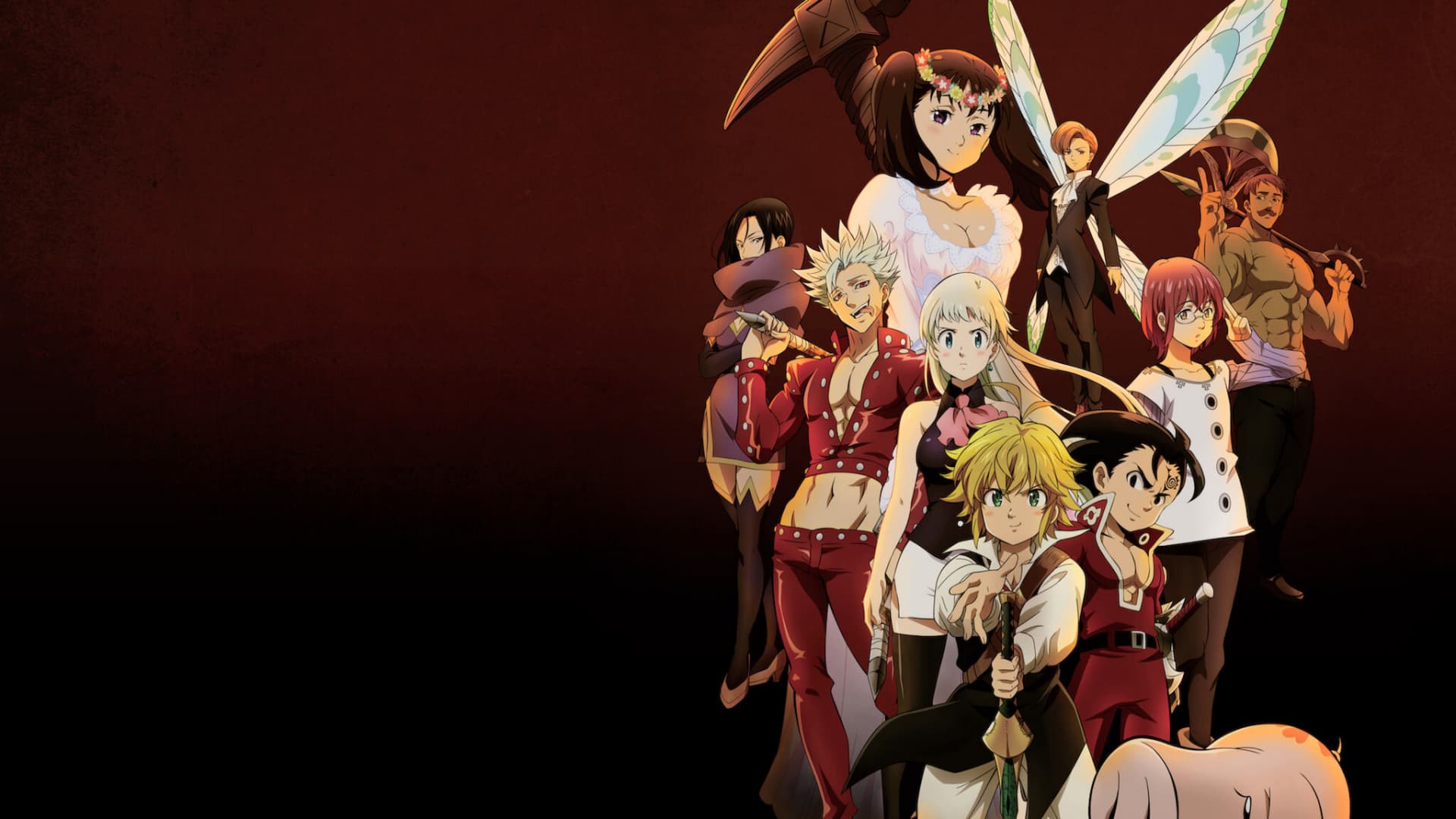
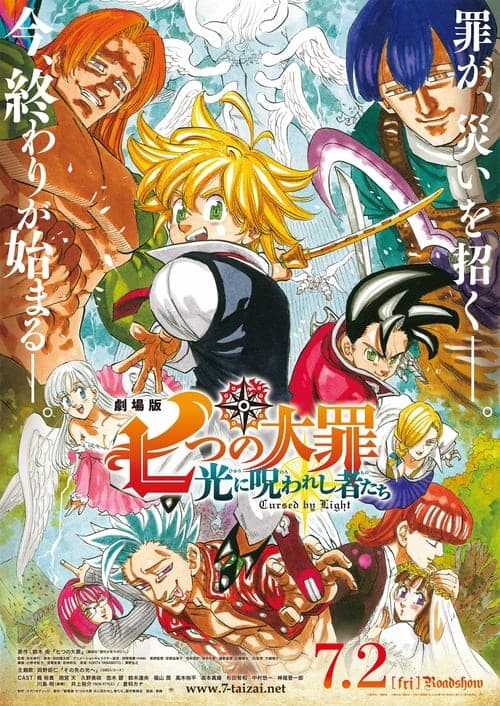
The Seven Deadly Sins: Cursed by Light is an epic, spectacular and fast-paced Japanese animation film, steeped in a flamboyant fantasy aesthetic. The plot continues the eponymous series by sending its heroes to face a new supernatural threat that endangers the recently recovered peace between humans and fantastical creatures. The film is aimed exclusively at teenagers and adults already familiar with the series, with no attempt to welcome new viewers.
Violence
Violence lies at the heart of the film and unfolds with sustained and repeated intensity. Combat sequences chain together blade attacks, devastating magical powers and spectacular deaths, with visible blood and images of spikes piercing through creatures. This violence is aestheticised and presented as gratifying, with action sequences conceived as spectacles in themselves rather than as dramatic consequences. It does not generate genuine narrative horror and remains within the shōnen genre framework, but its graphical level far exceeds what would be tolerated for a young child or pre-adolescent.
Sex and Nudity
Several female characters wear highly revealing clothing, and the framing regularly emphasises their bodies in suggestive ways, including during combat scenes. This hypersexualisation coexists with a depiction of these characters as effective fighters, which creates a contradictory message: women are capable and powerful, but their bodies remain above all an object of the gaze. Direct allusions to sexuality appear in dialogue as light jokes. The whole thing remains implicit and does not venture into the explicit, but it is a point not to underestimate for younger viewers.
Discrimination
The film perpetuates systematically unequal treatment between male and female characters. Men fight in functional clothing, women in sexualised clothing, regardless of the situation. This asymmetry is never questioned or flagged: it is presented as a natural state of fact in this universe. This is a direct angle for discussion to open with a teenager, particularly to point out the difference between what a character accomplishes in a fiction and the way the camera chooses to show it.
Underlying Values
The film values friendship, loyalty to the group and protection of loved ones as drivers of heroic action, which constitutes its most positive moral foundation. It conveys in parallel an aesthetic of physical performance and raw power as a natural response to conflict, without offering a credible non-violent alternative. The resolution of tensions passes almost exclusively through combat superiority, which deserves to be named with a teenager sensitive to such representations.
Substances
Alcohol is mentioned briefly in nostalgic exchanges between characters who recall episodes of intoxication. The presence is light and without heavy glorification, but it fits into a relaxed normalisation of alcohol consumption as a marker of camaraderie.
Language
The language contains a few occasional profanities, without this becoming a marked characteristic of the film. The impact is limited for a teenager but deserves to be flagged for a younger child.
Strengths
The film delivers on its promise as pure spectacle: the action sequences are energetic, visually clear and well-paced, with generosity in the staging of powers and confrontations that will satisfy fans of the series. It functions well as an emotional culmination of a long narrative arc for viewers who have followed the characters from the beginning, with a few moments of genuine resonance with bonds built over time. Outside this context of loyalty to the universe, it offers little of substance on the narrative or thematic level.
Age recommendation and discussion points
This film is not suitable before the age of 14 given the graphic violence, hypersexualisation of female characters and complex narrative context which assumes familiarity with the series. For a teenager aged 14 or over already a fan of the universe, viewing can be accompanied by a conversation about how the film represents women: why are two characters of equal strength not dressed and framed in the same way? It is also an opportunity to discuss the central place of violence as the sole response to conflict in this type of narrative.
Synopsis
With the help of the "Dragon Sin of Wrath" Meliodas and the worst rebels in history, the Seven Deadly Sins, the "Holy War", in which four races, including Humans, Goddesses, Fairies and Giants fought against the Demons, is finally over. At the cost of the "Lion Sin of Pride" Escanor's life, the Demon King was defeated and the world regained peace. After that, each of the Sins take their own path.
About this title
- Format
- Feature film
- Year
- 2021
- Runtime
- 1h 19m
- Countries
- Japan
- Original language
- JA
- Directed by
- Takayuki Hamana
- Main cast
- Yuki Kaji, Sora Amamiya, Misaki Kuno, Aoi Yuuki, Tatsuhisa Suzuki, Jun Fukuyama, Yuuhei Takagi, Maaya Sakamoto, Tomokazu Sugita, Yuichi Nakamura
- Studios
- Studio Deen
Content barometer
- Violence4/5Strong
- Fear2/5A few scenes
- Sexuality3/5Moderate
- Language2/5Moderate
- Narrative complexity1/5Accessible
- Adult themes1/5Mild
Watch-outs
- Alcohol
- Gender stereotypes
- Violence
- Sexuality
Values conveyed
- Courage
- Friendship
- Loyalty
- reconciliation