
The Rose of Versailles
ベルサイユのばら
Does this age rating seem accurate to you?
Detailed parental analysis
The Rose of Versailles is a romantic and historical film with a flamboyant atmosphere, sustained by the grandeur of the court of Versailles and the ferment of the beginnings of the French Revolution. The plot follows a young woman raised as a man who finds herself at the heart of tensions between nobility and the common people, torn between her duty and her feelings. The film is primarily aimed at a teenage and adult audience, sensitive to epic love stories and historical frescoes.
Violence
Violence is present significantly and intensifies as the narrative progresses towards the Revolution. Characters are shot by rifles, with bullets leaving bloody traces on bodies. A striking scene shows the main character lose an eye after being struck with a baton, with visible bleeding. Other characters spit blood as a result of injuries. The death of several protagonists is shown without restraint. This violence is not gratuitous; it serves to anchor the historical drama in a tragic reality and to measure the human cost of convictions. It remains nonetheless sufficiently intense to be unsuitable for all audiences.
Underlying Values
The film places romantic love at the absolute centre of all motivations: the characters' choices, their sacrifices, their betrayals and their loyalties are explained almost exclusively by their quest for the right partner. Themes of individual freedom and rebellion against established order are present, but remain superficial: social inequality and the corruption of the nobility serve mainly as a backdrop to the sentimental story rather than being examined in depth. Faithfulness to oneself and the courage to follow one's convictions constitute the strongest messages of the narrative, and deserve to be highlighted in discussion.
Social Themes
The revolutionary context is omnipresent and constitutes the historical framework of the film. Tension between aristocracy and the people is visible, and several scenes evoke political violence and the fragility of authoritarian regimes. However, the film does not make this context into an ambitious critical reflection: it privileges the spectacular and emotional aspect of the Revolution rather than its analysis. It is an interesting entry point for addressing the history of France with a curious young viewer, provided that the parent supplements what the film merely touches upon.
Discrimination
The film features a female character raised in a male role, which constitutes a potentially rich starting point around gender identities. In practice, the narrative does not exploit this dimension in depth and does not use it to question the construction of gender roles. It is rather a narrative device than a genuine exploration of the subject. Parents of adolescents sensitive to these questions may note that the film opens the door without truly stepping through it.
Sex and Nudity
A scene of intimacy between the two main characters is present: they appear naked under the sheets without the film showing anything explicit. The scene remains suggestive and brief. It is discreet enough not to dominate the film, but its presence should be flagged for families who prefer to avoid this type of content with young adolescents.
Language
The film contains a few mild expletives in its English dubbed version: terms such as 'damn', 'hell' or 'bastard' appear occasionally. Overall it remains measured and has no particular bearing on the film's overall experience.
Strengths
The film offers careful direction that makes use of the majestic settings of the court of Versailles to create an immersive visual experience. It constitutes an accessible introduction to a pivotal period of French history, and can spark genuine curiosity about the Revolution and its stakes. On an emotional level, the narrative is sincere and several scenes are sufficiently intense to move a teenage audience in a memorable way. The musical numbers, though judged intrusive by some, contribute to the epic atmosphere of the film. The main character, complex and endearing, offers a model of courage and faithfulness to one's values that transcends the clichés of the genre.
Age recommendation and discussion points
The film is suitable from the age of 14, an age at which scenes of violence and the death of several characters can be received with sufficient distance. After viewing, two angles of discussion merit being opened: why does a character raised in a role different from her perceived identity not suffer more greatly in this narrative, and to what extent was the French Revolution really a question of social justice rather than individual destinies.
Synopsis
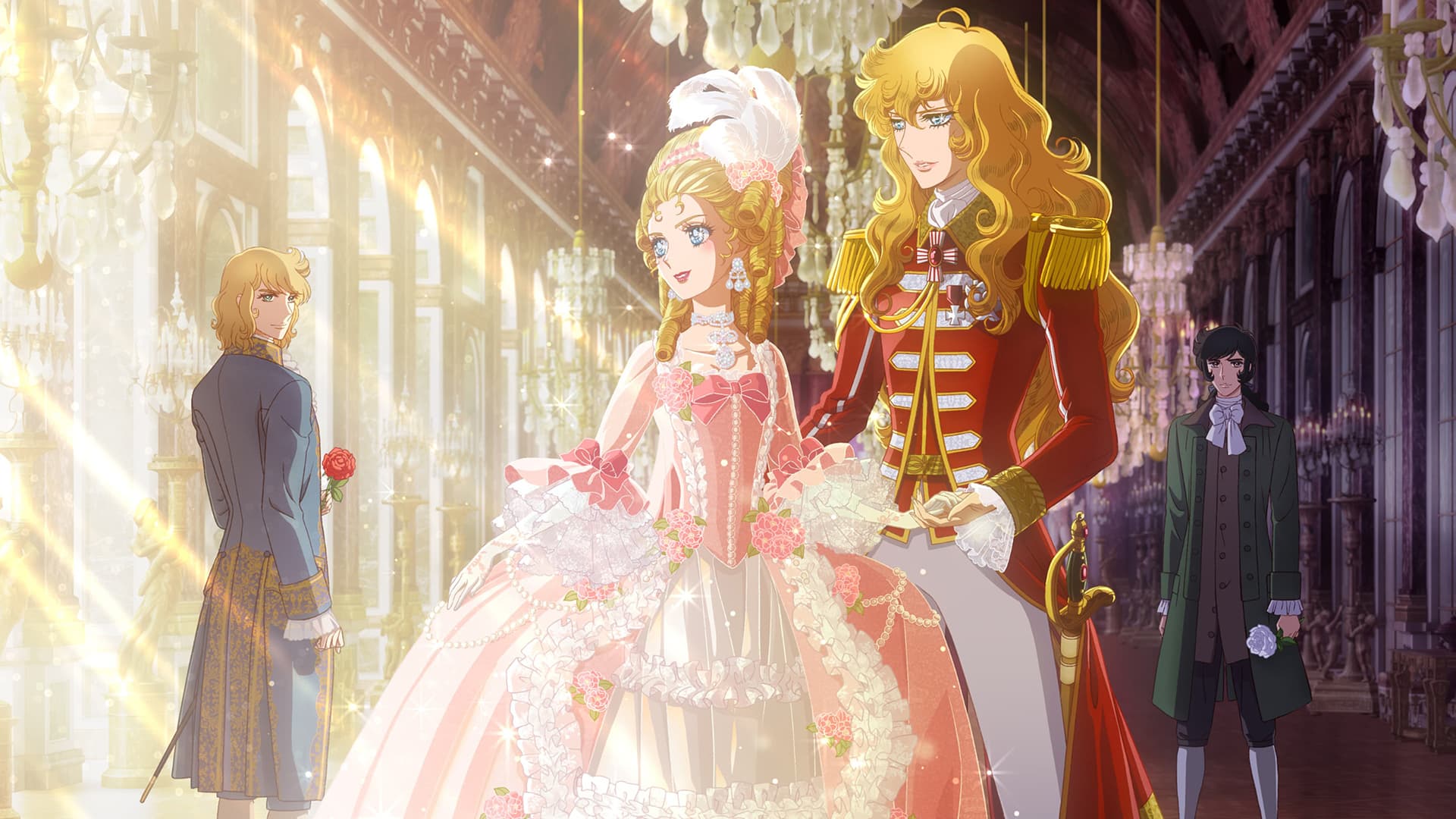
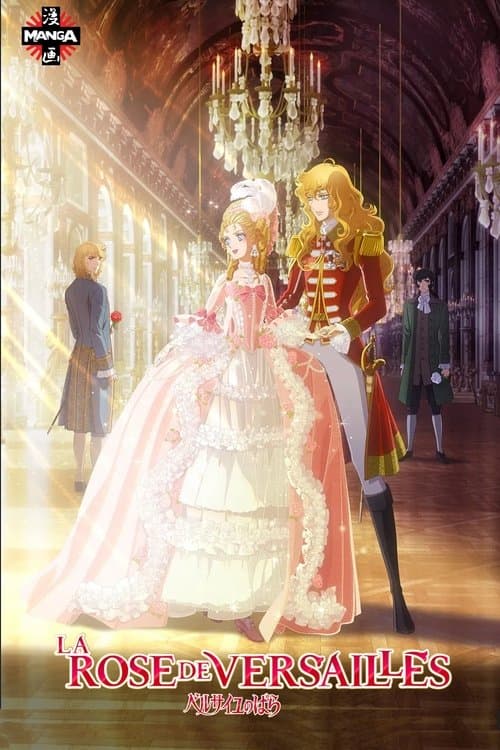
In an age of revolution, Marie Antoinette and her protector Oscar François de Jarjayes face tough choices as women growing into their distinct roles.
About this title
- Format
- Feature film
- Year
- 2025
- Runtime
- 1h 53m
- Countries
- Japan
- Original language
- JA
- Directed by
- Ai Yoshimura
- Main cast
- Miyuki Sawashiro, Aya Hirano, Toshiyuki Toyonaga, Kazuki Kato, Shunsuke Takeuchi, Takuya Eguchi, Miyu Irino, Fukushi Ochiai, Banjo Ginga, Mayumi Tanaka
- Studios
- MAPPA, avex pictures, Shueisha