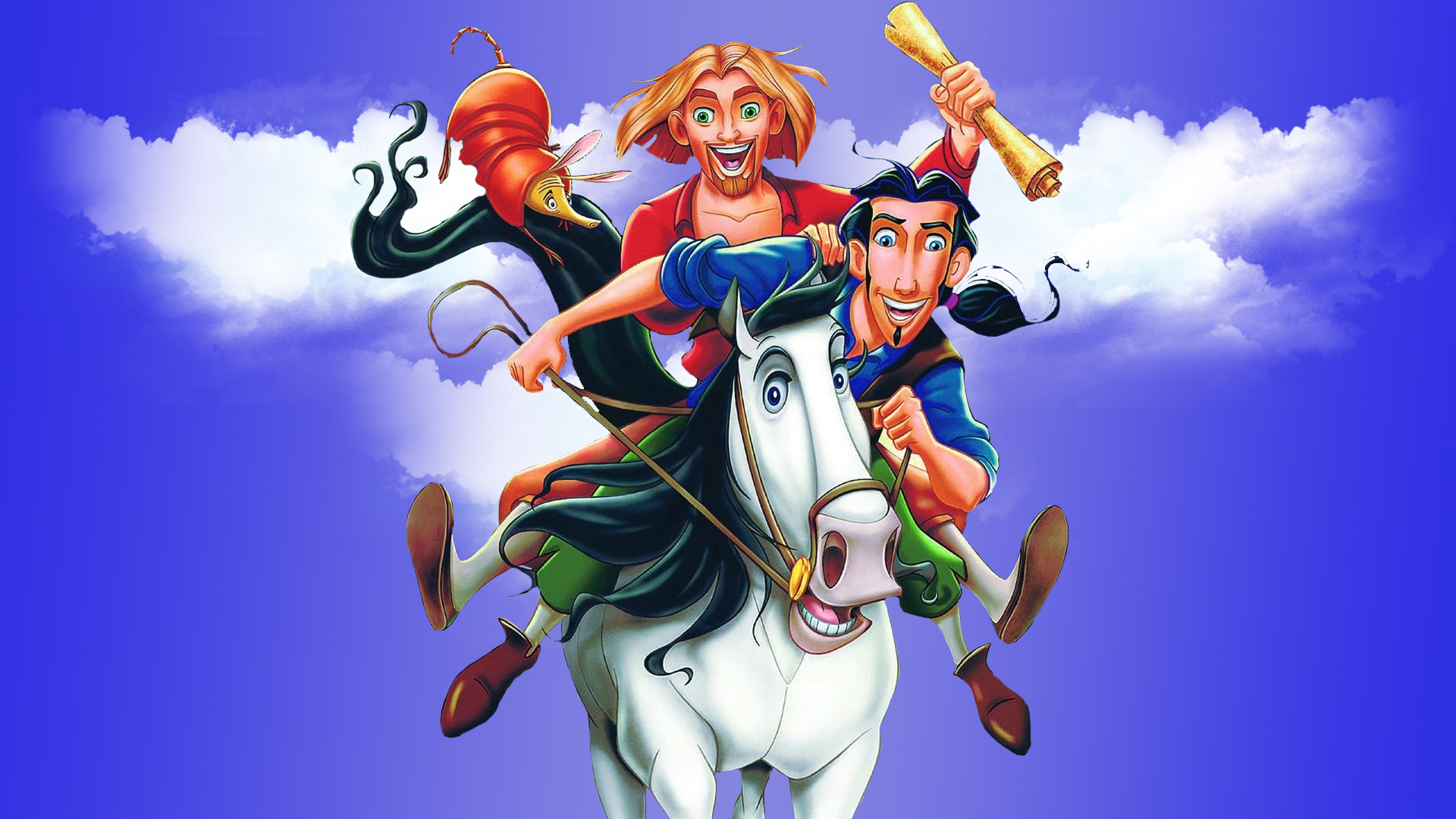

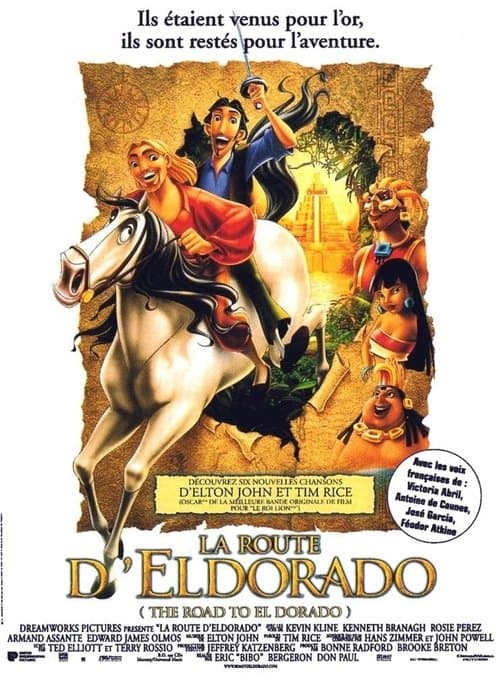
The Road to El Dorado
Does this age rating seem accurate to you?
Detailed parental analysis
The Road to El Dorado is an animated adventure film with a generally light and humorous tone, yet traversed by darker sequences and more complex moral tensions than first appears. The plot follows two Spanish con artists who accidentally discover the legendary city of gold and decide to profit from it by posing as gods. The film presents itself as a family comedy, but its actual content is better suited to children from age 10 onwards and to teenagers, and it was indeed perceived as such by the audiences who saw it.
Discrimination
This is the film's heaviest element and the one deserving the most serious discussion. Indigenous characters are represented according to well-documented problematic patterns: their language is first heard as incomprehensible grunts, their spiritual practices are mocked through formulas such as 'mystical gibberish', and they allow themselves to be duped without resistance by two white con men. The film operates without critical distance within the white saviour narrative: the two European protagonists literally save the indigenous people from their own priest and colonisation, without the story ever questioning this irony. The indigenous female character, Chel, is hypersexualised in a heavily emphasised manner: revealing clothing, suggestive movements, systematic seductive behaviour, with little substance beyond this role. Conversely, the indigenous high priest is presented as the film's true antagonist, more threatening than the Spanish conquistador Cortés, which constitutes a particularly questionable moral reversal. These elements are not incidental: they structure the narrative from beginning to end.
Underlying Values
The film articulates a tension between two systems of values. On one hand, the protagonists are liars and professional manipulators, and the film presents them with sympathy, even admiration for their resourcefulness. Deception is a valued narrative tool, never truly sanctioned in substance. On the other, the final arc achieves a moral rebalancing by placing friendship and generosity above financial gain. This reversal is sincere in form, but insufficient to erase the complacency with which the narrative has accompanied manipulation for the bulk of the film. The relationship with wealth is equally ambiguous: gold is coveted, celebrated, then theoretically abandoned, without the film really addressing this renunciation with depth. This is a good angle for discussion with a pre-teenager.
Violence
Violence is present on a regular basis without being the film's core. There are sword fights, arrow attacks, a character projected into a basin of flaming magical potion, and visible blood in a scene where a priest cuts his own hand for a ritual. The most anxiety-inducing sequence involves a gigantic stone statue that comes to life, chases characters, tramples them and swallows someone off-screen. This scene, combined with the high priest's invocations that conjure snakes, spiders and rats, constitutes the content most likely to frighten young children. Violence is not gore in the strict sense, but it far exceeds what a child under 8 years old is ready for.
Sex and Nudity
The film contains several discrete but real sexual elements. A shoulder massage scene with erotic connotations, a heavily suggested sequence where two characters are found behind a sofa with kissing sounds in the background, and nudity seen from behind when the protagonists' clothing is stolen by monkeys. To this is added the constant hypersexualisation of the character Chel, mentioned in the discrimination section. These elements are treated in a light comedic manner, but their accumulation makes them relevant to flag for parents of young children.
Substances
Alcohol and cigars appear in a few scenes, without particular dramatisation but without critical distance either. A scene where the horse appears drunk after drinking is played for comic effect, which normalises drunkenness in quite a direct way. It is not a running thread through the film, but it is present.
Language
The film contains a few measured instances of strong language for an animated production: 'hell' used several times, an obvious euphemism for a stronger profanity, and an attempted expletive cut short before completion. Nothing excessive, but sufficient to move away from a strictly all-ages register.
Strengths
The film has genuine narrative energy and a sense of pacing that works well, driven by a friendship between the two protagonists that is written with real warmth and effective humour. The animation, colourful and dynamic, captures an exotic adventure atmosphere with pleasure. The soundtrack contributes to the atmosphere in a convincing manner. The arc of friendship tested by temptation and potential betrayal constitutes the film's true emotional backbone, and it is what it has most solid to offer. For a pre-teenager, it is also an unexpected invitation to reflect on the mechanics of manipulation and the question of what one is willing to sacrifice for loyalty.
Age recommendation and discussion points
The film is not recommended for children under 10 years old due to the fantasy violence, sexual undertones and darkness of certain scenes. From age 10-12 onwards, it can be watched without difficulty, provided that viewing is followed by conversation: why are the two heroes likeable when they lie constantly, and how does the film represent indigenous peoples in relation to European characters? These two angles, one moral, one cultural, are well worth exploring.
Synopsis
Stowing away after a failed con, a pair of swindlers end up on El Dorado, the fabled "city of gold", where they quickly get in over their heads when they are mistaken as gods by the inhabitants.
About this title
- Format
- Feature film
- Year
- 2000
- Runtime
- 1h 29m
- Countries
- United States of America
- Original language
- EN
- Studios
- DreamWorks Pictures, DreamWorks Animation
Content barometer
- Violence3/5Notable
- Fear3/5Notable tension
- Sexuality2/5Mild
- Language1/5Mild
- Narrative complexity1/5Accessible
- Adult themes1/5Mild
Watch-outs
- Alcohol
- Strong language
- Ethnic or racial stereotypes
- Gender stereotypes
- Violence
- Sexuality
Values conveyed
- Friendship
- Loyalty
- courage
- teamwork