
The Rescuers
Does this age rating seem accurate to you?
Detailed parental analysis
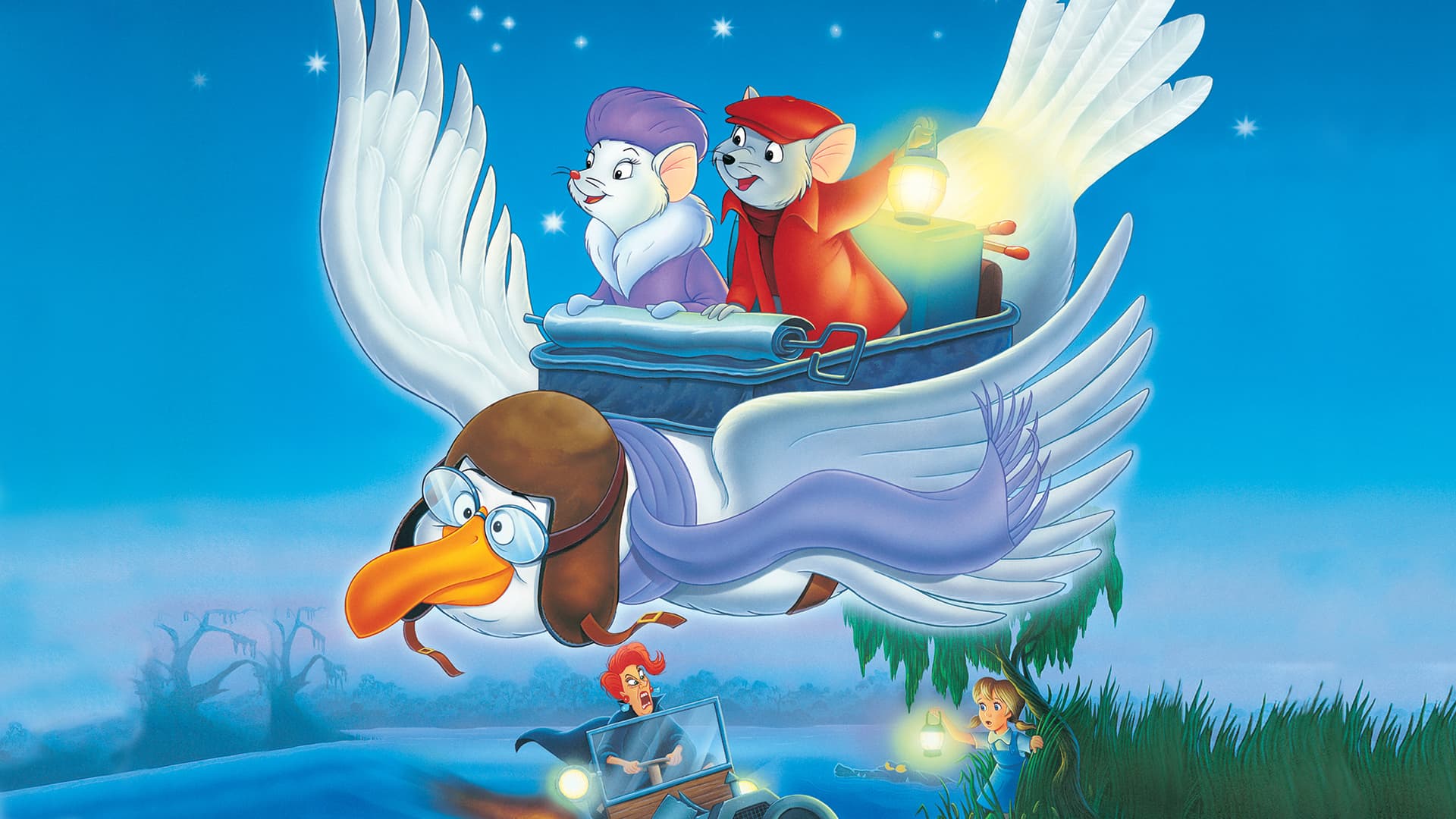
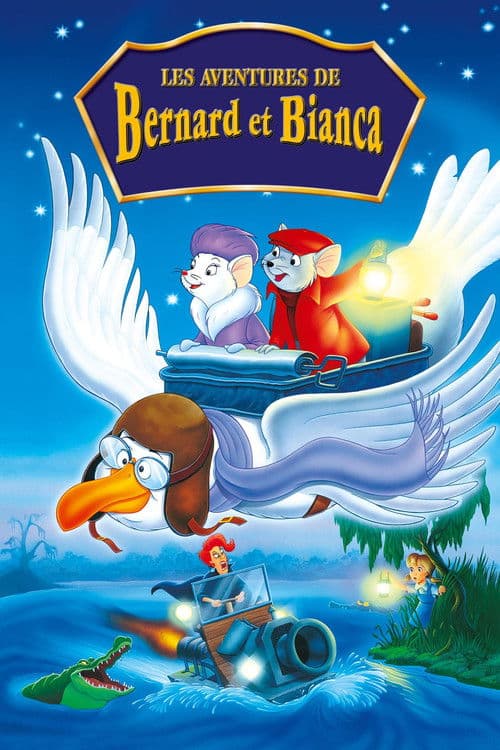
The Rescuers is a Disney animated film with a darker and more tense atmosphere than the studio's average output, despite its appearance as an adventure tale for children. The plot follows two mice who are members of an international rescue organisation as they attempt to find a young orphan kidnapped by a greedy and unscrupulous woman. The film is theoretically aimed at young children, but its decidedly unsettling tone makes it more suitable for school-age children accompanied by an adult.
Violence
Violence is present repeatedly and serves as the dramatic engine of the film. Madame Medusa directly threatens the mice with a shotgun and fires at them several times. Crocodiles pursue and attempt to devour the protagonists in sequences of genuine intensity. A dynamite explosion strikes Medusa full in the face. These elements are treated in an action-comedy register, but their accumulation and brutality can leave a lasting impression on sensitive children. The violence remains functional and oriented towards resolving the conflict, without gratuitous gore, but it is far from harmless.
Parental and Family Portrayals
Penny is an orphan without family, a central figure in a narrative that places abandonment and the absence of parental protection at its heart. Madame Medusa embodies a radically abusive adult figure: she exploits the child as labour, threatens her physically, deprives her of her comfort object to manipulate her psychologically, and subjects her to dangerous conditions. This portrayal of a predatory adult is one of the most explicit in the Disney catalogue of the era and can provoke lasting anxiety in very young viewers. The film offers no reassuring substitute parental figure, which reinforces the sense of vulnerability of the child on screen.
Underlying Values
The narrative is structured around a clear conviction: the weakest, if they show courage and act together, can overcome the most powerful. The Rescue Aid Society functions as an international voluntary organisation, which gives the film a dimension of collective solidarity that is uncommon. Good triumphs unambiguously, and perseverance in the face of adversity is valued consistently throughout the narrative. These values are solid and offer an interesting basis for discussion with a child.
Substances
A secondary character, Luke the muskrat, visibly consumes a home-made alcoholic substance and is presented as a regular drinker. The treatment is humorous and without warning, making it a point worth raising with an inquisitive child. Consumption is not central to the narrative but it is sufficiently visible to merit mention.
Sex and Nudity
In the original versions of the film, two subliminal images depicting a bare-breasted woman are inserted into a scene of flying over New York. These images, invisible at normal speed, led to the film's withdrawal from distribution in 1999. The versions currently available have been corrected. This point therefore has no practical impact for contemporary viewing, but it may be useful to know about it if the child accesses an older copy.
Strengths
The film possesses genuine narrative tension, rare in family animation of the era, which gives it a dramatic effectiveness still perceptible today. The relationship between Bernard and Bianca is written with a lightness and warmth that balance the dark subject matter without defusing it. The character of Penny, a lucid and courageous orphan, is treated with an unusual dignity for a child character in an animated film: she is not passive, she acts and resists. The film also conveys, without didacticism, the idea that organised mutual aid between modest individuals can accomplish what the powerful do not.
Age recommendation and discussion points
The film is not recommended for children under 6 years old and can be watched with ease from 8 years onwards, ideally in the presence of an adult for the more sensitive 6 to 7 year-olds. Two angles of discussion are worth pursuing after viewing: why is Medusa so frightening when she is supposed to be an adult who helps children, and what gives Bernard and Bianca the strength to act despite their small size and their fear.
Synopsis
Two agents of the mouse-run International Rescue Aid Society search for a little orphan girl kidnapped by sinister treasure hunters.
About this title
- Format
- Feature film
- Year
- 1977
- Runtime
- 1h 16m
- Countries
- United States of America
- Original language
- EN
- Directed by
- Wolfgang Reitherman, John Lounsbery, Art Stevens
- Main cast
- Bob Newhart, Eva Gabor, Geraldine Page, Joe Flynn, Jeanette Nolan, Pat Buttram, Jim Jordan, John McIntire, Michelle Stacy, Bernard Fox
- Studios
- Walt Disney Productions
Content barometer
- Violence3/5Notable
- Fear4/5Intense
- Sexuality1/5Allusions
- Language0/5None
- Narrative complexity1/5Accessible
- Adult themes1/5Mild
Watch-outs
- Alcohol
- Abuse