
The Railway Children Return
Does this age rating seem accurate to you?
Detailed parental analysis
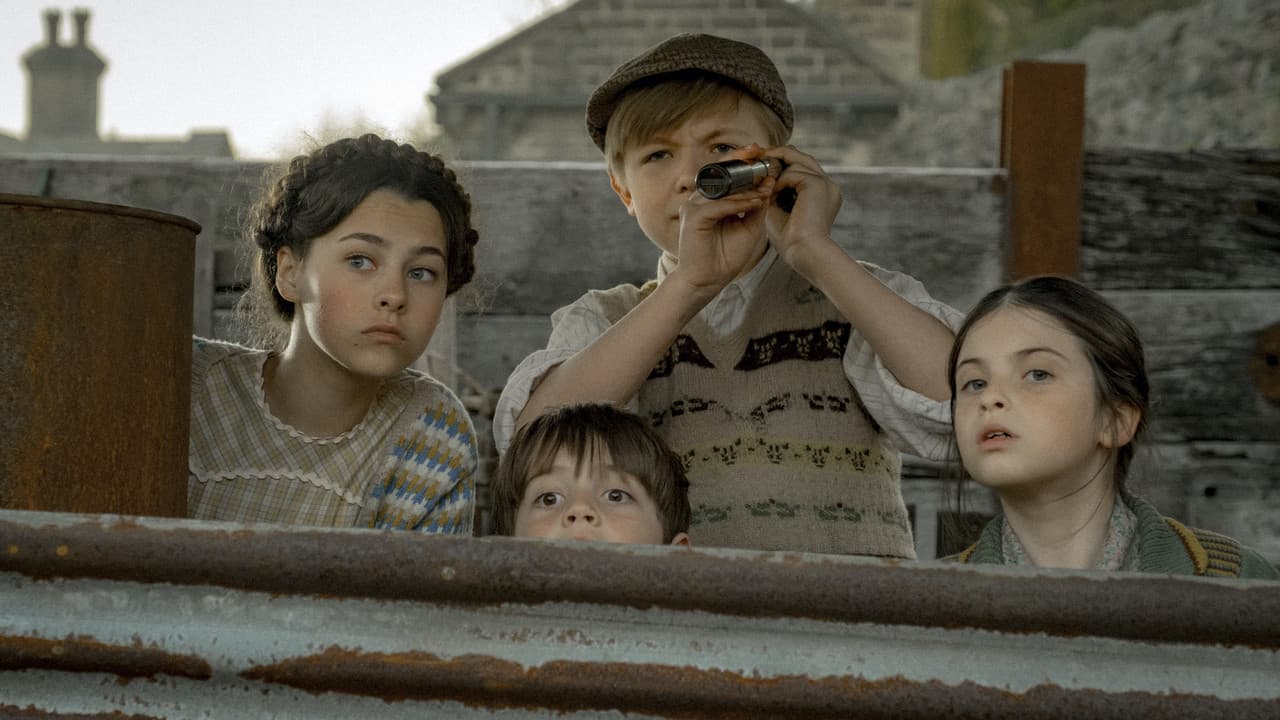
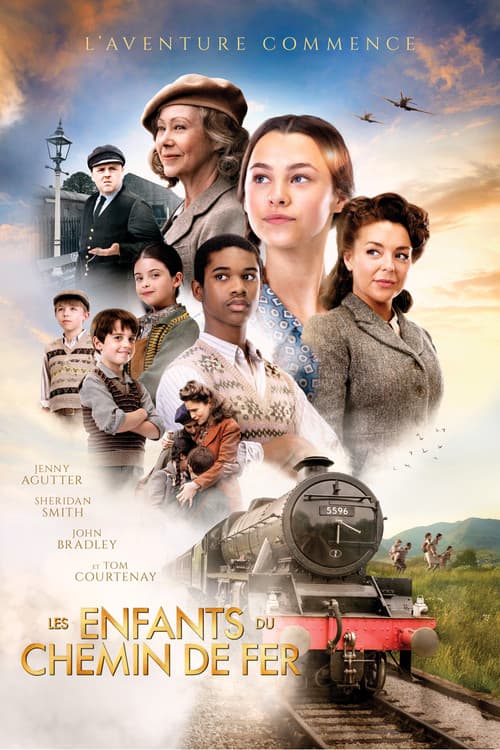
The Railway Children Return is a family adventure film with a warm tone yet shot through with moments of tension and vivid emotion, set in rural England during the Second World War. The plot follows a group of children evacuated from Manchester who, taken in by a village in Yorkshire, strike up a friendship with a young American soldier on the run and find themselves caught up in events beyond their understanding. The film is aimed at children from eight to ten years old and their families, with a sensibility that also speaks to adults nostalgic for classic family cinema.
Social Themes
The film places racism at the heart of its plot, without flinching. The central character of the American soldier is subjected to explicit racist violence by his military superiors: he is struck in the stomach and knocked to the ground in a scene that is both brief and hard-hitting, whose moral weight is fully acknowledged by the narrative. The distinction drawn by the film between racist American military personnel and benevolent English villagers constitutes a questionable narrative shortcut: it simplifies a more complex historical reality and deserves to be discussed with an inquisitive child. The context of racial segregation in the American army of the time is nonetheless a solid entry point for a historical conversation.
Violence
Violence is present on several occasions and, while it remains within family film conventions, it is not trivial. Aside from the scene of racist violence, a raid by soldiers in a pub turns into a confrontation, with a gunshot fired in a discreet manner, without bloodshed on screen. An explosion in a cemetery injures a teenage girl, leaving a visible cut on her forehead. These scenes are constructed to establish real tension, not for spectacle: they serve the dramatic stakes and are treated with a certain restraint. A sensitive child may nonetheless be affected by them, particularly by the sequences of soldiers hunting down hidden children, which play on an anxiety of direct threat.
Parental and Family Portrayals
Family separation is a central emotional driver from the opening of the film, with an evacuation scene presented as heartbreaking. The children are separated from their mother and placed with strangers, and the eldest of the siblings assumes a protective and quasi-parental role for her younger ones. This pattern of a child forced into premature maturity by circumstance is treated with sensitivity, but it may affect children who have themselves experienced separations or abandonment anxiety.
Underlying Values
The film constructs without ambiguity a system of values centred on bravery, solidarity, protection of the vulnerable and resistance to injustice. These values are embodied consistently by the child characters and are never ironised. The figure of the courageous child who acts where adults fail is a classic motif of the genre, used here with great effect. The collective resistance to arbitrary military authority gives the narrative a dimension of challenging unjust authority that merits being named with a child.
Substances
Men drink alcohol in a pub and one of them drinks from a hip flask. The consumption is presented as an ordinary social fact of the time, without particular valorisation or negative comment. Its presence is incidental in relation to the rest of the film.
Language
The language remains very mild: a few mild expletives and some scatological jokes about wind, clearly intended to make young audiences laugh. No aggressive or truly crude register.
Strengths
The film succeeds in making an painful historical period accessible without betraying it or parodying it. The reconstruction of rural England in wartime is carefully done, and the narrative pace includes moments of levity and complicity between children that balance the scenes of tension. The relationship between the evacuated children and the American soldier is treated with an emotional sincerity that avoids didacticism: the film shows injustice without explaining it in an artificial manner, leaving the viewer and the child room to respond. It is a work that functions as a bridge between a bygone era and contemporary issues, which makes it a rare vehicle for discussion in family cinema.
Age recommendation and discussion points
The film is suitable from nine to ten years old for children accompanied by an adult, with a preference for ten to twelve years old for a more serene viewing experience and fuller appropriation of the stakes. After viewing, two conversations naturally present themselves: why do some characters treat Abe differently because of the colour of his skin, and did this only exist in America or in France too? And what gives the children in the film the courage to act when adults do not dare?
Synopsis
Follow a group of children who are evacuated to a Yorkshire village during the Second World War, where they encounter a young soldier who, like them, is far away from home.
About this title
- Format
- Feature film
- Year
- 2022
- Runtime
- 1h 39m
- Countries
- United Kingdom, United States of America
- Original language
- EN
- Directed by
- Morgan Matthews
- Main cast
- Jenny Agutter, Sheridan Smith, Tom Courtenay, Beau Gadsdon, KJ Aikens, Austin Haynes, Eden Hamilton, Zac Cudby, John Bradley, Hugh Quarshie
- Studios
- StudioCanal UK
Content barometer
- Violence2/5Moderate
- Fear3/5Notable tension
- Sexuality0/5None
- Language1/5Mild
- Narrative complexity3/5Complex
- Adult themes1/5Mild
Watch-outs
- Ethnic or racial stereotypes
- Violence
Values conveyed
- Courage
- Perseverance
- Compassion
- friendship
- solidarity
- justice