The Rabbi's Cat
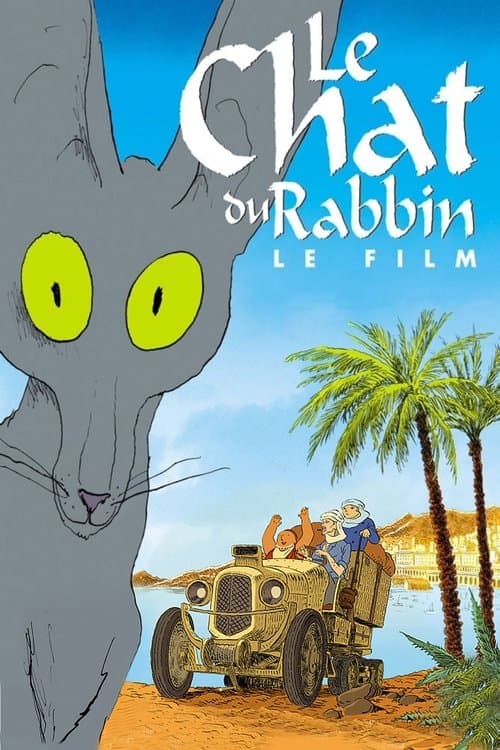
Le Chat du rabbin
Does this age rating seem accurate to you?
Detailed parental analysis
The Rabbi's Cat is an animated film with a contemplative atmosphere and a slightly picaresque quality, tinged with philosophical humour and Mediterranean warmth. The plot follows a talking cat who accompanies his master, a rabbi from Algiers, on an initiatory journey across 1930s Africa, encountering Jews, Muslims and Christians along the way. The film is aimed at adults and curious teenagers, not young children despite its animated format.
Underlying Values
The film builds its entire argument around inter-religious tolerance and dialogue between cultures, but without ever falling into naive sentimentality. It shows that each community, Jewish, Muslim or Christian, can produce its own fanatics and its own narrow-mindedness, which gives the message a welcome honesty. The cat, a Cartesian figure and readily anticlerical, questions religious dogmas with constant irony, which can open rich discussions about faith, reason and spiritual authority. The narrative values friendship as the driving force of adventure and as the only ground where differences truly fade away, without moralising discourse.
Violence
The film contains a frankly bloody combat scene involving sabres and spears, with a character spitting blood before dying. This sequence, linked to religious extremists, is brief but visually direct and without softening. It is not gratuitous; it illustrates the concrete consequences of fanaticism, but its intensity is real and may surprise or upset younger children. The rest of the film is free from sustained violence.
Discrimination
The film explicitly takes a stand against colonial and racist representations of Africa, openly mocking Tintin in the Congo and the paternalistic vision that the West long projected onto the African continent. This critique is woven directly into the narrative and constitutes a solid pedagogical entry point for discussing colonialism and the construction of stereotypes in popular culture with a teenager.
Social Themes
The film is set in colonial Algeria in the 1930s and traverses sub-Saharan Africa, anchoring the narrative in a precise historical and political reality. The coexistence of religious communities under French domination, tensions between tradition and modernity, and the question of cultural identity run through the film without being didactic. These dimensions make the film a relevant subject for discussion with a teenager beginning to take an interest in twentieth-century history.
Strengths
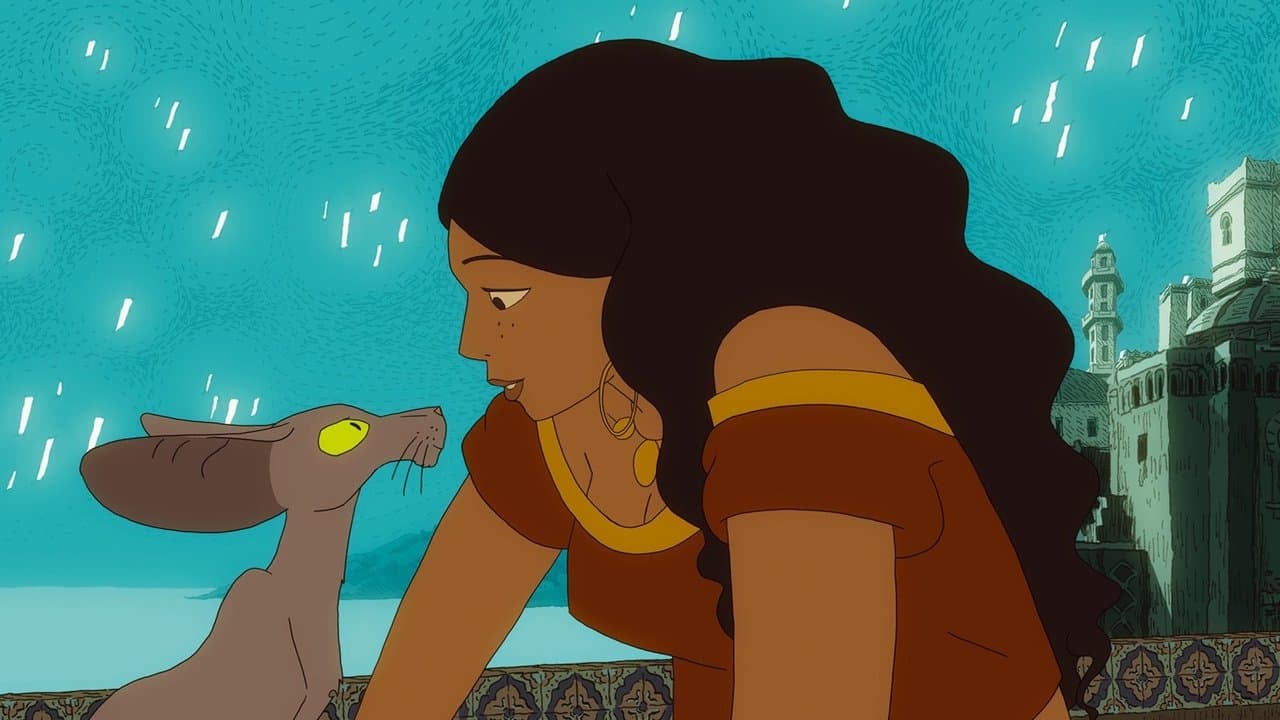
The film stands out for its refined writing and philosophical humour rare in French animation, carried by the cat's voice whose lines oscillate between mischief and depth. The visual universe, inspired by Joann Sfar's comic strip, sensitively captures the atmosphere of 1930s Algeria, its colours, textures and music. The narrative does not seek to resolve the tensions it raises, which gives it a narrative maturity uncommon for an animated film. Its pedagogical value is genuine, particularly for discussing with teenagers the relationship between faith and reason, or between cultural identity and openness to others.
Age recommendation and discussion points
The film is best reserved for children aged 10 and above, with a preference for 12 and over for fully relaxed viewing, particularly because of the bloody violence scene and the philosophical density of the subject matter. Two angles of discussion naturally emerge after viewing: why does the cat question the existence of God, and is asking this question compatible with respecting the beliefs of others, and what does the film say about the difference between being a believer and being a fanatic.
Synopsis
The story of a rabbi and his talking cat, a sharp-tongued feline philosopher brimming with scathing humor and a less than pure love for the rabbi's teenage daughter.
Where to watch
Availability checked on Apr 29, 2026
About this title
- Format
- Feature film
- Year
- 2011
- Runtime
- 1h 40m
- Countries
- France
- Original language
- FR
- Directed by
- Joann Sfar, Antoine Delesvaux
- Main cast
- François Morel, Hafsia Herzi, Maurice Bénichou, Jean-Pierre Kalfon, Daniel Cohen, François Damiens, Mohamed Fellag, Mathieu Amalric, Éric Elmosnino, Marguerite Abouet
- Studios
- TF1 Droits Audiovisuels, CinéCinéma, PROCIREP, Canal+, France Télévisions, Autochenille Production
Content barometer
- Violence2/5Moderate
- Fear2/5A few scenes
- Sexuality0/5None
- Language0/5None
- Narrative complexity2/5Moderate
- Adult themes0/5None
Watch-outs
- Death
- Ethnic or racial stereotypes
- Violence
Values conveyed
- Friendship
- Acceptance of difference
- religious tolerance
- intellectual curiosity
- intercultural dialogue
- loyalty
- identity