The Proud Family
Does this age rating seem accurate to you?
Detailed parental analysis
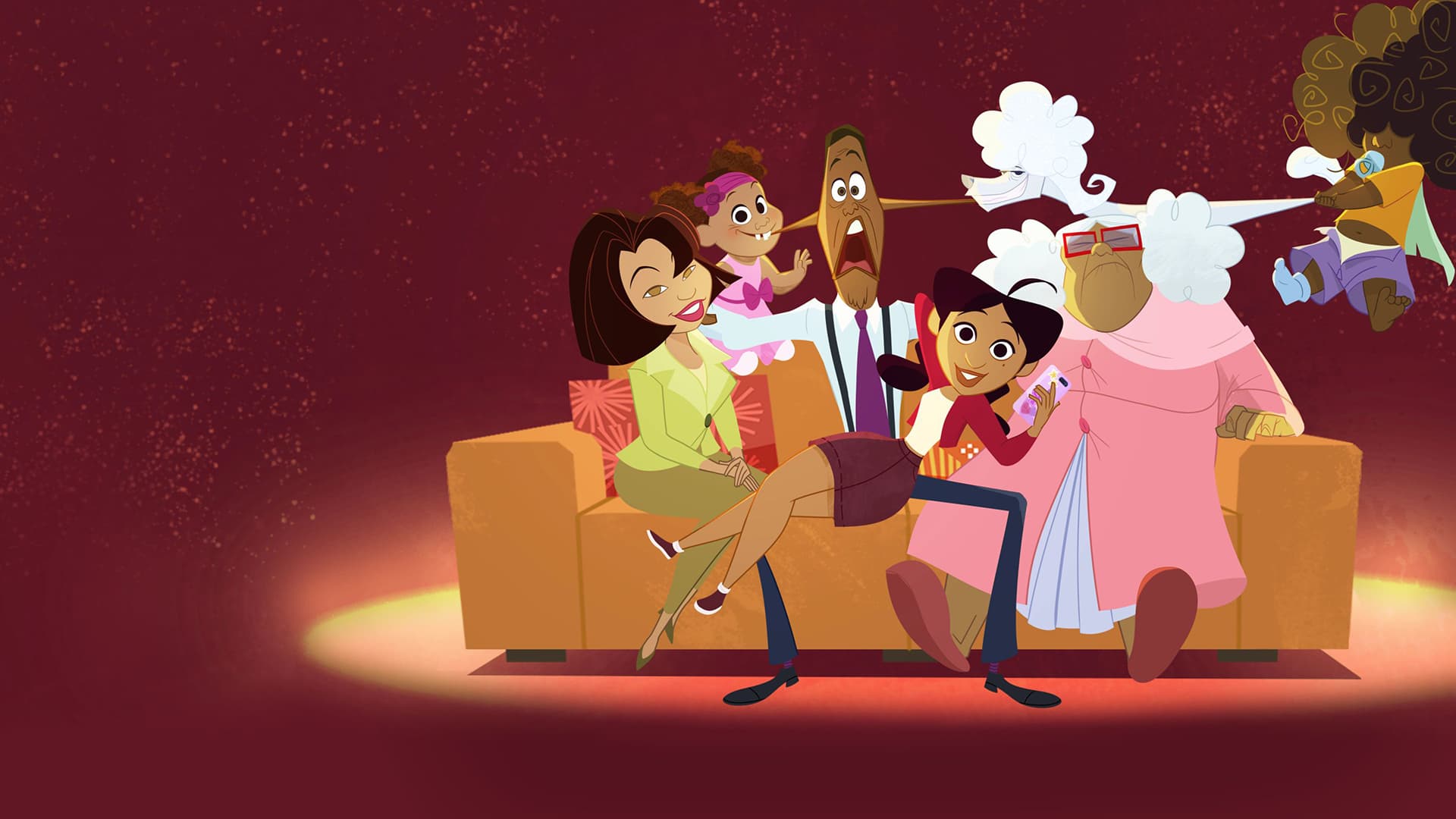
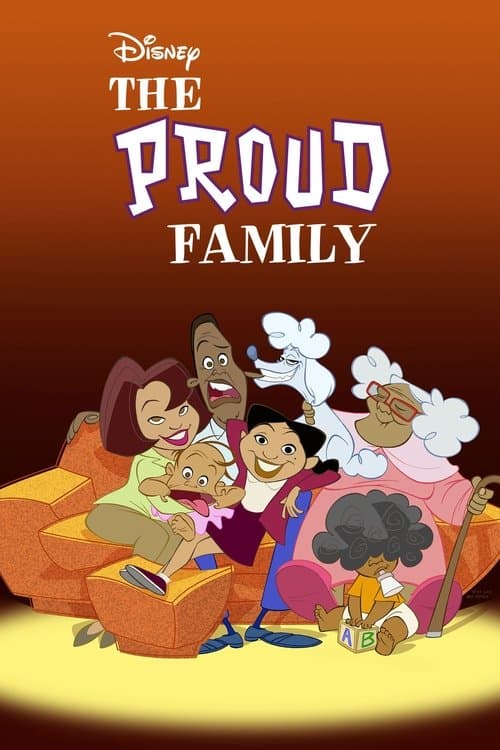
The Proud Family is an American animated series with a bright and colourful tone, driven by constant comic energy and genuine family warmth. It follows Penny Proud, a teenager navigating between the demands of her overbearing family and the turbulence of middle school. The series is clearly aimed at a pre-teen and teenage audience, with situations and stakes directly rooted in the experience of growing up.
Parental and Family Portrayals
Family is the beating heart of the series, and this is where its main strength lies. Penny's parents are present, involved and morally engaged, even when their clumsiness or overprotectiveness generates comic conflict. Her father, Oscar, is a recurring figure of good-natured humiliation: he is regularly put in difficult situations, beaten, ridiculed, but never absent or indifferent. Grandmother Suga Mama brings an offbeat energy and double-meaning lines that may surprise parents. Overall, it paints an imperfect but warm family model, where parental authority is both questioned and ultimately respected.
Violence
Violence is present in cartoon form, without real gravity but with notable frequency. Oscar regularly takes hits, falls and animal attacks in a purely slapstick register. The bullying exercised by the Gross Sisters, who steal students' lunch money and physically intimidate their classmates, is treated with more ambivalence: it is presented as a real problem without always being resolved satisfactorily. This last point warrants a conversation with the child about what bullying means and how to respond to it.
Discrimination
The series contains some stereotyped representations that deserve to be named. A makeover scene where Penny slips a cushion into her white friend's skirt to give her more pronounced curves plays on racialised body codes without really questioning them. The character of Wizard Kelly, an omnipotent billionaire who literally owns everything in the city, conveys a vision of wealth as absolute power without moral limits. These elements are not central to the series, but they are recurring enough that the parent should point them out to the child rather than let them pass unnoticed.
Sex and Nudity
The series contains several elements to flag in this register, without ever becoming explicit. Scenes of sexual innuendo appear in the dialogue, notably around the character of Suga Mama whose double-meaning lines are recurring. Oscar is regularly the target of scantily clad women in situations evoking marital infidelity, treated in a comic mode. A scene of child nudity, limited to babies' bottoms during a nappy change, is unambiguous but may surprise. Overall it remains in a suggestive rather than explicit register, but it is real.
Underlying Values
The series consistently champions self-pride, family loyalty and the ability to set boundaries against social pressure. These values are embodied concretely in Penny's arcs, as she learns episode after episode not to let herself be defined by others' gaze. In counterpoint, Wizard Kelly's wealth is presented as a form of almost magical power, without explicit criticism, which quietly installs a vision of the relationship to money that the parent may wish to nuance.
Strengths
The series succeeds in anchoring its characters in a social reality recognisable to pre-teens: peer pressure, family embarrassment, identity construction between two worlds. The writing of episodes is paced, comic situations are often well constructed, and the character of Penny offers a solid identification model for young girls in particular. The series has the merit of not infantilising its audience: it addresses real subjects such as bullying, rumour or friendship betrayal with a certain honesty, even if resolutions sometimes come too quickly.
Age recommendation and discussion points
The series is suitable from age 7 for the lightest episodes, but a calm and fully appropriate viewing experience sits more around 9 to 10 years old, the age at which a child can grasp the social stakes without being unsettled by innuendo or bullying scenes. Two angles of discussion are worth opening after viewing: how to respond to bullying when adults are not around, and why certain jokes about bodies or wealth make us laugh without necessarily being fair.
Synopsis
Follow the adventures and misadventures of Penny, a 14-year-old African American girl who's doing her best to navigate through the early years of teen-dom. Penny's every encounter inevitably spirals into bigger than life situations filled with hi-jinks, hilarity and heart. Her quest to balance her home, school and social lives are further complicated by friends like the sassy Dijonay, Penny's nemesis LaCienega Boulevardez, her loving, if not over-protective parents and her hip-to-the-groove-granny, Suga Mama.
Where to watch
Availability checked on Apr 28, 2026
About this title
- Format
- TV series
- Year
- 2001
- Runtime
- 22m
- Countries
- United States of America
- Original language
- EN
- Directed by
- Bruce W. Smith
- Main cast
- Kyla Pratt, Tommy Davidson, Tara Strong, Paula Jai Parker, Jo Marie Payton, Alisa Reyes, Orlando Brown, Soleil Moon Frye, Karen Malina White
- Studios
- Jambalaya Studio, Walt Disney Television