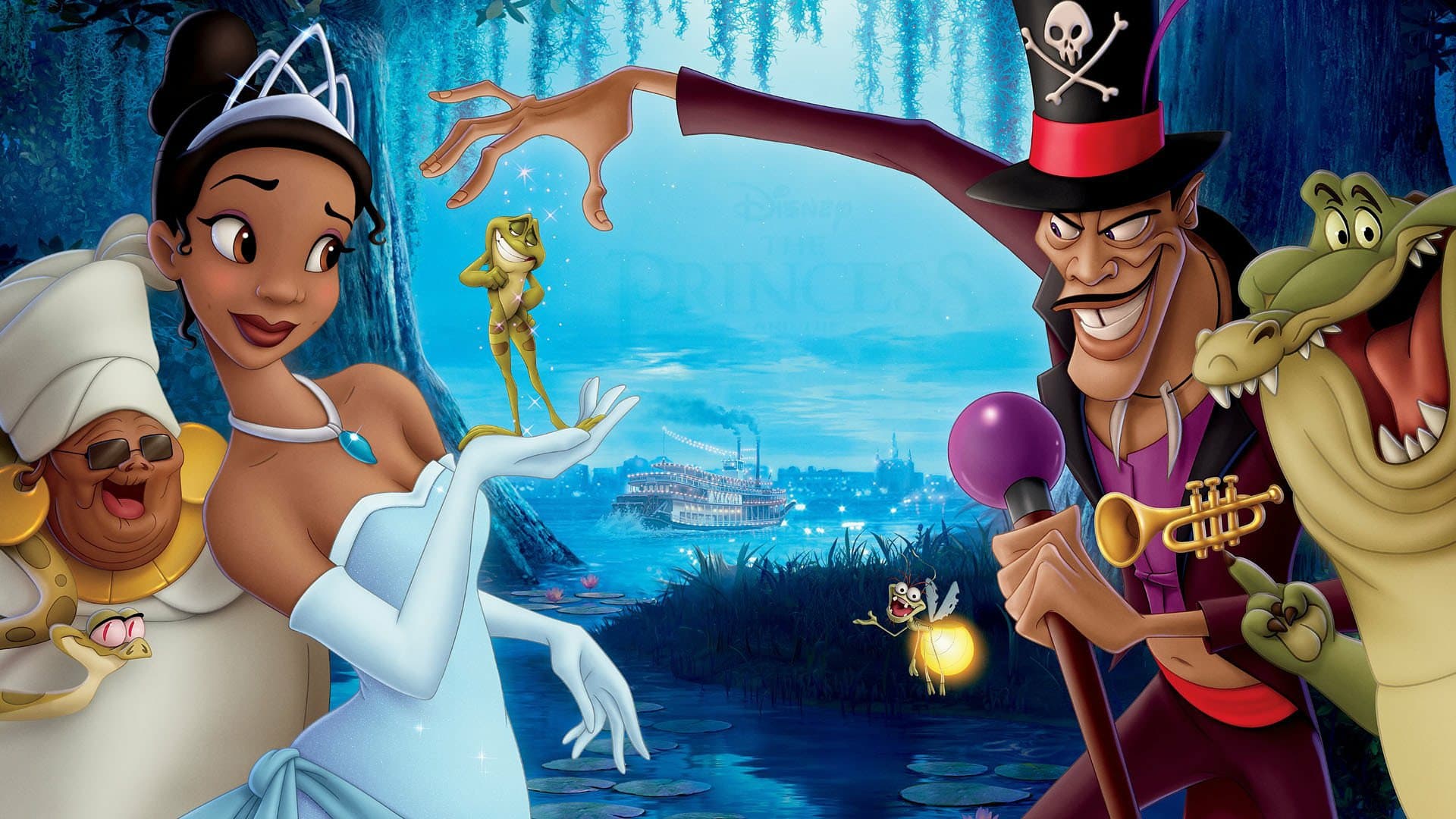

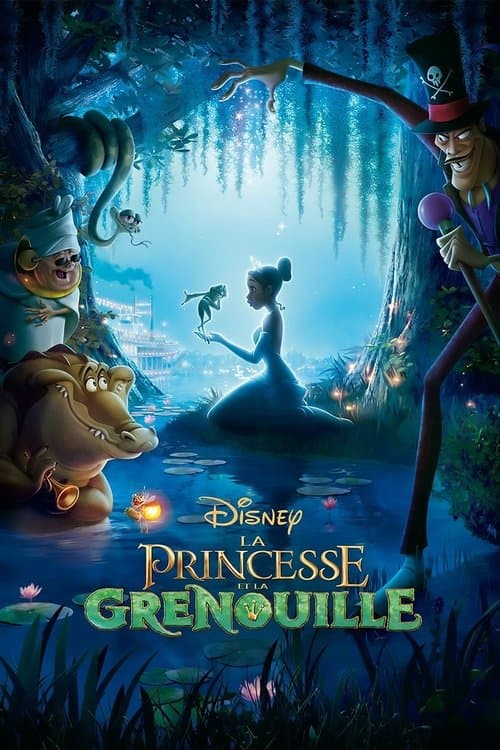
The Princess and the Frog
Does this age rating seem accurate to you?
Detailed parental analysis
The Princess and the Frog is a colourful animated musical tale from Disney, its bright atmosphere regularly darkened by sequences of black magic and a tangible supernatural threat. The story follows Tiana, a determined young woman intent on realising her dream of opening a restaurant in 1920s New Orleans, drawn unwillingly into a magical adventure with unforeseen consequences. The film is aimed primarily at children from age 6 onwards, but certain sequences involving voodoo and demonic spirits make it unsuitable for very young children.
Violence
The film's main threat is embodied by dark demonic spirits, visually oppressive creatures that hunt the characters and ultimately carry away the villain in an explicitly terrifying death: he is swallowed alive by a colossal mask surrounded by menacing shadows. This scene, intensely frightening for the target age group, represents the film's peak of horror. There are also sequences of cartoonish violence between swamp hunters, without serious consequences but visually crude. The death of an endearing secondary character occurs on screen, treated with emotion and transformed into poetic imagery, but the initial shock remains real for a young child. The violence is not gratuitous: it serves a clear narrative tension and a discourse on the consequences of pacts made with evil forces.
Underlying Values
The film constructs an explicit and coherent discourse on the value of work and personal effort, in direct opposition to the logic of magical wishes. Tiana consistently refuses shortcuts and her legitimate journey vindicates perseverance as the only credible path to fulfilment. As a counterpoint, the antagonist embodies a quest for power and wealth through deception, punished accordingly. The film also conveys the idea that love and a person's worth transcend social status and physical appearance, without ever reducing Tiana to her need for a romantic partner. The question of magic as a substitute for effort deserves to be discussed with children, especially since the film poses it itself with remarkable clarity for the genre.
Discrimination
The film sets its plot in segregationist New Orleans of the 1920s, and the racial context surfaces without being dealt with in depth: Tiana is refused access to a premises she wished to buy, a scene that evokes discrimination without naming it explicitly. Voodoo is represented exclusively from a demonic and threatening angle, caricaturing a living religious tradition by reducing it to its sole dimension of black magic. This representation, disconnected from the reality of Haitian vodou worship, deserves to be flagged: it perpetuates a stereotype that stigmatises a spiritual practice rooted in the African diaspora by systematically associating it with evil.
Parental and Family Portrayals
Tiana's father is a central and particularly well-crafted figure: a hardworking, loving man who carries a dream passed on to his daughter, he constitutes a positive and affectionate parental model, despite limited presence in the narrative. The mother is present, kind-hearted, but secondary. The father's absence as the narrative unfolds carries emotional weight and contributes to the main character's deep motivation, without falling into victimisation.
Substances
Alcohol is present in a light but recurring way: adult characters drink wine and champagne at festive scenes, and Tiana tastes wine in a fantasised musical sequence. Consumption remains unproblematised and normalised, without excess or drunkenness shown, but visible to a young audience.
Strengths
The film reconnects with the tradition of classical animated musicals whilst integrating a strong sonic identity rooted in jazz, blues and Louisiana zydeco, giving it a rare and authentic cultural colour within the genre. The characterisation of Tiana is solid: her arc rests on a tension between legitimate ambition and the human need for connection, handled with more nuance than appears at first glance. The film succeeds in making the morality of work and effort narratively convincing rather than moralising. Several songs carry a density of emotional and narrative information that requires a certain maturity to be fully grasped. The death of a secondary character, treated with tenderness and poetry, offers a gentle but honest entry point on the subject of grief.
Age recommendation and discussion points
The film is suitable from age 6 onwards, provided the child is not particularly sensitive to dark imagery and threatening creatures. Below age 5, the sequences of demonic magic are clearly too intense. Two angles of discussion merit being opened after viewing: why does the film associate voodoo exclusively with evil when it is a genuine spiritual tradition, and what is the difference between dreaming something and working to achieve it, a question that Tiana poses throughout the narrative.
Synopsis
A waitress, desperate to fulfill her dreams as a restaurant owner, is set on a journey to turn a frog prince back into a human being, but she has to face the same problem after she kisses him.
About this title
- Format
- Feature film
- Year
- 2009
- Runtime
- 1h 37m
- Countries
- United States of America
- Original language
- EN
- Studios
- Walt Disney Animation Studios
Content barometer
- Violence3/5Notable
- Fear4/5Intense
- Sexuality0/5None
- Language0/5None
- Narrative complexity1/5Accessible
- Adult themes1/5Mild
Values conveyed
- Perseverance
- Autonomy
- friendship
- love
- hard work
- generosity