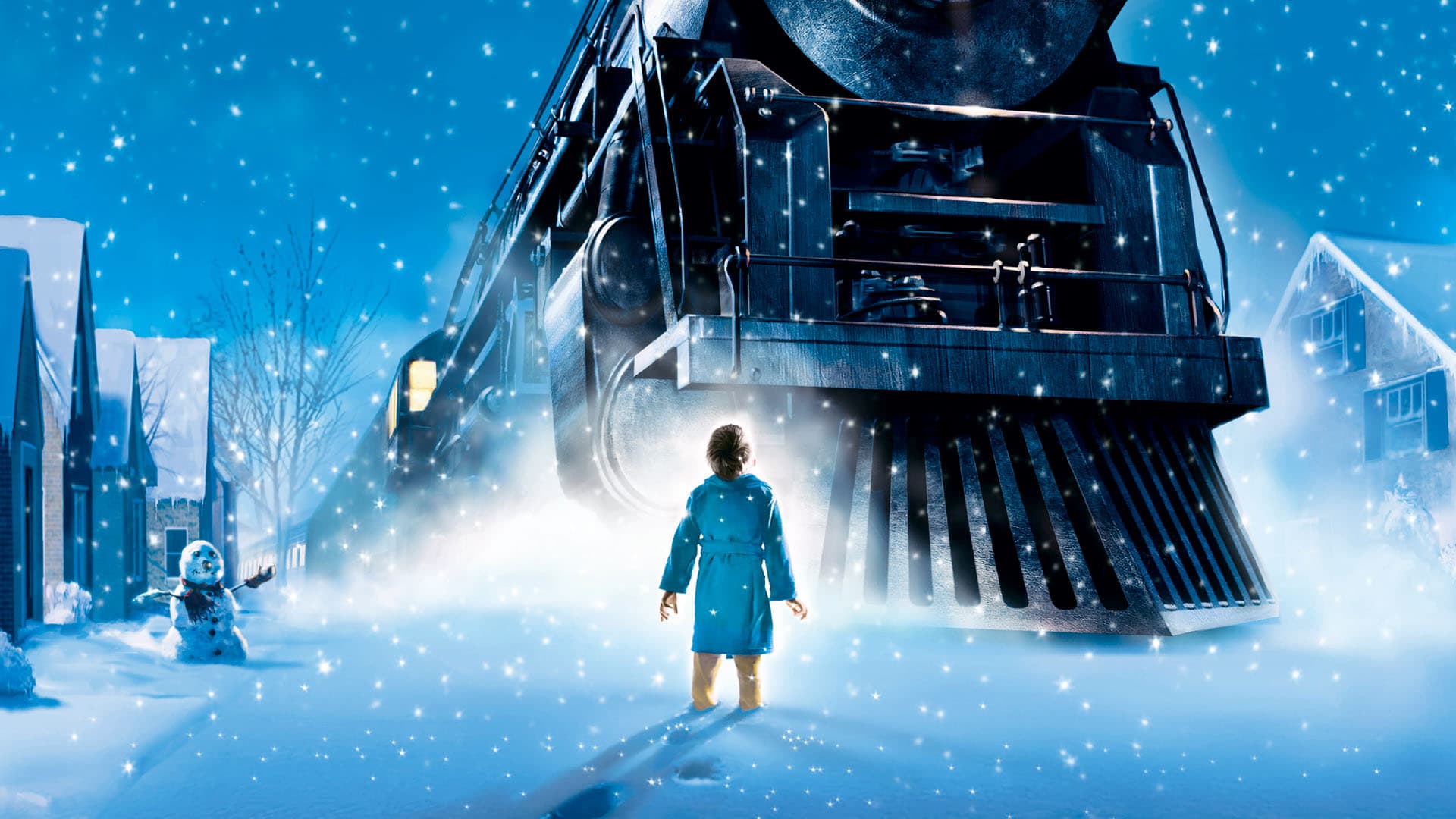


The Polar Express
Does this age rating seem accurate to you?
Detailed parental analysis
The Polar Express is a fantastical adventure film with an atmosphere that is both magical and strangely unsettling, oscillating between the wonder of Christmas and a visual tone that can disorient younger viewers. A boy plagued by doubt about Father Christmas's existence boards a mysterious train bound for the North Pole, accompanied by other children with contrasting personalities. The film is theoretically aimed at children from six or seven years old, but its visual treatment and suspenseful scenes make it more suitable from eight years onwards, with parental presence advised.
Violence
The film contains no violence in the strict sense, but accumulates sequences of intense physical suspense for a young audience. A child climbs onto the roof of a moving train and risks falling several times, the train derails onto a frozen lake whose ice fractures beneath the wheels with screams and sustained tension, and the initial arrival of the train is so sudden and thunderous that it can genuinely frighten younger children. These sequences are narratively justified and serve the coming-of-age arc, but their intensity is real and repeated.
Underlying Values
The narrative structures each child as a moral archetype on a path towards virtue: the hero learns to trust what he feels, the girl demonstrates a natural courage and leadership that others struggle to recognise, the solitary child learns to accept the presence of others, and the know-it-all character is confronted with humility. This mechanism is readable and pedagogically useful, but it is also quite rigid: each child embodies a lesson rather than a personality, which flattens the narrative somewhat. The central message, believing in something even without tangible proof, stems from a philosophy of faith and wonder that deserves to be discussed with the child, particularly for families who do not associate Christmas with a faith dimension.
Discrimination
The know-it-all character is presented in caricatural fashion: glasses, nasal voice, vain posture, and he serves as a comic foil until his partial redemption. The physical criticism associated with a character flaw (arrogance) is a problematic pattern that children easily internalise and which is worth pointing out explicitly after viewing.
Parental and Family Portrayals
The hero's parents appear briefly and play no active role in the adventure. Their absence is the condition of the coming-of-age journey, which is narratively coherent, but the film gives them no substance of their own. The true adult model is the train driver, a benevolent and enigmatic figure who guides without imposing.
Strengths
The film rests on a solid coming-of-age narrative, adapted from a classic illustrated picture book, and retains genuine emotional resonance for children of an age to be receptive to it. The structure of a journey with stages and archetypal characters works well as a first encounter with a narrative with multiple layers of meaning. The discreet philosophical dimension, believing without seeing, opening one's ears to what one does not wish to hear, gives parents material for substantive conversation after viewing. The visual atmosphere, despite its technical limitations, creates a nocturnal and wintry ambience that reinforces the sense of a world suspended between reality and dream, which remains an achievement of atmosphere.
Age recommendation and discussion points
The film is not recommended for children under six years old, and viewing is considerably more serene from eight years onwards for children sensitive to unsettling atmospheres. Two angles of discussion are worth opening after the film: firstly, why the character with glasses is presented as ridiculous, and whether being curious and knowing everything is really a flaw; secondly, the question of believing in something one cannot prove, a rich theme that each family can explore in their own way.
Synopsis
When a doubting young boy takes an extraordinary train ride to the North Pole, he embarks on a journey of self-discovery that shows him that the wonder of life never fades for those who believe.
About this title
- Format
- Feature film
- Year
- 2004
- Runtime
- 1h 40m
- Countries
- United States of America
- Original language
- EN
- Studios
- Golden Mean, Playtone, ImageMovers, Castle Rock Entertainment, Shangri-La Entertainment
Content barometer
- Violence2/5Moderate
- Fear3/5Notable tension
- Sexuality0/5None
- Language0/5None
- Narrative complexity2/5Moderate
- Adult themes0/5None
Watch-outs
- Gender stereotypes
Values conveyed
- Courage
- Acceptance of difference
- Perseverance
- friendship
- kindness
- wonder