The Painting
Le Tableau
Does this age rating seem accurate to you?
Detailed parental analysis
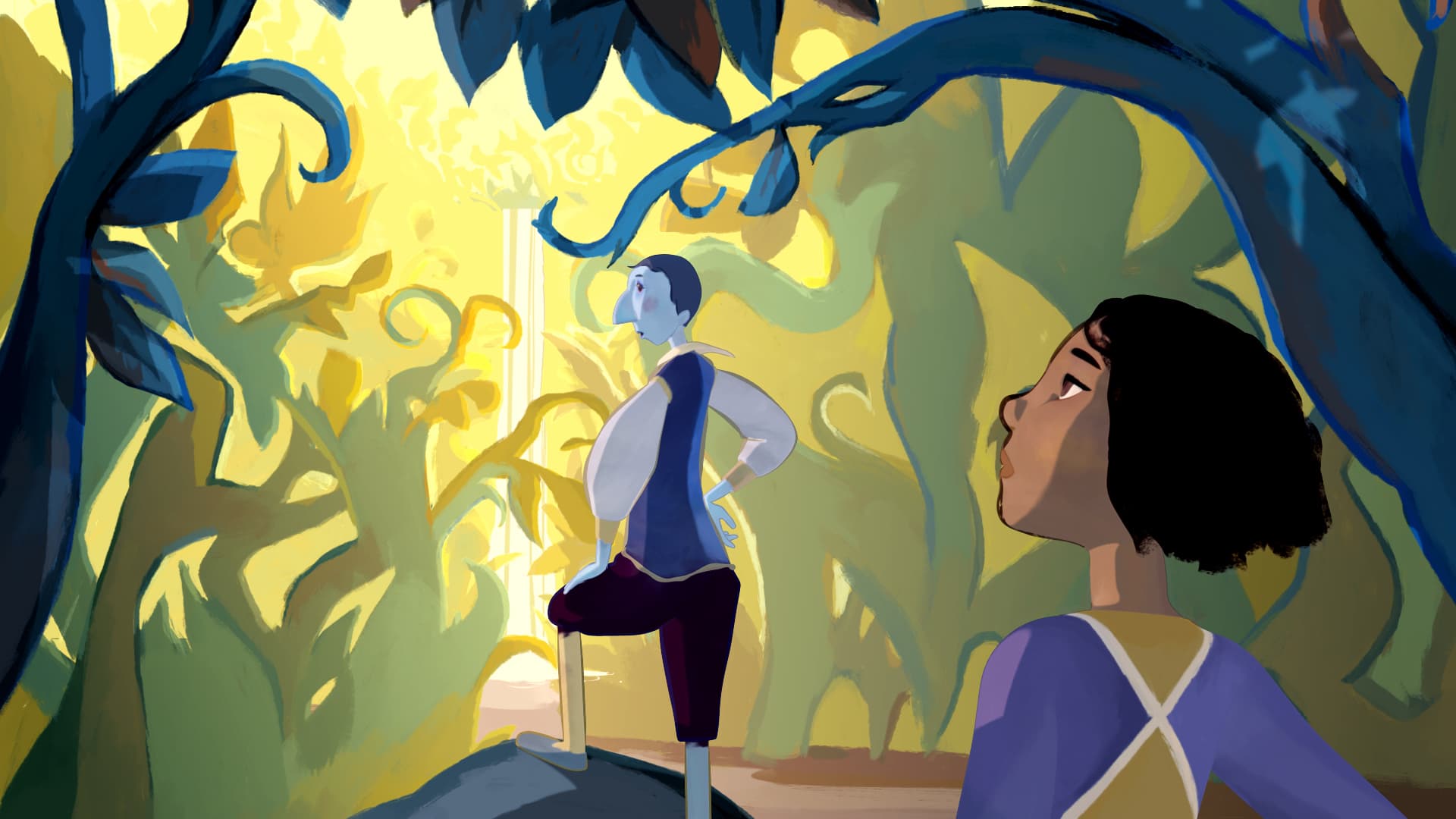
The Painting is a contemplative and poetic animated film with a pictorial aesthetic, its atmosphere oscillating between wonder and unease. The plot follows characters living inside an unfinished painting who set out to find their painter in order to understand why some of them have been left incomplete. The film is aimed at school-age children and upwards, but its narrative complexity and themes of identity and segregation make it more fully accessible to children aged 10 and above.
Violence
Violence is present recurrently and constitutes a genuine dramatic device. Incomplete characters are persecuted, chased on horseback with lances, threatened with bayonets, and one of them is trampled and then hurled from the top of a castle, left for dead. Lovers who are captured risk being painted black by an executioner, an image that can leave a lasting mark on a young child. A skeletal figure evoking death lurks throughout the narrative. These sequences are not gratuitous: they serve to illustrate the injustice of a system of domination, and the tension they generate is resolved narratively. But their visual and emotional intensity is real, and sensitive or younger children may be disturbed by them.
Underlying Values
The film constructs its narrative around a clear critique of segregation based on physical appearance: fully painted characters dominate and oppress those who are unfinished. This arbitrary hierarchy is presented as absurd and unjust, and the narrative progressively deconstructs it. The central value is that of autonomy: the characters ultimately paint themselves, refusing to wait for an external authority to complete or validate them. This is a powerful message about the capacity to define oneself, which deserves to be discussed with the child, particularly regarding what it means not to depend on the gaze of others in order to exist.
Discrimination
Discrimination is at the heart of the film and constitutes its main subject. The society represented in the painting is explicitly hierarchised according to the degree of completion of the characters, the fully painted Tupins dominating the partially finished Pafinis and scorning the Reufs, mere sketches. This metaphor of segregation is readable for children from a certain age onwards, and the film leaves no doubt that it condemns it. It is a solid pedagogical entry point for discussing discrimination, prejudice and the arbitrary construction of social hierarchies.
Social Themes
The film addresses political and social questions in allegorical form: the abuse of power, the fate of minorities, the legitimacy of authority and resistance to oppression. The forbidden forest, the zones reserved for the dominant and the spaces of relegation for incomplete characters draw a coherent social geography. These themes are treated with sufficient clarity to be understood by children aged 10 and upwards, and with sufficient depth to nourish serious discussion with adolescents.
Parental and Family Portrayals
The central figure of authority is that of the painter, the absent creator whose intentions and choices the characters seek to understand. This figure is ambivalent: it can destroy its works, it has left certain characters unfinished without explanation, and its dark and abandoned studio inspires a dull unease. The film implicitly poses the question of what one owes to those who have created or educated us, and of the legitimacy of freeing oneself from them. It is a reflection on parental and creative authority that may resonate differently depending on the child's age.
Strengths
The film is visually singular: its graphic universe borrows directly from styles of Western painting, from Impressionism to Expressionist flat colour, and this aesthetic coherence is maintained with genuine rigour. The central metaphor, of characters living inside a painting and seeking their painter, is an original narrative idea that naturally opens onto accessible philosophical questions: who are we without the gaze of the other, can we define ourselves, what is an unfinished work? The film thus offers a rare gateway to reflection on artistic creation and identity, without ever being didactic. Its contemplative pace and poetic sensibility make it an experience different from mainstream animated productions, which can be a precious discovery for a child accustomed to more frenetic formats.
Age recommendation and discussion points
The film is not recommended for children under 7 years old due to its violent sequences and anxiety-inducing images, and is fully recommended from age 10 onwards for calm and fruitful viewing. Two angles of discussion merit being opened after viewing: why do the fully painted characters believe themselves superior to others, and what does this recall in real life? And what does it mean that the characters ultimately paint themselves, without waiting for the painter's permission?
Synopsis
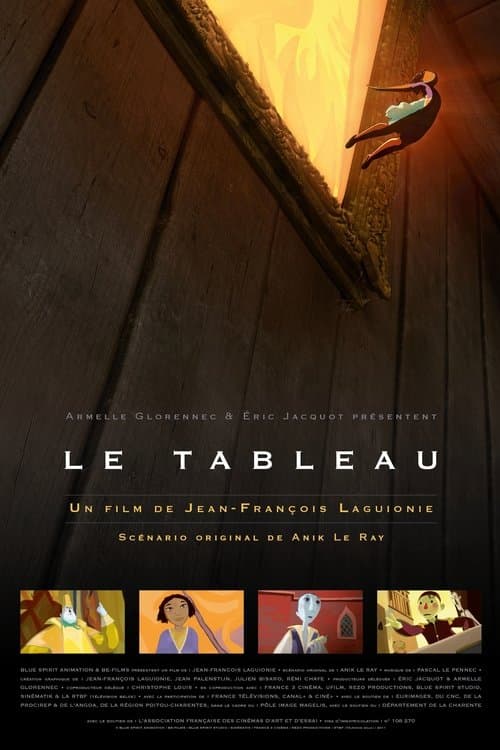
Three characters living in an unfinished painting venture out into the real world in search of their creator to convince him to finish his work.
Where to watch
Availability checked on Apr 29, 2026
About this title
- Format
- Feature film
- Year
- 2011
- Runtime
- 1h 36m
- Countries
- Belgium, France
- Original language
- FR
- Directed by
- Jean-François Laguionie
- Main cast
- Chloé Berthier, Thierry Jahn, Jessica Monceau, Céline Ronté, Adrien Larmande, Magali Ronsenzweig, Jean-François Laguionie, Julien Bouanich, Serge Faliu, Thomas Sagols
- Studios
- Blue Spirit, Be-FILMS, uFilm, Rezo Productions, Sinématik, France 3 Cinéma, RTBF
Content barometer
- Violence3/5Notable
- Fear3/5Notable tension
- Sexuality0/5None
- Language0/5None
- Narrative complexity1/5Accessible
- Adult themes0/5None
Watch-outs
Values conveyed
- Acceptance of difference
- Autonomy
- friendship
- tolerance
- courage
- equality