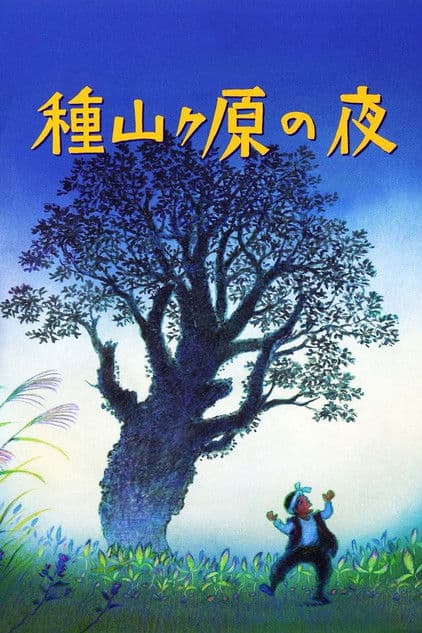
The Night of Taneyamagahara
種山ヶ原の夜
Does this age rating seem accurate to you?
Detailed parental analysis
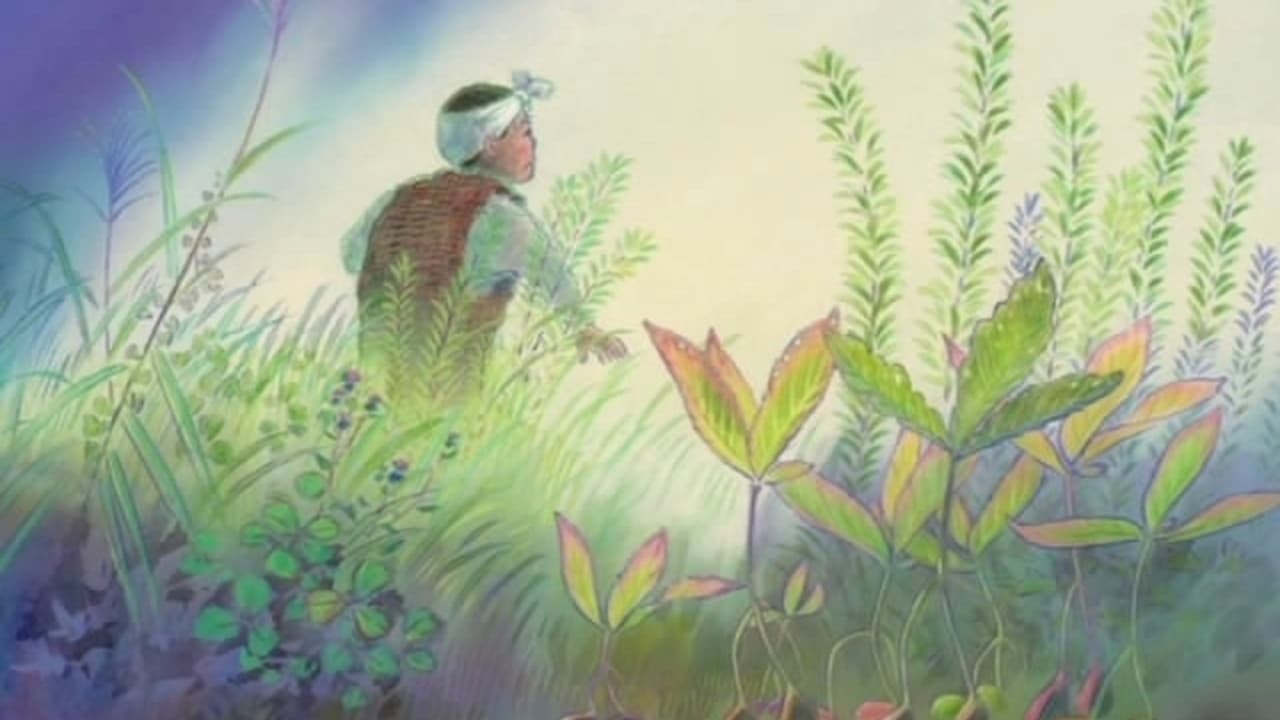
A contemplative and dreamlike animated short film, this work is steeped in a nocturnal and silent atmosphere, hovering at the boundary between dream and the natural world. A woodcutter falls asleep in a forest and witnesses, in his slumber, an assembly of deities and tree spirits deliberating over the forest's fate. The film is primarily aimed at young children, in the tradition of classical Japanese moral tales, yet its slow pace and refined aesthetic make it more accessible to calm and curious children than to younger viewers accustomed to dynamic animated formats.
Underlying Values
The narrative is entirely structured around an ethic of respect towards non-human life. The forest is not merely a backdrop but an inhabited world, endowed with its own voices and rights, and humanity is a tolerated guest rather than a master. This vision, inherited from Kenji Miyazawa's Buddhist philosophy, places gratitude and humility at the heart of the message: nature offers its resources without monetary exchange, and this generosity calls for reciprocity. The film does not moralise in a heavy-handed manner, but the lesson is clear and structuring for the entire narrative. It opens a rich avenue for discussion with a child: what does it mean to share the world with beings we cannot see?
Social Themes
The relationship between human needs and environmental preservation lies at the heart of the film, without ever veering into activist discourse. The woodcutter represents a humanity that draws from nature to survive, and the forest spirits embody a form of collective consciousness of the natural world. The film implicitly raises the question of the legitimacy of resource exploitation, without condemning the human character. This tension, treated with gentleness, offers a concrete entry point for discussing ecology with a child without resorting to catastrophism.
Violence
A sudden appearance of a thunder god in the dreamlike sequence may surprise or unsettle more sensitive children. The eruption is brief and registers in a supernatural rather than violent register, but the unexpected nature of the scene warrants anticipation for younger or easily frightened children.
Strengths
The film draws its strength from a remarkable fidelity to Kenji Miyazawa's poetic universe, which it restores with an assumed economy of means. The refined aesthetic, akin to animated illustration, imposes a rhythm of contemplation rare in animation aimed at young audiences, and constitutes in itself a singular aesthetic experience. The original text, written in 1924, retains an intact philosophical freshness: it speaks to the child without condescension and opens questions about the natural world that far exceed the scope of the tale. For a parent, it is also a gateway to Japanese children's literature and to a narrative tradition that values silence, observation and coexistence.
Age recommendation and discussion points
The film is suitable from age 5 or 6 for children comfortable with slow-paced narratives and dreamlike imagery, provided the appearance of the thunder god is anticipated for more sensitive viewers. Two angles of discussion are worth exploring after viewing: ask the child what he or she thinks about the fact that trees and spirits have their own assembly and their own rules, and explore with them what it means to take something from nature in exchange for nothing.
Synopsis
Four farmers spend the night at a campfire. Three of them talk about work, nature and weather, while one of them has dreams about buying his own plot.
About this title
- Format
- Short film
- Year
- 2006
- Runtime
- 27m
- Countries
- Japan
- Original language
- JA
- Directed by
- Kazuo Oga
- Main cast
- Hatsuo Yamaya, Shinchou Kokontei, Yuriko Ishida, Makoto Nonomura
- Studios
- Studio Ghibli
Content barometer
- Violence1/5Mild
- Fear2/5A few scenes
- Sexuality0/5None
- Language0/5None
- Narrative complexity0/5Simple
- Adult themes0/5None
Values conveyed
- Acceptance of difference
- Compassion
- nature
- empathy
- resilience
- solidarity