The Lord of the Rings: The Two Towers
Does this age rating seem accurate to you?
Detailed parental analysis
The Lord of the Rings: The Two Towers is an epic fantasy film with a dark, tense and at times contemplative atmosphere, primarily aimed at a teenage and adult audience. The plot follows several separated groups of characters converging towards total war against the forces of evil, at the heart of a Middle-earth on the brink of annihilation. The running time of nearly three hours, sustained emotional intensity and recurring violence effectively exclude young children.
Violence
Violence is the most prominent element of the film and runs through the entire narrative. Battles are numerous, spectacular and deadly: sliced bodies, creatures killed en masse, battlefields strewn with corpses. The film culminates in a nocturnal battle of sustained scale and brutality, among the most intense in the genre. The violence is predominantly narrative and functional, illustrating the stakes of war and its devastation without gratuitous indulgence, but it is never softened. To this are added more personal scenes of assault, notably the savage attack of a character scratching and biting, and a scene of abuse where a creature is beaten to the ground whilst weeping, which may leave a lasting impression on the most sensitive viewers.
Underlying Values
The film rests on a solid and intelligible system of values: loyalty, friendship and selfless sacrifice are presented as the only viable responses to totalitarian threat. The courage of the humble against the overwhelming power of evil is the central emotional driving force, embodied particularly strongly by the character of Sam. However, the narrative also relies on a very binary worldview where good and evil are rarely ambiguous, which merits discussion with a teenager: the reality of actual conflicts is seldom cut and dried.
Social Themes
War is the dominant societal subject of the film, treated with genuine gravity. The film does not glorify military violence for its own sake but shows its human costs, the fear preceding battle, irreplaceable losses and the moral exhaustion of combatants. The character of the Ent, a tree-shepherd who eventually takes up arms after losing his forest, carries an implicit ecological dimension regarding the destruction of nature by the industrial forces of evil, a theme sufficiently present to sustain conversation.
Discrimination
The film presents an asymmetry in representation worth noting. The enemy armies include the Haradrim, fighters with darker complexions from the south and east, placed on the side of evil without nuance or their own perspective. This choice, inherited from the original text, perpetuates a Western schema in which geographical and ethnic otherness is associated with threat. A teenager capable of raising the question deserves an honest answer about the era of the work's writing and its cultural blind spots.
Parental and Family Portrayals
Parental and family figures are virtually absent as such, but the film develops very strong bonds of elective brotherhood, notably between Frodo and Sam, whose relationship functions as a protective familial substitute. The dynamic of guardianship and mutual care between these two characters offers an unusual and touching representation of assumed masculine vulnerability.
Strengths
The film is a work of rare narrative and visual ambition, which succeeds in making several dramatic threads coexist without losing the viewer. The characterisation of secondary figures, notably Gollum whose psychological duality is rendered with remarkable subtlety, offers a concrete introduction to questions of moral philosophy accessible from adolescence onwards: can one hate a being whom one pities, is corruption irreversible, does compassion have strategic value? The staging of collective fear and doubt facing adversity goes beyond mere spectacle to touch something universally human. For a teenager, the film also constitutes an entry point into a major literary tradition.
Age recommendation and discussion points
The film is not recommended before age eleven due to intense violence, frightening creatures and demanding length; a calm viewing is possible from age twelve or thirteen for a child accustomed to dark narratives and accompanied by an adult. Two angles of discussion are particularly worthwhile after viewing: why Gollum elicits both revulsion and compassion, and what this tells us of our capacity to judge others; and in what sense the war represented in the film resembles or differs from actual conflicts.
Synopsis
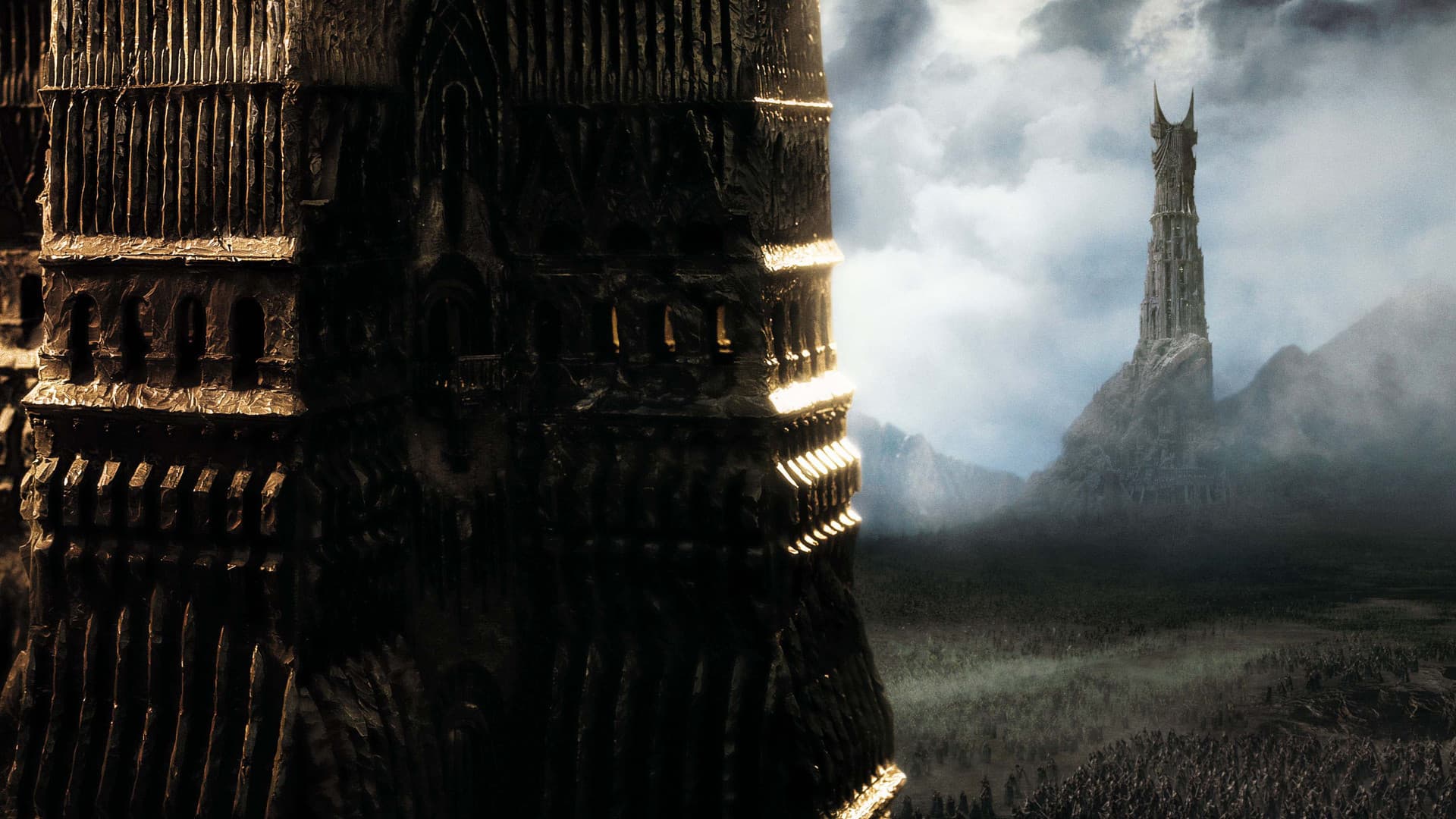
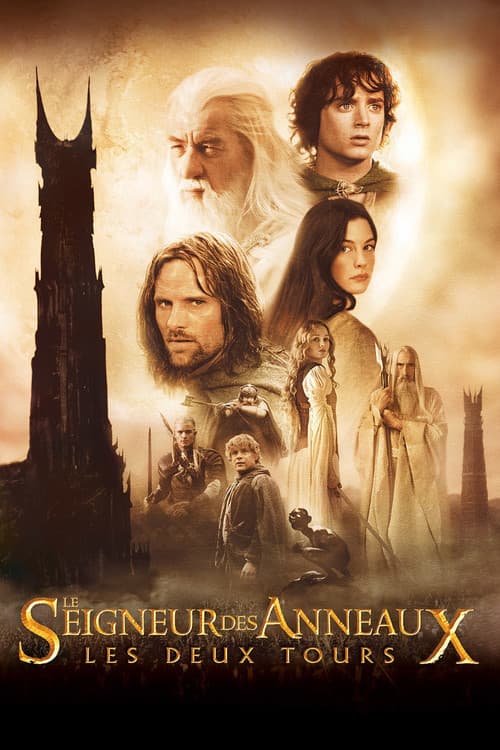
Frodo Baggins and the other members of the Fellowship continue on their sacred quest to destroy the One Ring--but on separate paths. Their destinies lie at two towers--Orthanc Tower in Isengard, where the corrupt wizard Saruman awaits, and Sauron's fortress at Barad-dur, deep within the dark lands of Mordor. Frodo and Sam are trekking to Mordor to destroy the One Ring of Power while Gimli, Legolas and Aragorn search for the orc-captured Merry and Pippin. All along, nefarious wizard Saruman awaits the Fellowship members at the Orthanc Tower in Isengard.
Where to watch
Availability checked on Apr 03, 2026
About this title
- Format
- Feature film
- Year
- 2002
- Runtime
- 3h
- Countries
- New Zealand, United States of America
- Original language
- EN
- Directed by
- Peter Jackson
- Main cast
- Elijah Wood, Ian McKellen, Viggo Mortensen, Sean Astin, Andy Serkis, John Rhys-Davies, Orlando Bloom, Bernard Hill, Miranda Otto, Dominic Monaghan
- Studios
- New Line Cinema, WingNut Films, The Saul Zaentz Company
Content barometer
- Violence4/5Strong
- Fear4/5Intense
- Sexuality0/5None
- Language1/5Mild
- Narrative complexity4/5Very complex
- Adult themes0/5None
Watch-outs
- Death
- Ethnic or racial stereotypes
- Violence
- Abuse