The Lord of the Rings: The Return of the King
Does this age rating seem accurate to you?
Detailed parental analysis
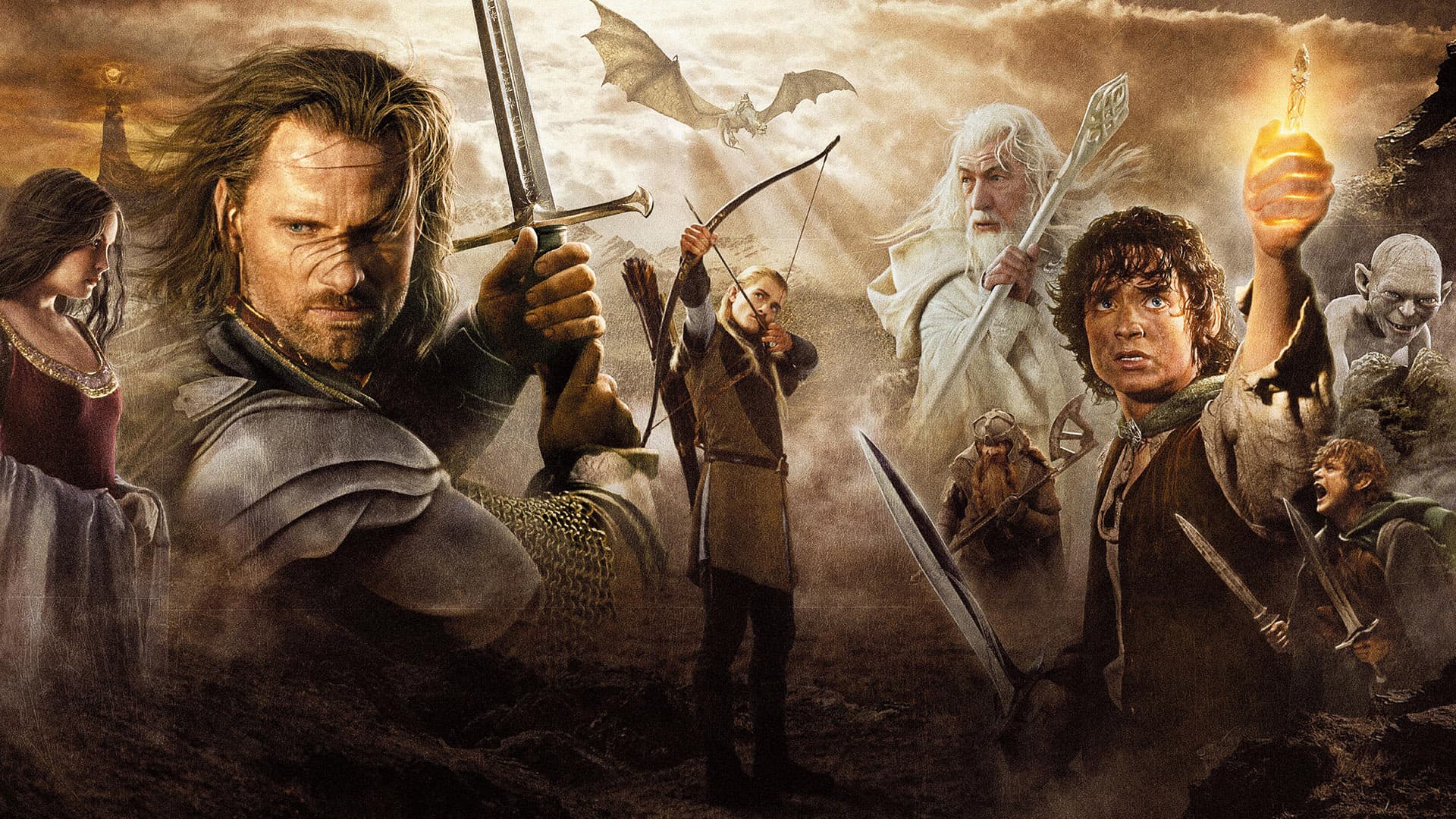
The Return of the King is an epic adventure film with a dark and grandiose atmosphere, concluding a large-scale fantasy trilogy. The plot follows the convergence of multiple destinies towards a final battle between the forces of good and those of a Lord of Darkness, whilst a humble hobbit must accomplish an impossible mission at the heart of enemy territory. The film is aimed at teenage and adult audiences, with no ambiguity whatsoever regarding its unsuitability for young children.
Violence
Violence is the most salient element of the film and it is omnipresent. The battles are of crushing scale, with bloody hand-to-hand combat, visible deaths in large numbers, monstrous creatures devastating entire ranks of soldiers. Certain sequences exceed conventional spectacle: severed heads are hurled by catapult onto a besieged city, Gollum tears off a finger with his teeth, a character attempts self-immolation with his wounded son. This violence is not gratuitous in narrative terms: it serves an epic in which sacrifice carries a real price and in which war is never presented as glorious without human cost. It remains nonetheless intense, sustained and visually striking, which renders it clearly unsuitable for children and potentially disturbing for sensitive pre-teenagers.
Underlying Values
The narrative is structured around sacrifice as a supreme value: several characters renounce their comfort, their safety, even their immortality for the collective good. Friendship is treated with rare depth, embodied in the relationship between Frodo and Sam where one literally carries the other when he can no longer move forward alone. Power is represented as corruption, and the film affirms that the most modest beings, those whom no one considers heroes, may be the only ones capable of accomplishing what brute force cannot. These are solid value axes that merit being named explicitly after viewing.
Discrimination
The film inherits a visible representational imbalance: the heroic figures and holders of power are almost exclusively white and male, whilst the most anonymous enemy combatants, notably the Haradrim, are peoples of dark skin bearing adornments evoking the Middle East or North Africa. This visual correspondence between ethnic alterity and the enemy side is a genuine point of friction, which is neither commented upon nor questioned by the narrative. This is not deliberate malice, but it is a pattern sufficiently legible to merit being addressed with a teenager, particularly if they are attentive to representation.
Substances
Tobacco appears several times in the form of pipe smoke, practised by the hobbits in a clearly comic and benevolent register. One scene features a dwarf and an elf engaging in a drinking contest to intoxication, treated likewise in a humorous tone. These two representations positivise intoxicating behaviours without the slightest critical perspective. This is not a central element of the film, but its light tone on these points contrasts with the gravity of the remainder and may warrant a passing remark.
Social Themes
The film deploys an implicit reflection on war and power that exceeds the scope of pure entertainment. Resistance in the face of absolute totalitarian power, the temptation of corruption by an object of domination, and the burden borne by the most humble in conflicts decided by the powerful are structuring themes. The film does not propose explicit political discourse, but it offers rich material for addressing with a teenager the mechanisms of totalitarianism, propaganda or collective resistance.
Strengths
The film offers a narrative construction of rare density for the genre: multiple arcs converge with strong emotional coherence, without one overwhelming the others. The writing of secondary characters is careful, and certain scenes attain genuine dramatic intensity without resorting to easy manipulation. The musical score accompanies the narrative with intelligence, amplifying moments of exhaustion as much as those of relief. As a conclusion to a foundational literary epic, the film also constitutes a gateway to a seminal work of modern fantasy, and may prompt a teenager to wish to read Tolkien, to reflect upon mythology or upon what the fantasy genre says of human history.
Age recommendation and discussion points
The film is not recommended before age 12 due to sustained violence and frankly frightening imagery; serene viewing is better suited around 14-15 years, depending on the teenager's sensitivity. Two angles of discussion are worth pursuing after the film: why does the narrative choose to entrust the salvation of the world to an ordinary and fragile character rather than to a powerful hero, and what should one think of the fact that anonymous enemies are visually associated with non-Western peoples whilst all heroes are white.
Synopsis
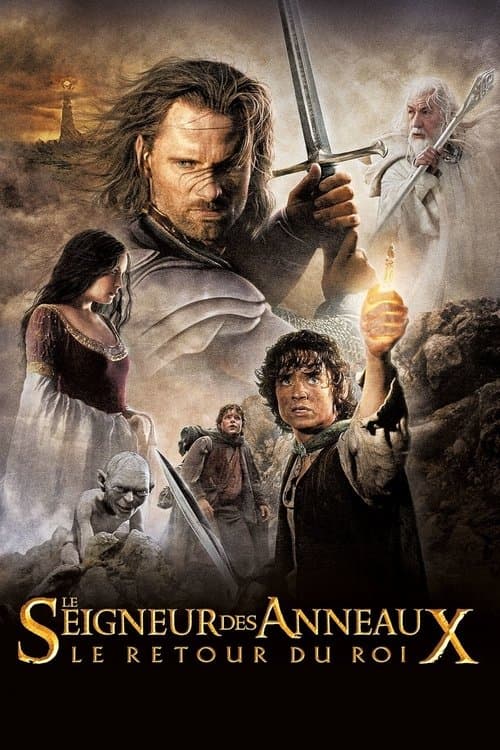
As armies mass for a final battle that will decide the fate of the world--and powerful, ancient forces of Light and Dark compete to determine the outcome--one member of the Fellowship of the Ring is revealed as the noble heir to the throne of the Kings of Men. Yet, the sole hope for triumph over evil lies with a brave hobbit, Frodo, who, accompanied by his loyal friend Sam and the hideous, wretched Gollum, ventures deep into the very dark heart of Mordor on his seemingly impossible quest to destroy the Ring of Power.
Where to watch
Availability checked on Apr 03, 2026
About this title
- Format
- Feature film
- Year
- 2003
- Runtime
- 3h 21m
- Countries
- New Zealand, United States of America
- Original language
- EN
- Directed by
- Peter Jackson
- Main cast
- Elijah Wood, Ian McKellen, Viggo Mortensen, Sean Astin, Andy Serkis, Dominic Monaghan, Billy Boyd, John Noble, David Wenham, Miranda Otto
- Studios
- New Line Cinema, WingNut Films, The Saul Zaentz Company
Content barometer
- Violence4/5Strong
- Fear4/5Intense
- Sexuality0/5None
- Language0/5None
- Narrative complexity4/5Very complex
- Adult themes2/5Present
Values conveyed
- Courage
- Friendship
- Perseverance
- Loyalty
- sacrifice