

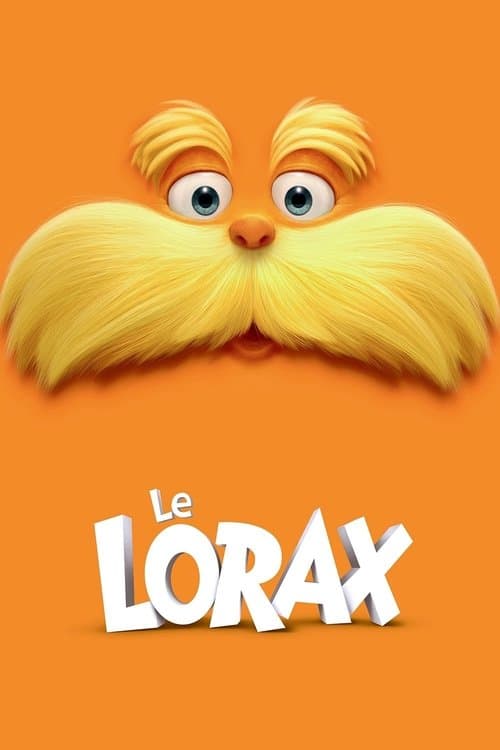
The Lorax
Does this age rating seem accurate to you?
Detailed parental analysis
The Lorax is a family animated film with a colourful and musical atmosphere, infused with a fairly pronounced ecological activist dimension. The plot follows a young boy who seeks to give a real tree to the girl he loves, in an entirely artificial world, and whose quest leads him to discover how nature was destroyed by an unscrupulous entrepreneur. The film primarily targets children from 6 or 7 years old, but its themes and certain scenes make it more suitable for 8-10 year-olds and beyond.
Social Themes
Ecology is the absolute heart of the film: the destruction of an entire forest by greedy industry, the suffering of animals driven from their habitat, widespread pollution and the commodification of clean air make up the substance of the message. The message is deliberate and direct, which constitutes genuine pedagogical strength, but the treatment is poorly nuanced: industrial capitalism is embodied by a caricatural antagonist, without true systemic complexity. The film pushes towards individual activism, presenting a single child as capable of overturning the established order by planting a seed, which is inspiring but can give a simplified vision of social transformation. It is an excellent starting point for discussing with a child the human impact on nature, provided you supplement the picture.
Underlying Values
The film strongly values individual commitment, personal responsibility in the face of collective injustice and the courage to speak when others remain silent. These values are positive and well embodied narratively. However, the redemption of the entrepreneur responsible for the ecological catastrophe comes quite easily, which raises a real question about adult responsibility for the damage they have caused. The film also conveys a critique of consumerism, but this critique is largely contradicted by the numerous commercial operations that accompanied its release, a paradox that adolescents are perfectly able to perceive and which deserves to be discussed.
Violence
Physical violence is absent, but certain sequences are emotionally intense and can be anxiety-inducing for the youngest viewers: a character drifts in a bed along a river and comes close to falling over a waterfall in a potentially frightening scene. The progressive disappearance of animals and the desolation of the ravaged landscape constitute a form of muted, sad and heavy narrative violence, which sensitive children may experience with discomfort. These moments have a clear narrative purpose and serve the ecological message, but it is wise to anticipate their impact on the youngest.
Language
The language is globally very mild. A few slightly disparaging terms such as "stupid" or "idiot" are present occasionally. A line of dialogue from the Lorax, delivered in an expressive tone, may sound like a swear word to some viewers even though it is not formally one. Nothing that requires particular preparation.
Parental and Family Portrayals
Parental figures are present but little developed, relegated to the background of a plot centred on the autonomy of the young protagonist. This stepping back of adults is typical of the genre and reinforces the message of emancipation, without constructing a negative parental model.
Strengths
The film adapts Dr. Seuss's illustrated book with genuine visual generosity: the settings of the vanished natural world are inventive, warm and effectively contrast with the plastic and sterile universe of the artificial city. The songs are well integrated into the narrative and carry the message without weighing it down. On an educational level, the film offers an accessible and emotionally engaging introduction to environmental issues for school-age children. The figure of the Lorax, guardian of nature who can speak but cannot act on behalf of humans, is a narratively interesting metaphor for the limits of protest in the face of indifference.
Age recommendation and discussion points
The film is suitable from 7 years old for supervised viewing, and fully appropriate from 8-9 years old without major reservations. Two angles of discussion deserve to be opened after viewing: why it is so difficult to protect nature when many adults are aware of the damage, and how to explain that a film which criticises overconsumption sold dozens of merchandise products for its cinema release.
Synopsis
A 12-year-old boy searches for the one thing that will enable him to win the affection of the girl of his dreams. To find it he must discover the story of the Lorax, the grumpy yet charming creature who fights to protect his world.
About this title
- Format
- Feature film
- Year
- 2012
- Runtime
- 1h 27m
- Countries
- United States of America, Japan
- Original language
- EN
- Studios
- Illumination, dentsu
Content barometer
- Violence1/5Mild
- Fear2/5A few scenes
- Sexuality0/5None
- Language1/5Mild
- Narrative complexity1/5Accessible
- Adult themes0/5None
Values conveyed
- Courage
- Perseverance
- Autonomy
- environment
- family