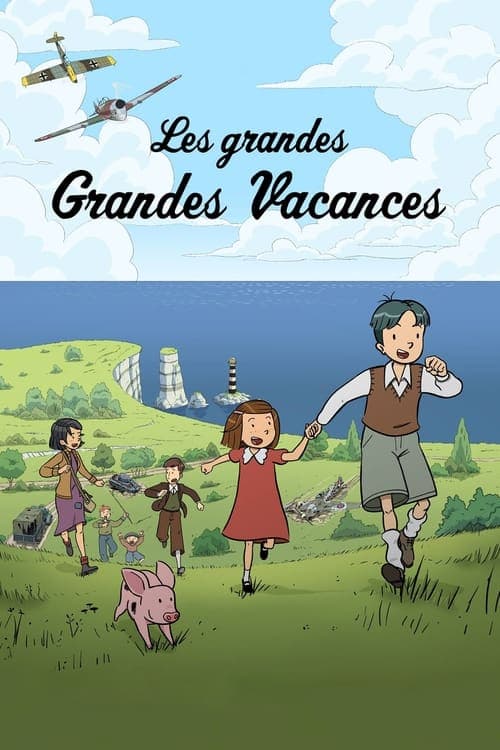
The Long, Long Holiday
Does this age rating seem accurate to you?
Detailed parental analysis
Les Grandes Grandes Vacances is an animated series with a bittersweet atmosphere, blending childhood carefree spirit with historical gravity in a remarkably balanced way. The plot follows two Parisian children sent to their grandparents in Normandy at the beginning of the Second World War, and who will live through the Occupation alongside a young anti-Nazi German. The narrative is primarily aimed at children from 7 years old, but its emotional and historical depth makes it an equally relevant experience for parents watching alongside them.
Social Themes
War is the structuring framework of the entire series, present in every episode without ever being softened or overwhelming. Bombings, arrests, the deportation of Jewish families and the death of a character at Auschwitz are addressed head-on, with clear language, but without traumatising images. It is precisely this narrative choice that makes the series valuable: it speaks of things, it does not hide them, but it leaves the child space to integrate them at their own pace. The Occupation is shown in its complexity, with French resisters, implicit collaborators and a German soldier who refuses to be the enemy one expected. The question of forced migration and uprooting also runs through the narrative through children separated from their parents.
Underlying Values
The series carries an assumed French patriotism, embodied by children who sing the Marseillaise and dream of fighting for their country. This sentiment is presented with warmth and sincerity, without critical distance, which deserves to be discussed with a child: patriotism as an impulse of protection and belonging is not the same thing as nationalism, and the series does not confuse the two. In parallel, the character of Otto, a sympathetic and humanist German soldier, constitutes a strong counterpoint: he embodies the idea that the uniform does not make the enemy, and that rejecting the other solely on the basis of their origin is a moral error. Intergenerational solidarity and the protection of children by adults, even at the risk of their own safety, are structuring values of the narrative.
Violence
Violence is present but always contained in its visual effects. Bombings are shown with explosions and gunfire, the death of a horse during an air attack is explicit in its announcement, and a scene of nocturnal struggle between a child and a wild boar creates real physical tension. A scene of gunfire whose outcome remains deliberately ambiguous may cause concern in younger viewers. Death, notably that of the Jewish character Fernand, is announced clearly without being shown. This approach, which speaks without exhibiting, is narratively sound and pedagogically solid: it prepares the child to understand without subjecting them to images that would exceed their capacity to process.
Discrimination
The persecution of Jews is at the heart of the narrative and treated with seriousness: arrests, deportation, death in an extermination camp are named. The series does not caricature the perpetrators but neither does it absolve them. The character of Otto allows one to question the view held of the German as such, and the series takes a clear stance against the rejection of the foreigner based on nationality or origin. These representations are a direct invitation to discuss with the child what it means to judge someone on what they are rather than what they do.
Language
Colloquial language is present in a sporadic way, with terms such as bastard, fool or mugs. These words fit within a popular and rural register consistent with the period and the characters, without gratuitous vulgarity or shocking accumulation. It is not a major point of concern, but it is worth noting for parents most attentive to vocabulary.
Parental and Family Portrayals
The parents of the two protagonist children are absent for most of the series, either held back in Paris or deported depending on circumstances. This absence is the emotional driver of the narrative and generates a form of separation anxiety that can resonate strongly with young children. The grandparents who welcome them are loving, protective and courageous figures, offering a solid adult model as a substitute. The reconstituted and improvised family that forms around the children is one of the most touching elements of the series.
Strengths
The series achieves something rare: treating the Second World War and the Occupation from a child's perspective without ever falling into condescension or gratuitous trauma. The writing maintains a constant balance between moments of carefree spirit, play and friendship, and sequences where historical reality imposes itself with all its gravity. The character of Otto is a particularly fine construction, which avoids manichaeism without ever minimising the crimes of the regime he serves despite himself. The series has real pedagogical value on the period, not as an illustrated history lesson, but as an emotional experience that makes one want to understand. It constitutes a solid entry point for addressing with a child notions such as resistance, collaboration, deportation and the moral complexity of individuals in wartime.
Age recommendation and discussion points
The series is suitable from 7 years old for a child accompanied by an adult, and can be watched confidently independently from 9 years old. Two angles of discussion naturally present themselves after viewing: why is Otto, who wears the German uniform, on the side of the good, and what does this teach us about the way we judge people? And how do we speak of Fernand's death, of what it means to be deported, and why did this happen?
Synopsis
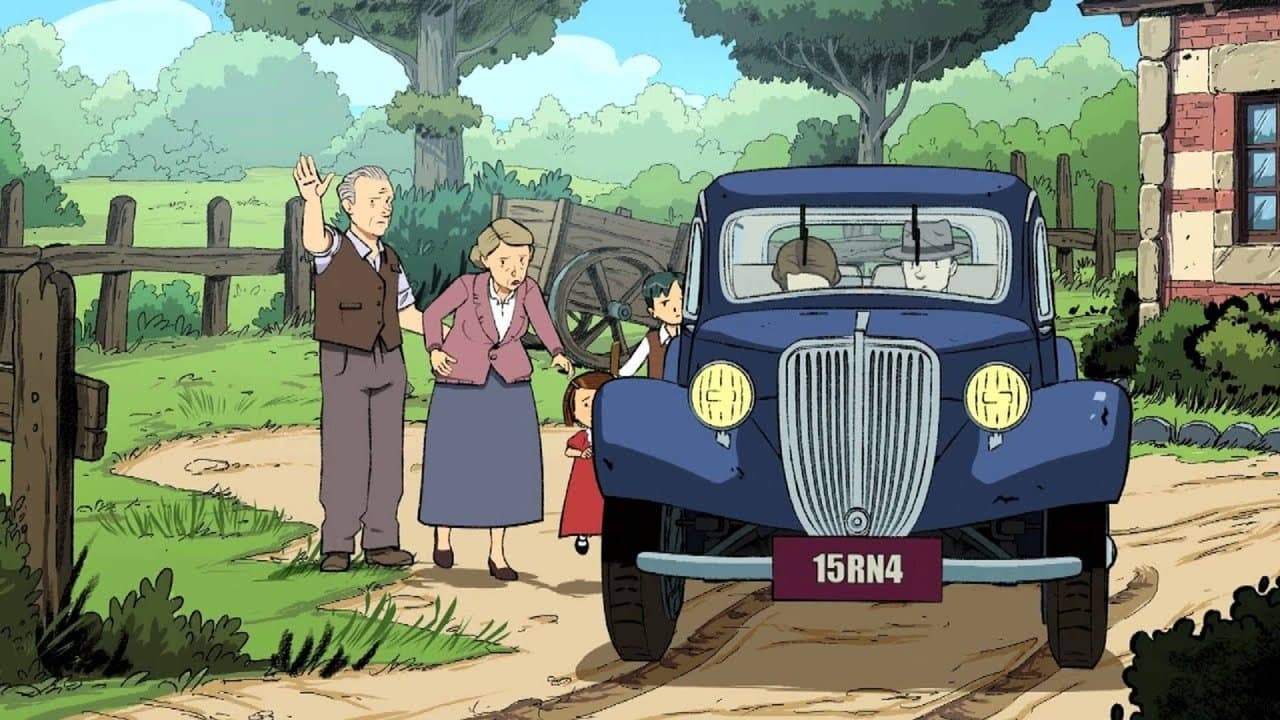
In September 1939, Colette and Ernest are welcomed by their maternal grandparents in a fictional village named Grangeville, near Dieppe in Normandy. The short vacation becomes semi-permanent when their father goes off to fight, following the mobilization of France to fight the invading German Army, and the poor health of their mother, required to leave to be treated for tuberculosis in a sanatorium in Switzerland. The two little Parisians discover life in the countryside during wartime, including occupation, Resistance, deprivation, but also life with friends.
About this title
- Format
- TV series
- Year
- 2015
- Runtime
- 26m
- Countries
- France
- Original language
- FR
- Directed by
- Delphine Maury, Olivier Vinuesa
- Main cast
- Antoine Lelandais, Philippe Catoire, Julien Crampon, Julien Alluguette, Cédric Dumond, Clara Quilichini, Benjamin Bollen, Dorothée Pousséo
- Studios
- Les Armateurs, Blue Spirit
Content barometer
- Violence2/5Moderate
- Fear3/5Notable tension
- Sexuality0/5None
- Language1/5Mild
- Narrative complexity2/5Moderate
- Adult themes0/5None
Values conveyed
- Courage
- Acceptance of difference
- Loyalty
- friendship
- solidarity
- resilience