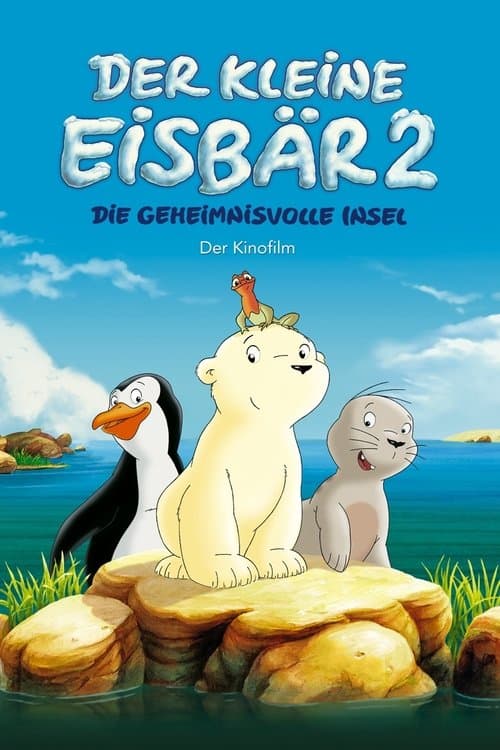
The Little Polar Bear 2: The Mysterious Island
Der kleine Eisbär 2 - Die geheimnisvolle Insel
Does this age rating seem accurate to you?
Detailed parental analysis
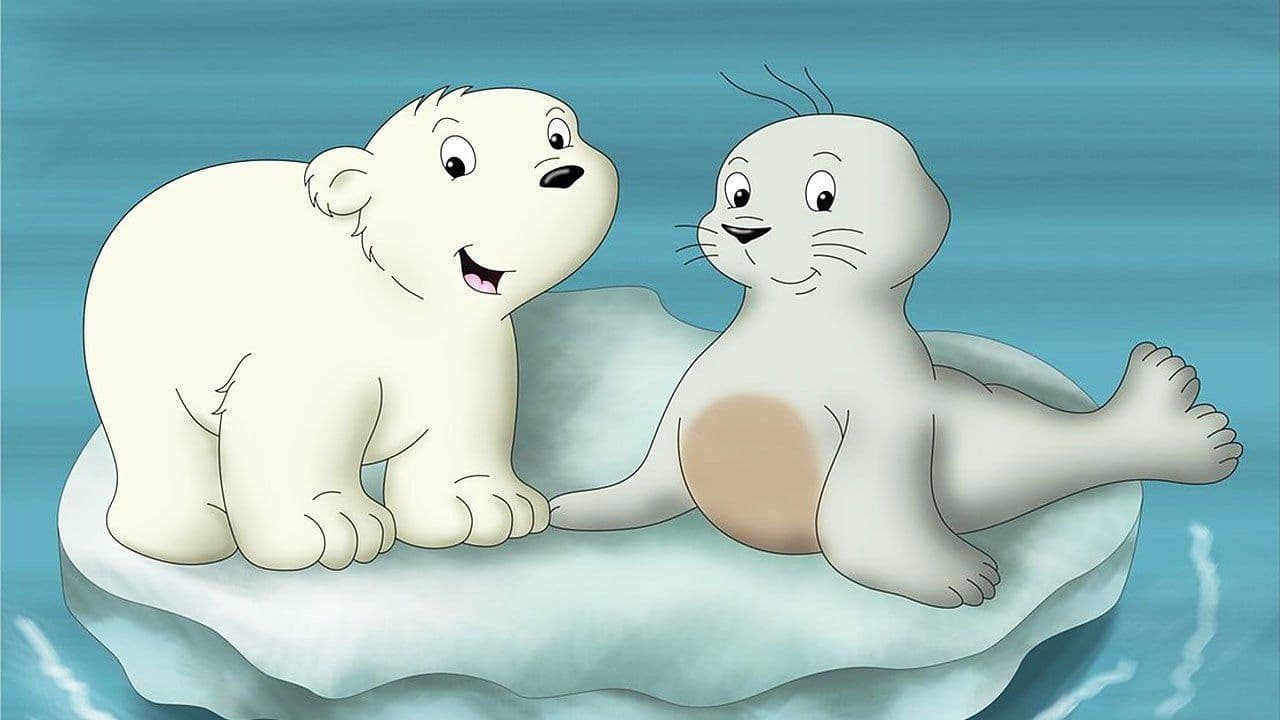
Feather and the Mysterious Island is a soft and luminous animated film, crafted for very young children, with a warm atmosphere and carefully rendered natural landscapes. The plot follows Feather, a young polar bear, who finds himself swept far from home to an unknown tropical island and must find his way back whilst helping the creatures he encounters. The film explicitly targets toddlers, from three or four years old, and fully embraces this audience without attempting to appeal to a wider public.
Underlying Values
The film builds its entire narrative around mutual aid and acceptance of differences. Feather successively helps a captured penguin, a prehistoric fish and endangered turtle eggs, never expecting a reward in return. This repeated pattern firmly anchors the idea that one helps others because it is right, not out of self-interest. Autonomy is also valued in a positive way: Feather manages far from his family without this being presented as a traumatic ordeal, but as a natural capacity to draw upon. No antagonistic figure disturbs this picture, which gives the film a resolutely benevolent tone, sometimes at the cost of very weak narrative tension.
Violence
The film contains no violence in the strict sense, but several sequences may provoke fleeting fright in the youngest viewers. Feather risks drowning after being expelled from a boat, a volcanic eruption threatens turtle eggs and a boat, and a large menacing shadow turns out to be nothing more than a small harmless iguana. These moments are constructed to create light tension, immediately resolved, without lasting consequences or violent imagery. The abduction of the penguin Caruso by three polar bears whilst he sleeps is the sequence most likely to startle a very young child, even though it remains treated without brutality. Overall it falls well short of what one finds in most mainstream animated films.
Parental and Family Portrayals
Feather's parents are absent for most of the film, since the plot rests precisely on separation from home. This absence is not dramatised or presented as a painful rupture: it is the starting point of an adventure, not a family drama. The film does not question the parental figure and does not propose a dysfunctional model. For a young child, temporary separation from parents may nonetheless resonate emotionally, and it may be helpful to reassure the child that Feather finds his way back to his family.
Social Themes
The film discreetly touches upon ecological sensitivity through the protection of turtle eggs and respectful cohabitation with rare or prehistoric creatures. This is not a campaigning message, but the direction systematically values the preservation of life and respect for fragile species. It is a natural entry point for conversation about nature and animals with a young child.
Strengths
The film offers carefully rendered natural landscapes and pleasant animation that make tropical and polar environments visually appealing to a young audience. Its principal strength is its emotional clarity: each situation is clear, each feeling is nameable, which makes it a solid pedagogical tool for addressing with a toddler the notions of helping, overcoming fear and encountering the unknown. The pacing, though judged uneven by some adults, is calibrated to hold the attention of nursery school children without overwhelming them. The film does not seek to charm parents on a secondary level, which gives it a rare honesty of tone in the genre.
Age recommendation and discussion points
The film is suitable from four years old, and may even suit three-year-olds accompanied by an adult to reassure them during the few sequences of light tension. Two angles of discussion are worth pursuing after viewing: ask the child why Feather helps animals he does not know, to prompt reflection on spontaneous mutual aid, and ask him what he would do if he found himself alone far from home, to explore together the theme of resourcefulness and self-confidence.
Synopsis
New adventures from Lars, the cheeky little polar bear who loves nothing more than to explore the big wide world. This time Lars and his friend Robby start out for a rescue mission for their friend Caruso leading them all the way to the Galapagos Islands.
About this title
- Format
- Feature film
- Year
- 2005
- Runtime
- 1h 20m
- Countries
- Germany
- Original language
- DE
- Directed by
- Thilo Rothkirch, Piet De Rycker
- Main cast
- Maximilian Artajo, Céline Vogt, Leander Wolf, Anke Engelke, Dirk Bach, Joy Gruttmann, Atze Schröder, Oliver Kalkofe, Bastian Pastewka, Ralf Schmitz
- Studios
- Rothkirch Cartoon Film, MaBo Filmproduktion, Torus, Warner Bros. International Television Production Germany
Content barometer
- Violence1/5Mild
- Fear2/5A few scenes
- Sexuality0/5None
- Language0/5None
- Narrative complexity2/5Moderate
- Adult themes0/5None