The Lion King
Does this age rating seem accurate to you?
Detailed parental analysis
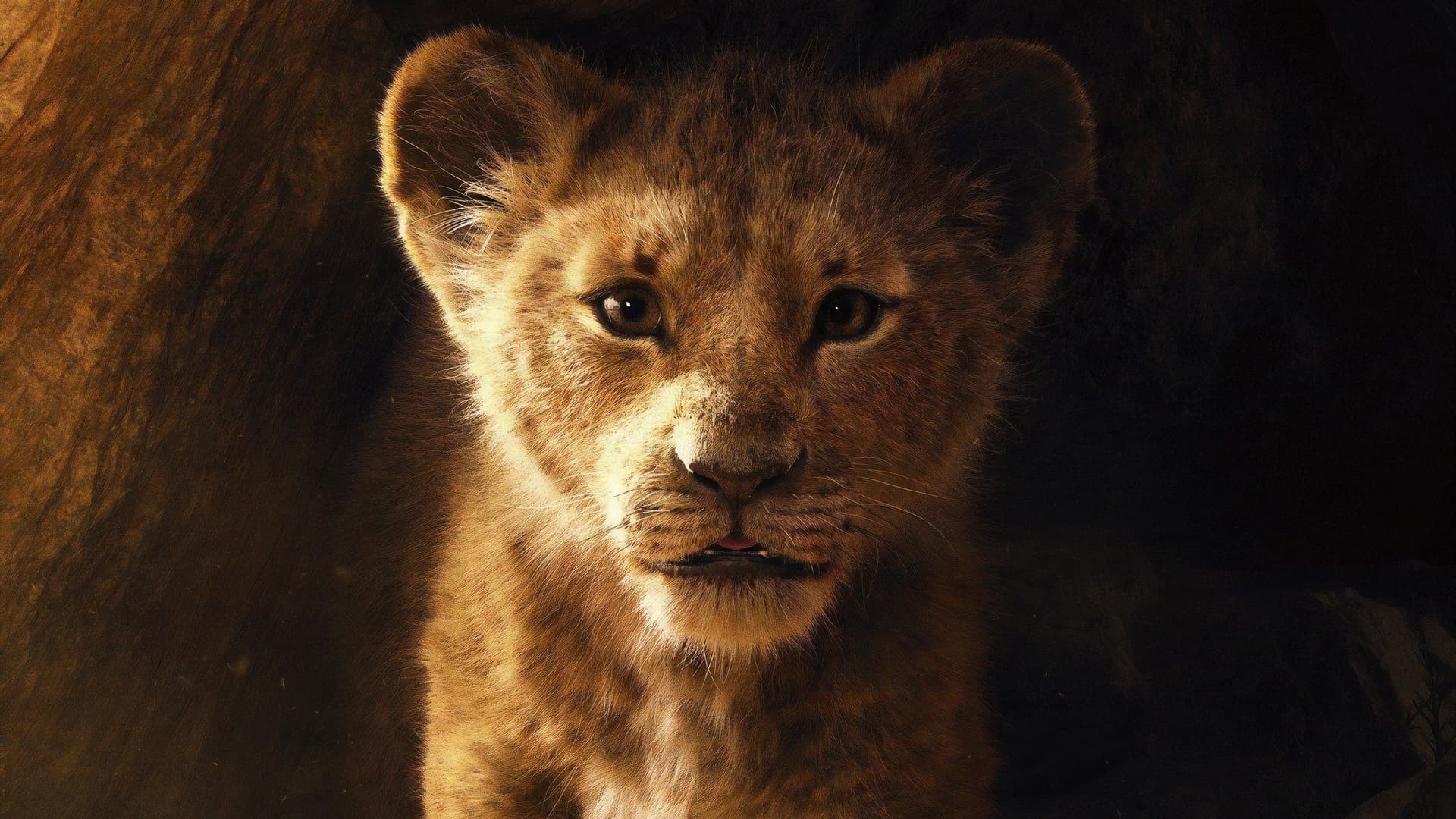
The Lion King 2019 is a family adventure film with an atmosphere that shifts between epic, melancholic and luminous, carried by a striking visual realism that gives it a more serious tone than its animated predecessor. The plot follows Simba, a young lion forced into exile after his father's tragic death, who must confront his past to reclaim his rightful place. The film targets a broad family audience, but its emotional intensity and the rawness of certain scenes make it more suitable for school-age children than for very young children.
Violence
Violence is the film's main point of concern. Mufasa's death, caused by a stampede of wildebeest and followed by a scene in which Simba discovers his father's body, is rendered particularly harrowing by the realism of the images: whereas the 1994 animation allowed a certain emotional distance, the photorealistic rendering removes this filter and makes the scene genuinely distressing for a young child. The battles between lions and hyenas, notably the final duel in darkness and flames, are intense and visually charged. The hyenas pursue lion cubs with explicit murderous intent. These sequences are not gratuitous: they serve a narrative about loss, fear and courage, but their emotional impact is real and should be anticipated.
Parental and Family Portrayals
The father occupies a central and structuring place in the narrative. Mufasa is presented as a model of wisdom, tempered strength and transmission: he teaches his son the meaning of responsibility, each creature's place in the circle of life, and continuity between generations. His death is not merely a narrative trauma: it is the driving force of Simba's entire quest, who must learn to reconcile himself with his paternal legacy rather than flee from it. The maternal figure is present but secondary. Scar, the antagonistic uncle, embodies a toxic substitute paternity, founded on manipulation and guilt, which offers a pedagogically interesting contrast.
Underlying Values
The film carries two systems of values in explicit tension. On one side, the 'Hakuna Matata' philosophy of Timon and Pumbaa, which advocates carefree living, refusal of responsibilities and forgetting the past as a strategy for emotional survival. On the other, the central message of the narrative, which ultimately invalidates this stance: fleeing one's origins and responsibilities is not enough, and adulthood demands facing them. This tension is well constructed and offers concrete material for discussion with a child. The film also values dynastic legitimacy and natural order, which deserves to be noted: power is presented here as a legacy to assume rather than a responsibility to be conquered through merit.
Social Themes
The film depicts a natural kingdom whose ecological balance is directly linked to the quality of its government: under Scar's reign, the lands dry up, prey disappear and predators themselves suffer from overexploitation. This link between political power and environmental health is a metaphor readable for children and can open a conversation about collective responsibility towards nature.
Strengths
The film impresses with the coherence and emotional density of its narrative, inherited from solid source material but carried here by an artistic direction that transforms every landscape into a living tableau. The soundtrack, between orchestral compositions and reprises of the original songs, effectively supports the emotional arcs without overwhelming them. From a pedagogical standpoint, the film addresses with real depth difficult themes: the loss of a parent, misplaced guilt, the temptation to flee one's responsibilities and the necessity of confronting one's history to build one's identity. These themes are treated with sufficient nuance to nourish a serious conversation with a child or pre-adolescent.
Age recommendation and discussion points
The film is not recommended before age 6 due to the emotional intensity of Mufasa's death and combat scenes, and can be watched comfortably from age 8 onwards. Two angles of discussion are worth opening after viewing: ask the child what he or she thinks of the 'Hakuna Matata' philosophy and whether fleeing one's problems is truly a solution, and explore with them what it means to inherit a responsibility one did not choose.
Synopsis
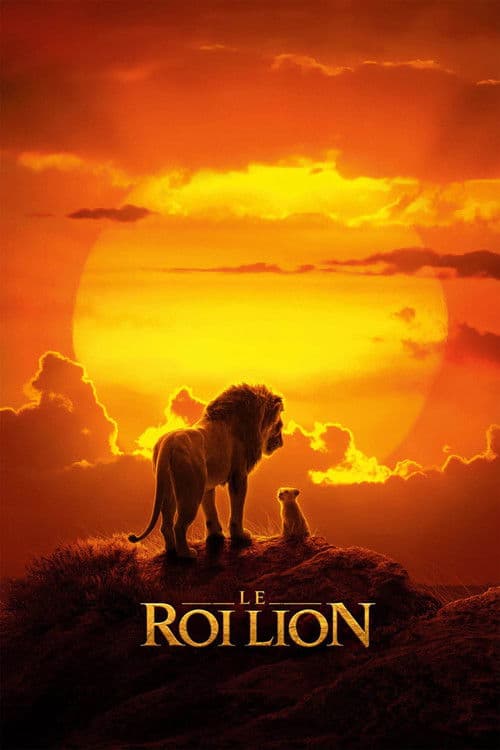
Simba idolizes his father, King Mufasa, and takes to heart his own royal destiny. But not everyone in the kingdom celebrates the new cub's arrival. Scar, Mufasa's brother—and former heir to the throne—has plans of his own. The battle for Pride Rock is ravaged with betrayal, tragedy and drama, ultimately resulting in Simba's exile. With help from a curious pair of newfound friends, Simba will have to figure out how to grow up and take back what is rightfully his.
Where to watch
Availability checked on May 05, 2026
About this title
- Format
- Feature film
- Year
- 2019
- Runtime
- 1h 58m
- Countries
- United States of America
- Original language
- EN
- Directed by
- Jon Favreau
- Main cast
- Chiwetel Ejiofor, John Oliver, Donald Glover, James Earl Jones, John Kani, Alfre Woodard, Beyoncé, JD McCrary, Shahadi Wright Joseph, Penny Johnson Jerald
- Studios
- Walt Disney Pictures, Fairview Entertainment
Content barometer
- Violence3/5Notable
- Fear3/5Notable tension
- Sexuality0/5None
- Language1/5Mild
- Narrative complexity3/5Complex
- Adult themes0/5None