The Lion King
Does this age rating seem accurate to you?
Detailed parental analysis
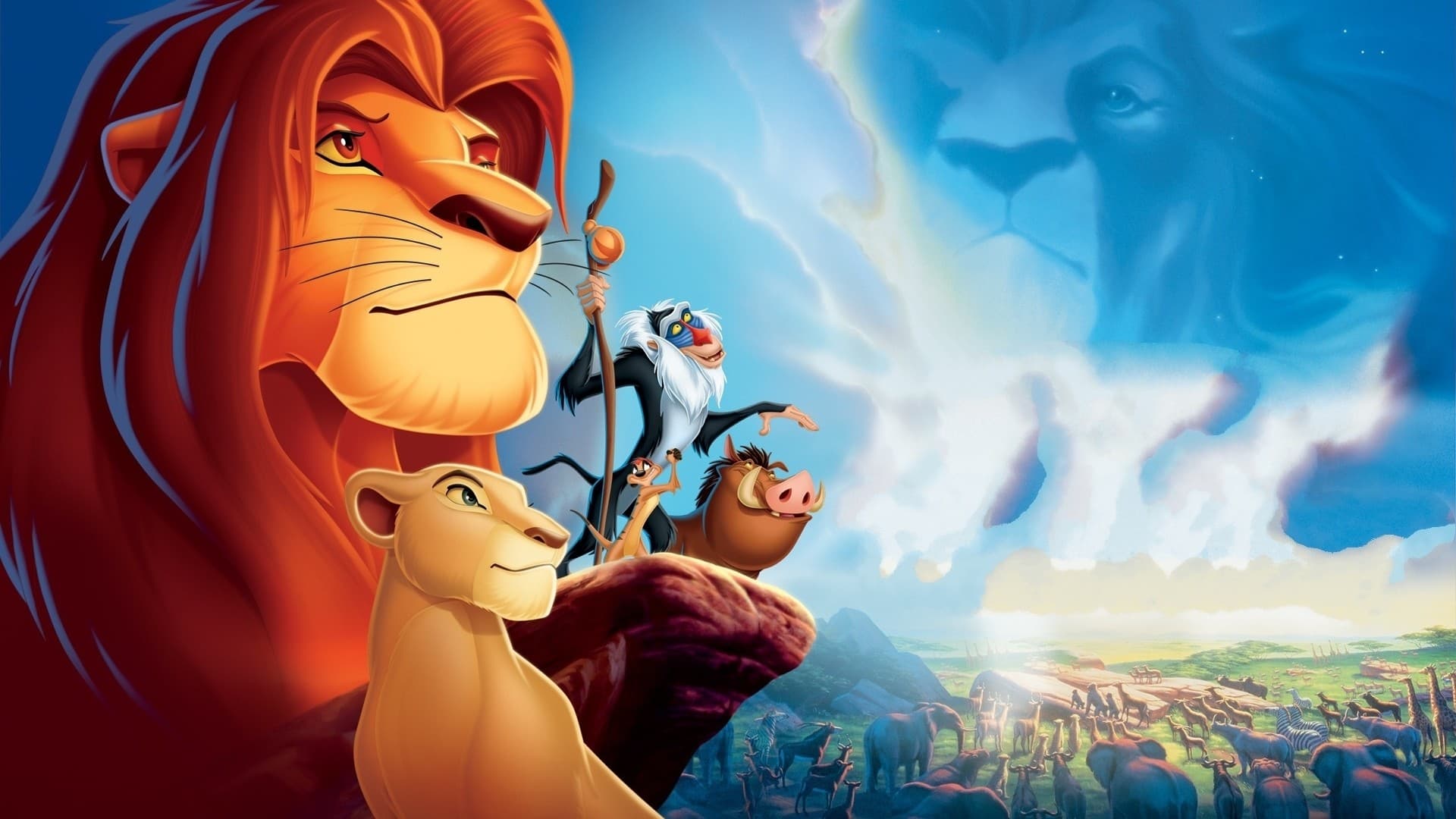
The Lion King is a Disney animated film with an epic and often dark atmosphere, interspersed with comedic sequences and memorable musical numbers. The plot follows Simba, a young lion cub forced into exile following a family tragedy, who must confront his past to reclaim his rightful place. Presented as a mainstream family film, it is in fact more comfortably suited to children aged 6 and above, and the adults accompanying them, than to very young children.
Violence
Violence is present on several occasions and with an intensity unusual for a mainstream animated film. The central scene of the film, the death of Mufasa crushed by a stampede of wildebeest, is lengthy, graphic and emotionally overwhelming. It is neither softened nor glossed over: the viewer experiences it fully, as Simba does. The attacks by hyenas involve claws, physical combat and visible injuries, including a laceration to the face. The final battle sees hyenas falling into flames. This violence is not gratuitous: it serves a narrative about loss, responsibility and courage, and each violent episode has a clear narrative purpose. This does not diminish its impact for a child aged 4 or 5, for whom these scenes can remain traumatising long after viewing.
Parental and Family Portrayals
The father occupies an exceptionally structuring place in the narrative. Mufasa is depicted as a model of benevolent, wise and protective authority, whose death constitutes the pivotal event of the entire story. The paternal figure does not disappear with his death: it returns in the form of a celestial presence, an inner voice, a transmission of values. This construction of the idealised father, whose loss generates consuming guilt in the child, is powerful and merits discussion with children. Scar, by contrast, embodies a figure of corrupted authority, who governs through manipulation and terror. The absence of a strong maternal figure is also notable: Sarabi is present but underdeveloped, relegated to a secondary role in a narrative entirely structured around masculine lineage.
Underlying Values
The narrative rests on solid values: responsibility, courage in confronting one's faults rather than fleeing, loyalty to one's origins and to those who depend on you. The cycle of life as a principle of interconnection between all creatures is laid out clearly and constitutes a genuine philosophical opening for children. However, the pattern of dynastic legitimacy merits nuance when discussed with an adolescent: the narrative presupposes that there exists a leader naturally designated by birth, and that restoring this order is intrinsically just. This monarchical reading of political justice is not questioned by the film itself. The Hakuna Matata sequence introduces a parenthesis on letting go and lightness, but the film ultimately treats it as a stage of immaturity to be transcended rather than as a value in itself.
Discrimination
The hyenas are systematically depicted as dangerous, primitive and morally corrupt, with a visual treatment that sets them clearly apart from the heroic lions through colour, posture and register of speech. This pattern functions as an implicit racial stereotype and has been commented upon as such, notably because of the resonance of certain visual and phonetic codes of these characters with marginalised communities. This is not a minor detail: the hyenas form a cohesive group of antagonists defined solely by their membership of a species presented as vile. The character of Scar, moreover, displays traits often coded as effeminate, unambiguously associated with the role of great villain, a narrative cliché that reinforces a problematic association between gender non-conformity and malevolence. These elements do not compromise viewing but merit being named with a child or adolescent capable of discussing them.
Social Themes
Scar's reign is a clear representation of tyranny: seizure of power through manipulation, government by terror, destruction of the environment as a direct consequence of illegitimate power. The film establishes an explicit correlation between good governance and fertile lands, between despotism and ecological desolation. This is an accessible entry point for introducing children to notions of just and unjust power, of collective consequences flowing from a single individual's decisions.
Strengths
The Lion King is a work of rare emotional and narrative ambition in mainstream animation. It addresses without circumlocution death, guilt, grief and the transmission of values between generations, with a sincerity that explains its enduring impact across several generations of viewers. The music contributes powerfully to the film's emotional architecture: the pieces alternate effectively between comedic lightness and epic gravity, sustaining the narrative's rhythm without drowning it in entertainment. The film poses genuine philosophical questions about the cycle of life, responsibility and identity, at a level of depth accessible to children whilst resonating differently in adulthood. This is a film that can be watched at multiple ages with distinct readings, making it a strong intergenerational conversation piece.
Age recommendation and discussion points
The film is not recommended before the age of 5 and can be watched calmly from age 6 or 7 onwards, ideally in the presence of an adult capable of supporting the most intense scenes. Two angles of discussion are particularly worth pursuing after viewing: why does Simba feel guilty for something for which he is not responsible, and what makes a leader or authority figure just or unjust in the film?
Synopsis
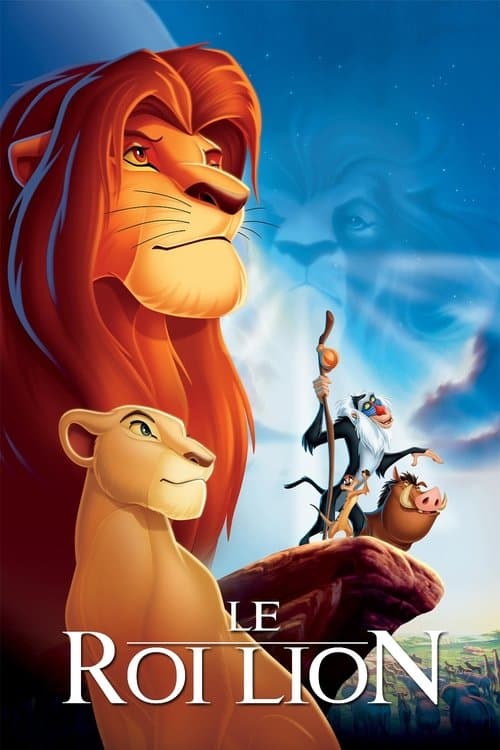
Young lion prince Simba, eager to one day become king of the Pride Lands, grows up under the watchful eye of his father Mufasa; all the while his villainous uncle Scar conspires to take the throne for himself. Amid betrayal and tragedy, Simba must confront his past and find his rightful place in the Circle of Life.
About this title
- Format
- Feature film
- Year
- 1994
- Runtime
- 1h 28m
- Countries
- United States of America
- Original language
- EN
- Studios
- Walt Disney Pictures, Walt Disney Feature Animation
Content barometer
- Violence3/5Notable
- Fear4/5Intense
- Sexuality0/5None
- Language0/5None
- Narrative complexity2/5Moderate
- Adult themes0/5None
Values conveyed
- Courage
- Loyalty
- Forgiveness
- friendship
- responsibility
- resilience