The Legend of Hei
罗小黑战记
Does this age rating seem accurate to you?
Detailed parental analysis
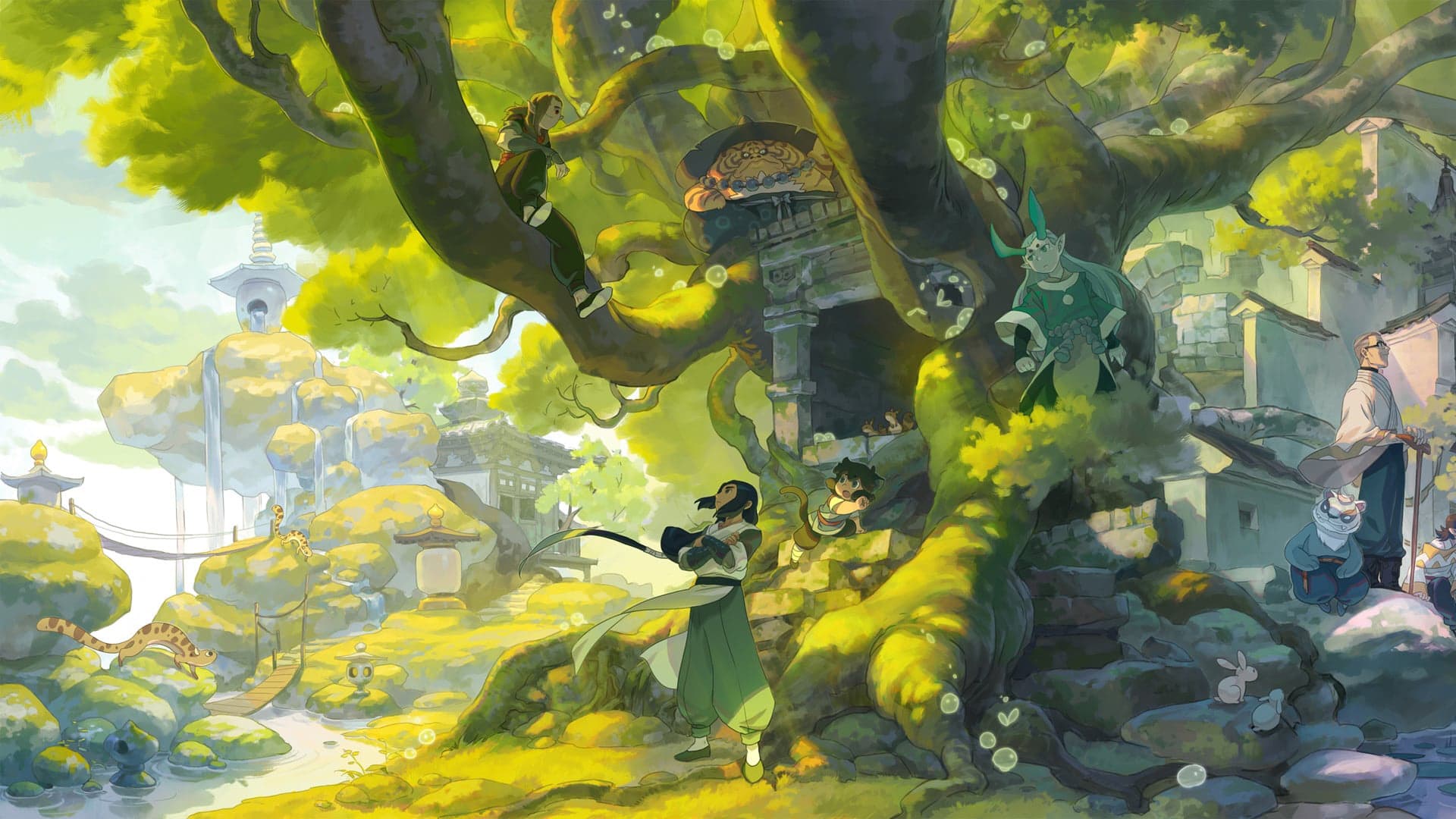
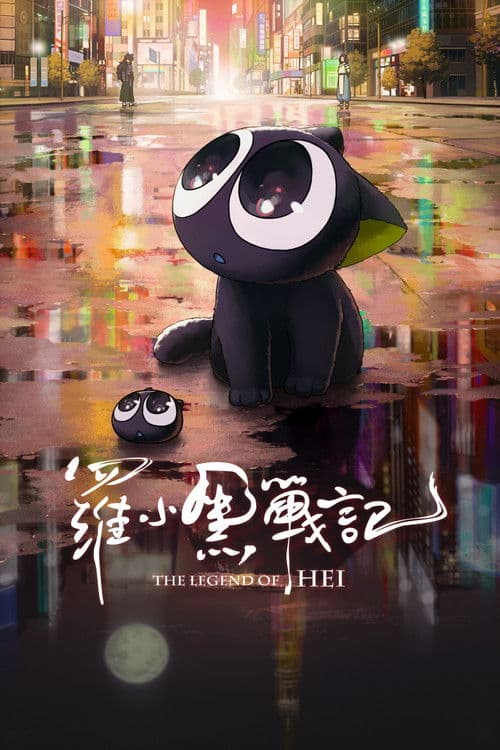
The Legend of Hei is a fantasy animation film with a contemplative and melancholic atmosphere, threaded through with tense action sequences and moments of great tenderness. The plot follows a young cat-spirit who finds himself at the heart of a conflict between nature spirits seeking to preserve their territory and human forces driving them out. The film is aimed primarily at pre-teens and teenagers, though younger children accompanied by an adult can follow its essential elements.
Underlying Values
This is where the film is most dense and most stimulating for conversation. The narrative does not distribute roles in a clear-cut manner: the spirits seeking revenge have legitimate reasons, and the humans advocating coexistence are not necessarily innocent. Vengeance is presented as an understandable temptation, not as a caricatural vice, which makes the question of its rejection more honest and more interesting than in many films of its kind. The film clearly values personal choice, constructed peace, and belonging woven through relationships rather than imposed by birth or territory. There is no figure of authority to follow blindly, which can unsettle children accustomed to narratives where a reliable adult points the way forward.
Social Themes
Deforestation and the destruction of natural habitats lie at the heart of the conflict that structures the film. It is not a message slipped in as subtext: it is the direct cause of the drama, and the film does not underplay it. The spirits lose their forest because humans have destroyed it, and this responsibility is neither erased nor cynically punished. The treatment is sober and effective, concrete enough that a ten-year-old child can grasp the stakes without needing prior instruction.
Violence
Violence is frequent and constitutes a significant part of the film's rhythm: stylised martial arts combat, confrontations between spirits, bursts of magical power, a brief shooting sequence in an urban setting. It remains within the register of fantasy animation, without gore or graphic self-indulgence, but certain sequences have genuine intensity, notably the transformations of the main character into demonic form during moments of distress or anger. These scenes may unsettle sensitive children under eight or nine years old. The violence is narratively justified and is never presented as cool in itself, which makes it a lever of tension rather than spectacle.
Substances
An adult character in the form of a tiger-spirit offers alcohol to the young protagonist in a scene with a humorous tone. The gesture is not valorised but neither is it morally commented upon in the narrative. Scenes with characters smoking in the background are noted, without particular narrative emphasis. These elements are incidental but merit mention for parents of younger children.
Language
A few occasional expletives in the dubbed version, including terms such as 'damn', 'bastard' or 'ass'. The register remains moderate and is not a distinctive feature of the film, but it is worth noting for families to whom this matters.
Strengths
The film impresses through the clarity of its narrative despite a deliberately non-binary moral construction: it is a real feat of writing to render each side intelligible without simplifying the stakes. The animation, of remarkable fluidity in action sequences, contrasts with a soft and organic artistic direction in natural settings, which visually reinforces the tension between the world of spirits and that of humans. On an emotional level, the film is generous without being manipulative: the touching moments are earned through the progression of the narrative. It constitutes a good entry point into a form of Asian animation cinema that does not shy away from ambiguity and trusts in the intelligence of the young viewer.
Age recommendation and discussion points
The film is suitable from age ten onwards for accompanied viewing, and from age twelve without major reservations. Two angles of discussion are worth opening after viewing: why the film refuses to designate one side as clearly evil, and what this changes in the way one experiences the ending; and how the main character chooses his 'home', which can lead to a more personal conversation about what it means to belong somewhere.
Synopsis
When cat spirit Luo Xiaohei's home is deforested by humans, he must find a new one. He runs into a group of other spirit creatures who take him under their wing with dreams of reconquering the land they say is rightfully theirs. However, they run into a human known as Wuxian who separates Luo Xiaohei from the other spirits and the two go on a journey, with the cat spirit learning to control his abilities as well as forming his own thoughts on whether or not he should ally with the spirits or the humans.
About this title
- Format
- Feature film
- Year
- 2019
- Runtime
- 1h 25m
- Countries
- China
- Original language
- ZH
- Directed by
- MTJJ
- Main cast
- Shan Xin, Liu Mingyue, Hao Xianghai, Ding Dang, Yuntu Cao, Sheng Feng, Chen Siyu
- Studios
- MTJJ, Beijing Guangying Gongchang Wenhua Chuanbo, Dream Castle, Heyi Capital, HMCH, Beijing Jiyin Yinghua
Content barometer
- Violence3/5Notable
- Fear2/5A few scenes
- Sexuality0/5None
- Language1/5Mild
- Narrative complexity1/5Accessible
- Adult themes1/5Mild
Watch-outs
- Alcohol
- Violence
Values conveyed
- Acceptance of difference
- Compassion
- Autonomy
- Forgiveness
- friendship
- identity quest
- human and nature coexistence
- free will
- trust
- belonging