The Last Unicorn
Does this age rating seem accurate to you?
Detailed parental analysis
The Last Unicorn is a fantasy animated film with a melancholic and sometimes oppressive atmosphere, far removed from the lightness its title might suggest. A unicorn sets out in search of others like herself, drawing into her quest a clumsy magician and a young woman of courage facing a tyrannical lord and the terrifying creature that serves him. The film appears on the surface to be aimed at a young audience, but its tone, themes and certain images make it more suited to children aged 9 and above, accompanied by an adult for the younger end of this range.
Underlying Values
This is the richest and most demanding dimension of the film. The Last Unicorn offers neither clear victory nor unalloyed happiness: the heroine accomplishes her mission but emerges transformed, marked by a sadness and regret that nothing can erase. The film directly addresses questions about mortality, loss, and the inability to escape suffering even when one has done good. Bravery is real here but does not guarantee happiness, which constitutes an unusual and precious message, provided it is accompanied by discussion. The selfishness of the quest is tempered by the solidarity of travelling companions, and personal sacrifice is presented as a painful necessity rather than a glorious act.
Violence
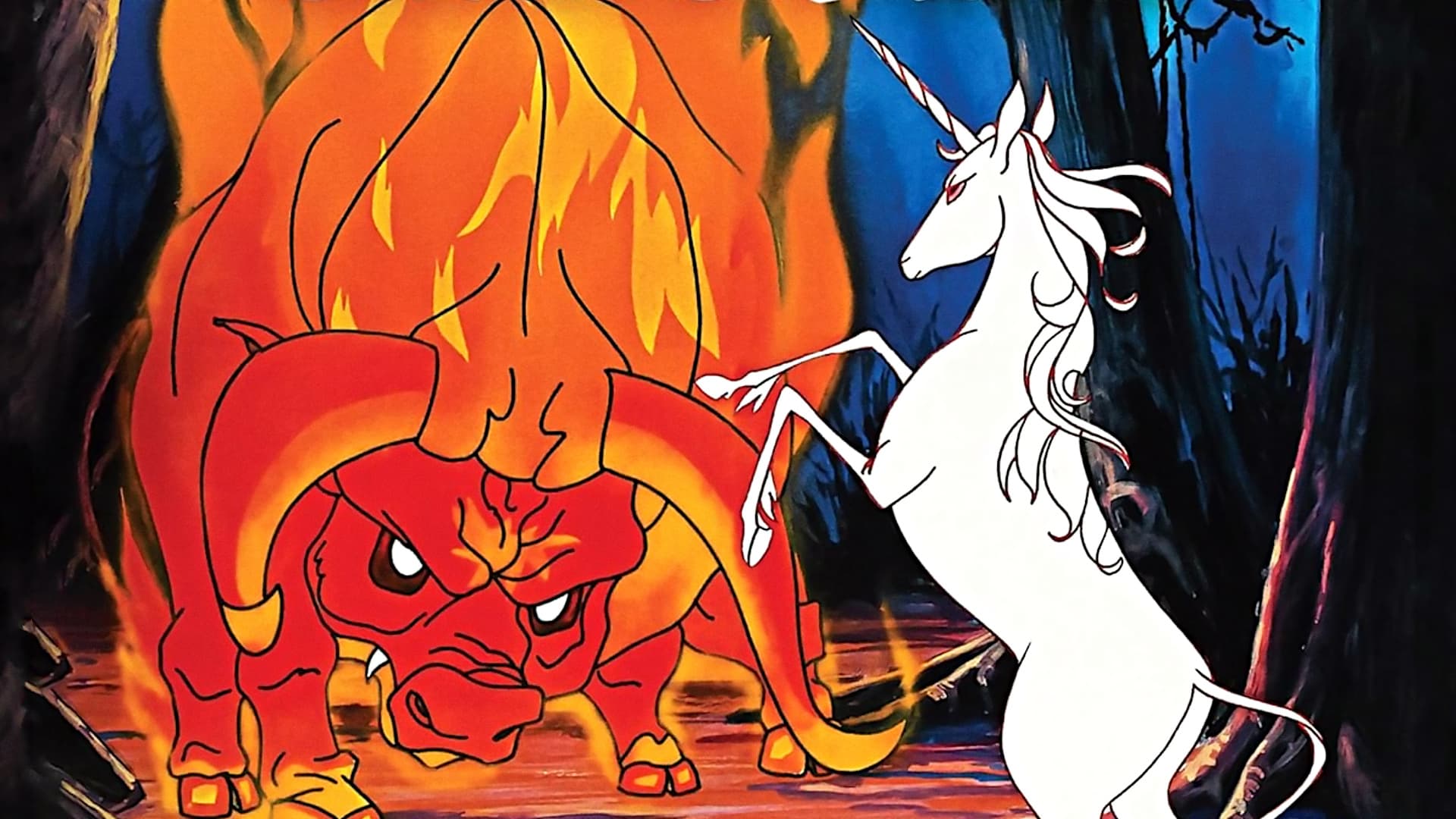
Violence is present on several occasions and, whilst it remains off-screen at its most brutal moments, it is nonetheless heavy. The harpy kills a character in a violent attack whose effects we hear without seeing directly, which can prove even more distressing for a young child. The Red Bull, an imposing and menacing creature, pursues and attacks the characters in several sequences of high tension. A knight presents a severed dragon's head as a trophy, a brief but striking scene. Violence is never gratuitous or aestheticised for pleasure: it serves the darkness of the narrative and its dramatic stakes, but its emotional impact remains strong.
Sex and Nudity
When the unicorn takes human form, she appears briefly naked, with her buttocks visible and a breast fleetingly shown. The scene is treated without erotic intent and fits within the logic of the metamorphosis, but the nudity is real and may surprise in a film classified for general audiences. Furthermore, an anthropomorphic tree endowed with a voluminous chest attempts to suffocate a male character in a scene that is both comic and strange, whose implicit sexual connotation is difficult to ignore for an adult. These elements merit being anticipated.
Substances
A skeleton character drinks wine and becomes intoxicated in a scene intended for humorous effect. Alcohol consumption is presented in a light and comic manner, without being valorised as behaviour to imitate, but it is sufficiently explicit to warrant mention.
Parental and Family Portrayals
Adult figures of authority are predominantly failing or malevolent: the witch Mommy Fortuna exploits mythological creatures for her own profit and ultimately pays with her life for her arrogance, the lord Haggard is a tyrant consumed by emotional emptiness. The magician Schmendrick, a mentor figure, is endearing but incompetent and uncertain. This gallery of imperfect adult figures reinforces the sense that the characters must find their own way without a reliable model, which is consistent with the narrative's tone but may unsettle the youngest viewers.
Strengths
The Last Unicorn is a rare animated work, carried by writing that refuses the shortcuts of the edifying tale. The adaptation of Peter S. Beagle's novel preserves careful language, dialogue of unusual density for the genre, and an ability to address melancholy and finitude without softening them. The film offers a natural introduction to narratives that do not conclude with a happy resolution, making it a valuable tool for conversation about loss, regret and courage in the face of the inevitable. Its original score contributes to a poetic and enchanting atmosphere that lingers in memory long after viewing. For an accompanied child, it is an emotionally dense experience that can open profound discussions about what it means to act well in an imperfect world.
Age recommendation and discussion points
The film is not recommended before age 8 due to its frightening images, emotional violence and occasional nudity; a serene and fully rewarding viewing is better suited to age 10 and above, ideally in the presence of an adult available to discuss it. Two angles of discussion naturally present themselves after viewing: why the film does not end like a classical tale, and what this teaches us about courage when it does not guarantee happiness? One can also ask the child what they think about the fact that certain adult characters supposed to protect actually do harm.
Synopsis
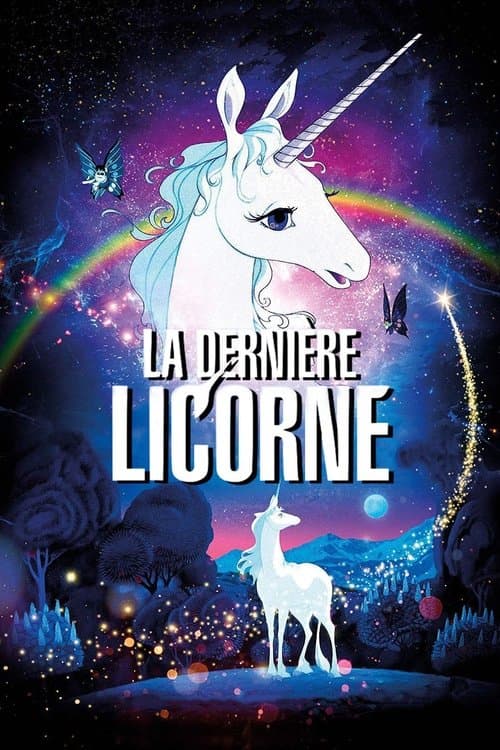
A unicorn learns from a riddle-speaking butterfly that she is supposedly the last of her kind, all the others having been herded away by the monstrous Red Bull. The unicorn sets out to discover the truth behind the butterfly's words. She is eventually joined on her quest by Schmendrick, a second-rate magician, and Molly Grue, a middle-aged woman who dreamed all her life of seeing a unicorn. Their journey leads them far from home, all the way to the castle of King Haggard.
Where to watch
Availability checked on Apr 28, 2026
About this title
- Format
- Feature film
- Year
- 1982
- Runtime
- 1h 32m
- Countries
- United Kingdom, United States of America
- Original language
- EN
- Directed by
- Jules Bass, Arthur Rankin, Jr.
- Main cast
- Mia Farrow, Alan Arkin, Tammy Grimes, Jeff Bridges, Christopher Lee, Angela Lansbury, Robert Klein, Keenan Wynn, Paul Frees, René Auberjonois
- Studios
- Rankin/Bass Productions, ITC Entertainment
Content barometer
- Violence3/5Notable
- Fear4/5Intense
- Sexuality2/5Mild
- Language1/5Mild
- Narrative complexity1/5Accessible
- Adult themes1/5Mild
Values conveyed
- Courage
- Perseverance
- Compassion
- friendship
- quest
- loyalty