
The King of Kings
Does this age rating seem accurate to you?
Detailed parental analysis
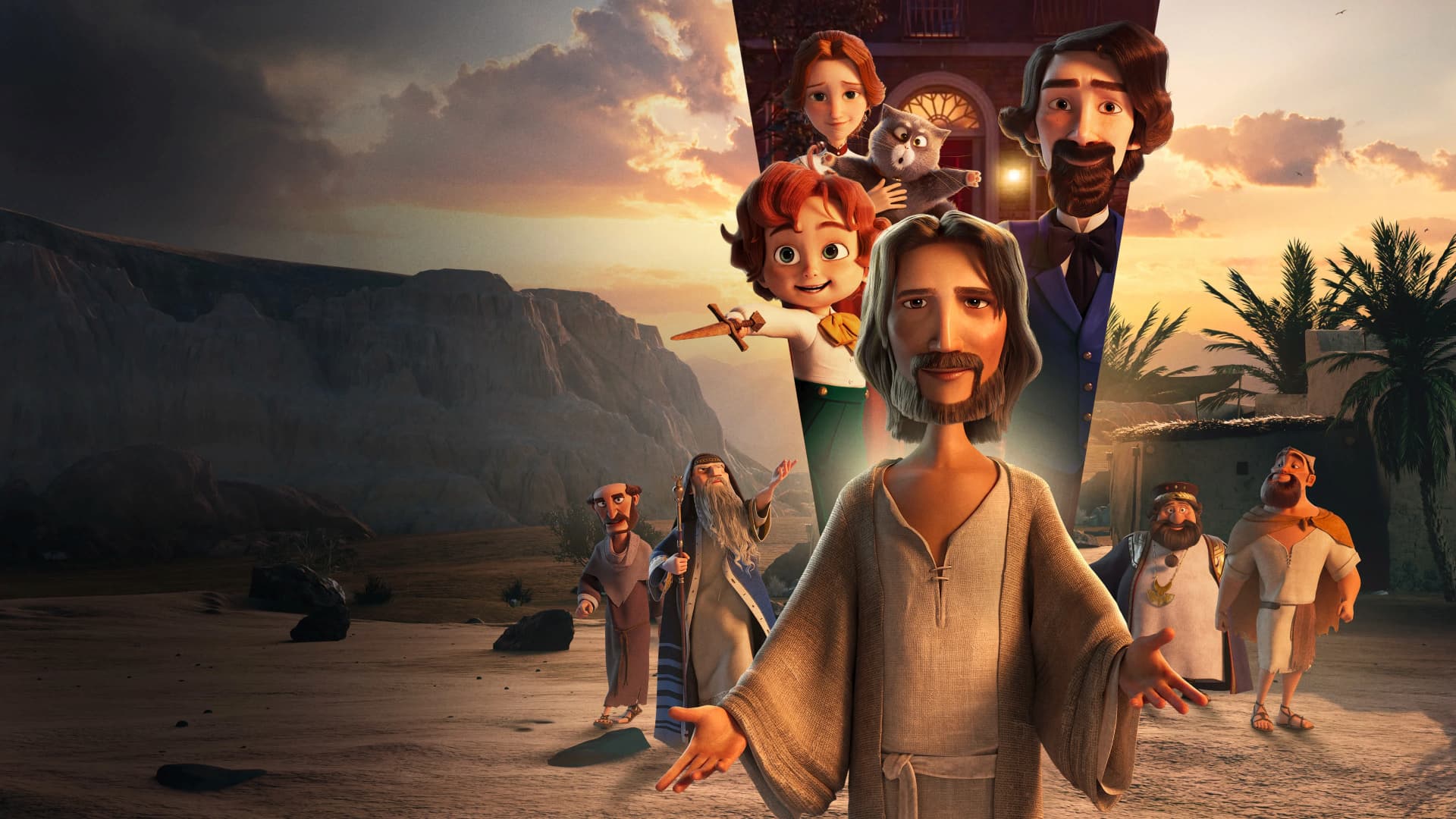
The King of Kings is an animated film with a contemplative and solemn atmosphere that traces the life of Jesus from his birth through crucifixion and resurrection, seen through the eyes of a child discovering these stories. The film targets a broad family audience, with particular attention to school-age children, whilst not excluding teenagers or believing adults.
Violence
The film addresses several episodes of violence inherent to the biblical narrative, systematically seeking to reduce their visual impact. The flagellation is shown through red marks without blood. The crucifixion depicts the placing on the cross but averts the camera at the moment of nailing, with the puncture marks remaining blurred. A soldier has his ear cut off, but the wound is not shown and Jesus heals it immediately. The massacre of the innocents ordered by Herod is visually initiated with armed soldiers, but no children are injured on screen, with the group managing to escape. These directorial choices are consistent and deliberate: violence is present as narrative reality, never as spectacle. For sensitive children from ages 7-8 onwards, certain threat scenes may nevertheless generate anxiety, notably the arrival of soldiers or the crucifixion sequence.
Discrimination
The treatment of Jewish religious authorities constitutes the film's most serious point of tension. The Pharisees and high priest Caiaphas are constructed as caricatural antagonists, close to the register of a fairy-tale villain, whose malevolence appears gratuitous and almost demonic. This representation poses a real problem: by identifying Temple leaders as unambiguous conspirators, the film perpetuates a narrative pattern that has historically fuelled Christian antisemitism. The film offers no counterpoint, no complex Jewish character that would allow one to distinguish a ruling minority from an entire people. This is a point to address explicitly with children and teenagers, recalling that responsibility for Jesus's condemnation has been instrumentalised for centuries to justify persecutions.
Underlying Values
The film carries a message of willing sacrifice, unconditional love and forgiveness as responses to violence and injustice. Faith is presented as an inner force capable of transforming lives, and the transmission of this faith between generations forms the emotional framework of the narrative. These values are embodied without ambiguity and without irony. The film does not question faith, it celebrates it, which is a legitimate stance for a work of confessional inspiration, but which calls for conversation with non-believing children or those from other traditions.
Parental and Family Portrayals
The father-son relationship is central, on two interwoven levels: the bond between Jesus and God the Father on one hand, and the intergenerational dynamic of the narrative frame on the other. The human father is represented as a transmitter of stories and faith, a benevolent and attentive figure. This valorisation of the parental role as spiritual and emotional transmission is one of the film's most positive drivers.
Sex and Nudity
Adam and Eve appear in sketched-style sequences, represented naked with intimate parts concealed by vegetation and shadow play. Nudity is treated in a symbolic and modest register, without any sexual connotation.
Strengths
The film offers a visually refined adaptation of the gospel narrative, with a real sense of narrative rhythm suited to children's capacity for attention. The framing of the story within a contemporary human relationship is an effective pedagogical device that allows the child viewer to identify with a character discovering the narrative at the same time as they do. The emotional dimension is handled with restraint, avoiding both sentimentality and excessive pathos. For believing families, the film provides a concrete foundation for engaging with foundational texts often inaccessible to young children. For all families, it is a solid introduction to a narrative that belongs to Western cultural heritage.
Age recommendation and discussion points
The film is accessible from age 7 for children accompanied by an adult, with particular mention for sensitive children for whom certain threat scenes may require preparation. Two angles of discussion merit being opened after viewing: first, why religious leaders are represented as purely evil and what this says about the way in which history is told, in order to prevent any generalisation about the Jewish people; secondly, what it means in the child's daily life to forgive someone who has done harm.
Synopsis
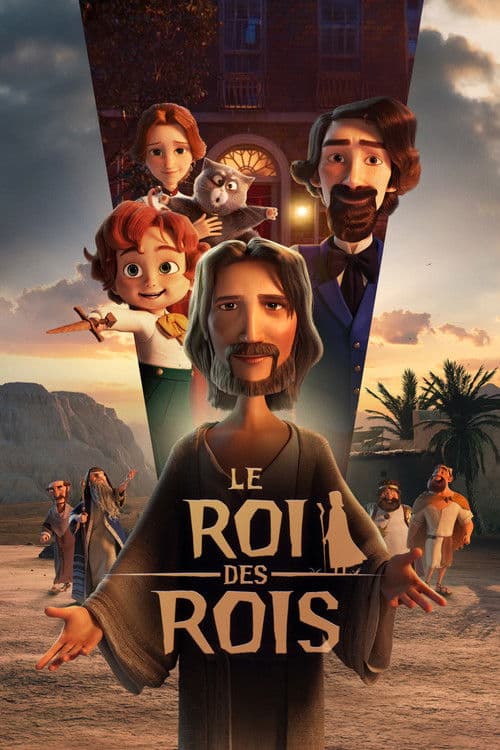
Charles Dickens tells his young son Walter the greatest story ever told, and what begins as a bedtime tale becomes a life-changing journey. Through vivid imagination, the boy walks alongside Jesus, witnessing His miracles, facing His trials, and understanding His ultimate sacrifice.
About this title
- Format
- Feature film
- Year
- 2025
- Runtime
- 1h 43m
- Countries
- South Korea, United States of America
- Original language
- EN
- Directed by
- Jang Seong-ho
- Main cast
- Oscar Isaac, Kenneth Branagh, Uma Thurman, Pierce Brosnan, Roman Griffin Davis, Forest Whitaker, Ben Kingsley, Mark Hamill, Ava Sanger, Jim Cummings
- Studios
- MOFAC, GIANTSTEP, Blue Harbor Entertainment, Angel Studios
Content barometer
- Violence2/5Moderate
- Fear2/5A few scenes
- Sexuality1/5Allusions
- Language0/5None
- Narrative complexity3/5Complex
- Adult themes0/5None
Watch-outs
- Death
- Ethnic or racial stereotypes
Values conveyed
- Courage
- Compassion
- Loyalty
- Forgiveness
- faith
- hope