The King and the Mockingbird
Does this age rating seem accurate to you?
Detailed parental analysis
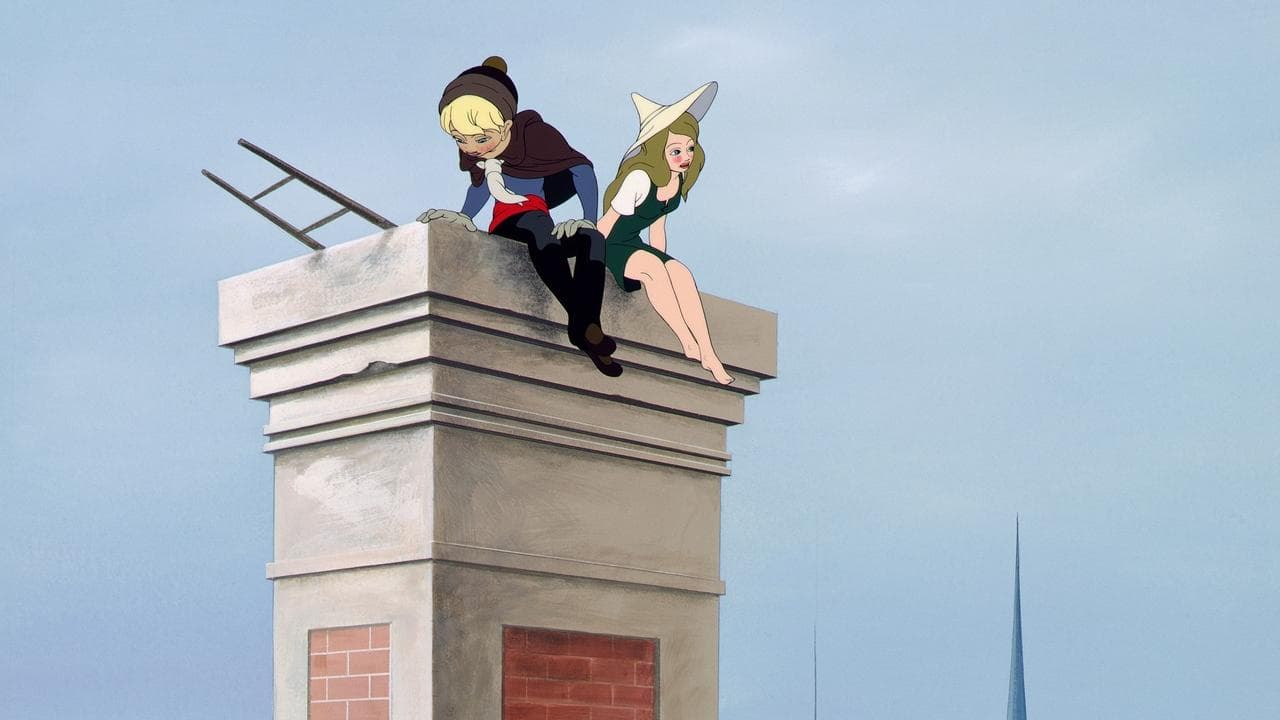
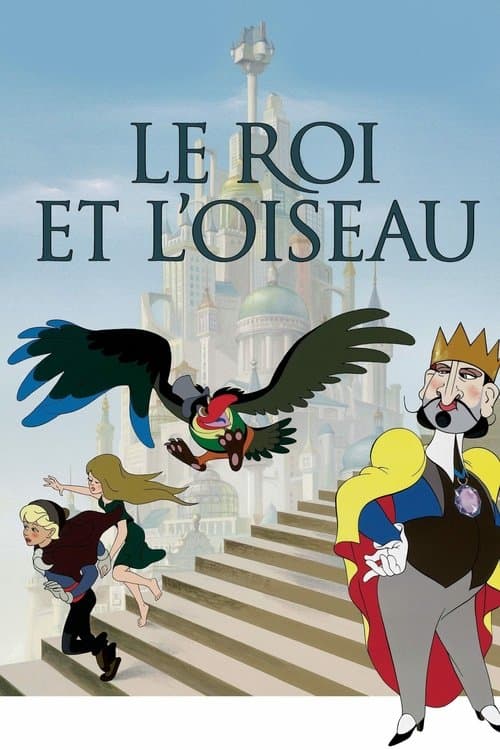
The King and the Bird is a poetic animated film with a dark and dreamlike atmosphere, oscillating between philosophical tale and political fable. A young chimney sweep and a shepherdess, in love and persecuted, attempt to escape the tyranny of a despotic king in a vertical kingdom with Kafkaesque mechanisms. The film appeals more to children sensitive to poetry and to adults than to a younger audience that would not yet have the tools to grasp its density.
Social Themes
Politics is the true subject of the film. The kingdom is an avowed dictatorship, with its personality cult, its omnipresent police, its crushed subjects and its eliminated dissidents. The king destroys his own city with a giant robot in a final sequence of total devastation that functions as a metaphor for totalitarian power pushed to its logical conclusion. This dimension is not softened for a child audience: it is frontal, coherent and deliberately unsettling. This is precisely what gives the film its strength, but also what makes it difficult for the youngest viewers.
Violence
Violence is not gory, but it is present in a repeated and cold manner. Characters are eliminated by those in power without explanation or mourning: the painter, the groom, the police officers, and the mother of the small birds. The king attempts several times to shoot the bird. The final destruction of the city by the giant robot constitutes the most spectacular moment of violence in the film, representing the complete ruin of a world. This violence is narrative and never gratuitous: it illustrates the real cost of tyranny. But its detached treatment, without consolatory pathos, can upset young children and provoke lasting anxiety.
Underlying Values
The film carries a firm reflection on freedom against abusive authority, the resistance of the weak against power, and the legitimacy of disobeying an unjust order. The bird embodies a form of moral autonomy and commitment, protecting its young and the lovers at the cost of danger. The narrative makes no compromise: the king's authority is illegitimate by nature, and freedom is not negotiable. This moral clarity is a genuine educational strength, but it deserves to be discussed with the child to contextualise the notion of authority and distinguish tyrannical power from a protective framework.
Parental and Family Portrayals
The bird is the only true parental model in the film: it confronts the king to protect its young, frees the captive lovers and acts on principle rather than self-interest. In mirror image, the king represents a narcissistic and destructive figure of authority, incapable of love. The young protagonists are entirely alone facing power, without family or institutional support. This representation of a failing adult world reinforces the ambient anxiety whilst valorising the autonomy of the most vulnerable.
Strengths
The film is a work of rare visual and narrative coherence in French animation, built over decades of maturation. The architecture of the vertical kingdom, the graphic design of the characters and the internal logic of the invented world testify to a formal ambition that far exceeds the standard children's film. The narration proceeds through images and atmospheres as much as through dialogue, which makes it an object of contemplation as much as of reading. For an older child or a teenager, it is an exemplary introduction to the power of cinematic language and to the capacity of animation to treat serious political subjects without condescension.
Age recommendation and discussion points
The film is best reserved for children aged 7 and above accompanied by an adult, with calm viewing rather from 9 or 10 years onwards for children sensitive to unsettling atmospheres. Two angles of discussion naturally present themselves after viewing: ask the child why the king destroys his own city, and what this says about people who would rather lose everything than share power; and explore with them the difference between obeying a fair rule and submitting to unjust authority, taking the bird as a starting point.
Synopsis
A young shepherdess and a chimneysweep plan to get married and escape the clutches of a tyrannical king in love with her, assisted by the guile of a cheeky mockingbird, the king's archenemy.
About this title
- Format
- Feature film
- Year
- 1980
- Runtime
- 1h 22m
- Countries
- France
- Original language
- FR
- Directed by
- Paul Grimault
- Main cast
- Jean Martin, Renaud Marx, Agnès Viala, Pascal Mazzotti, Albert Médina, Philippe Derrez, Raymond Bussières, Roger Blin, Claude Piéplu, Hubert Deschamps
- Studios
- Les Films Paul Grimault, Les Films Gibé, Antenne 2
Content barometer
- Violence3/5Notable
- Fear4/5Intense
- Sexuality0/5None
- Language0/5None
- Narrative complexity1/5Accessible
- Adult themes0/5None
Watch-outs
Values conveyed
- Courage
- Perseverance
- Autonomy
- freedom
- love
- resistance