
The Jungle Book
Does this age rating seem accurate to you?
Detailed parental analysis
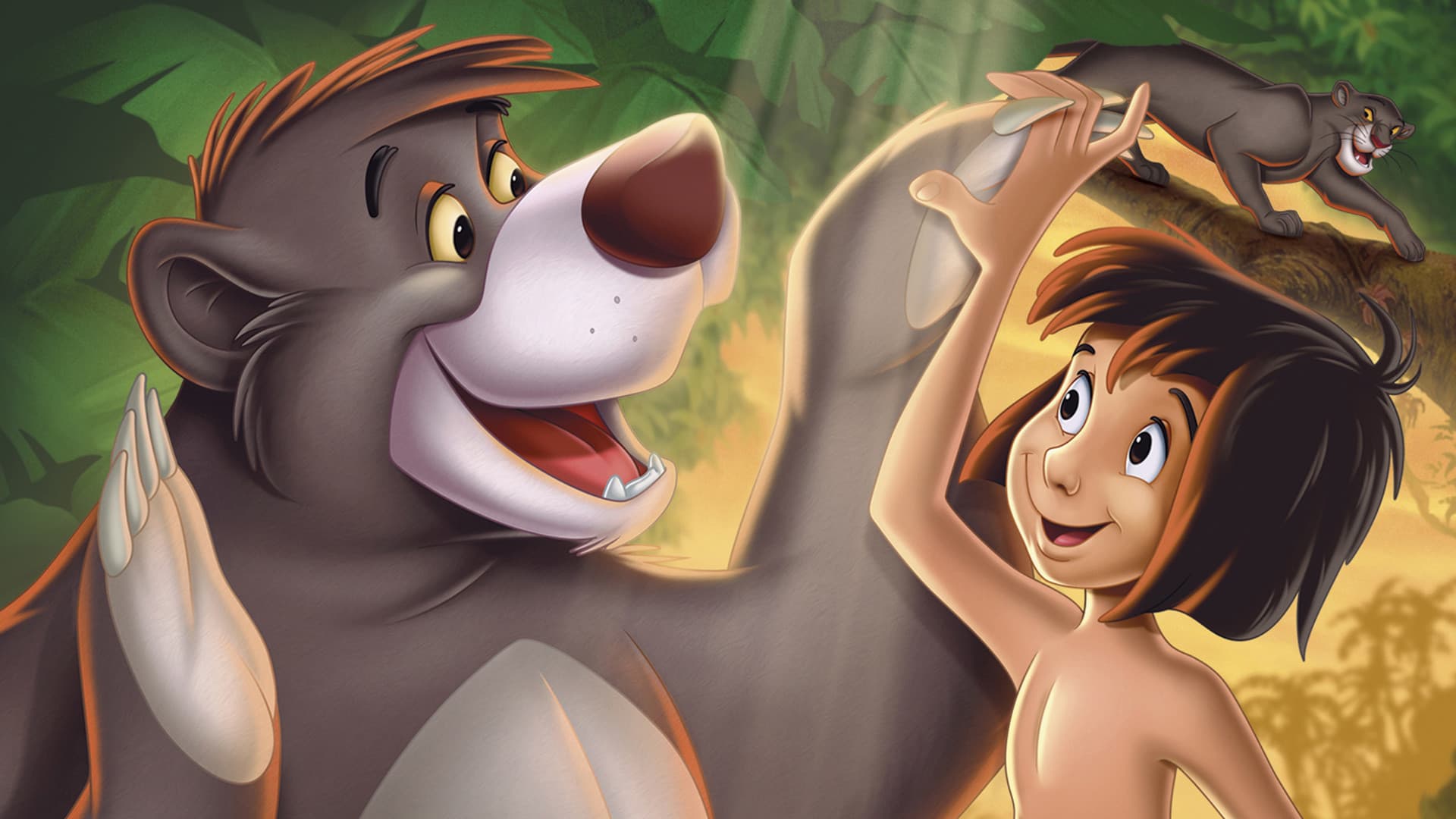
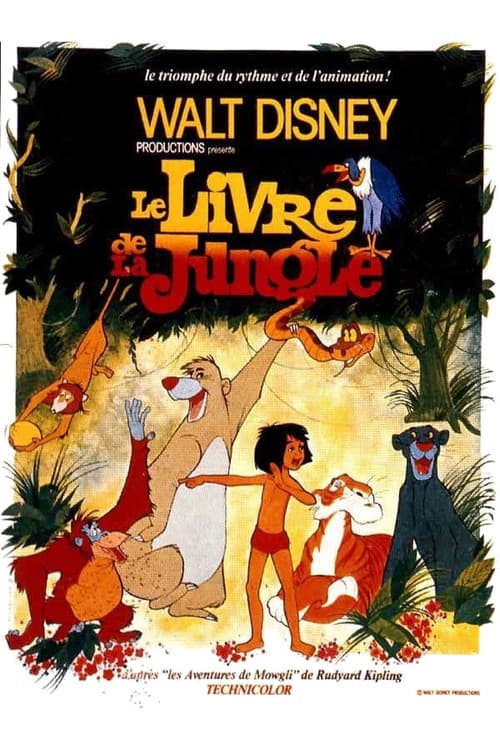
The Jungle Book is a Disney animated film with a joyful, musical atmosphere, interspersed with moments of genuine tension. The plot follows Mowgli, a child raised by wolves in India, whom his animal protectors attempt to bring back to mankind before a fearsome tiger can find him. The film is aimed at young children from five or six years old, but certain sequences and several representation issues warrant particular parental attention.
Discrimination
This is the most serious point to address with a child. The band of monkeys led by King Louie is coded in a racist manner: the jazz, the scat, the attitudes and speech patterns associated with these characters echo stereotypes historically linked to African American populations, in a tradition inherited from segregationist music hall. The fact that Disney deemed it necessary to place a content warning on the streaming platform confirms that the problem is real and documented, not an anachronistic reading. Furthermore, the only female character with notable presence is a young Indian girl whose sole function is to seduce Mowgli with her languorous gaze, without an identity of her own. The Indian identity of the narrative remains itself merely decorative. This is an ideal opportunity to explain to a child how certain representations, even in beloved works, can convey prejudices without anyone in the audience noticing.
Violence
Violence is present in the form of narrative threat rather than gore, but it is far from harmless for a very young child. The tiger Shere Khan kills animals on screen, expresses his clear intention to kill Mowgli, and the final fight between him and Baloo is intense: bites, scratches to the face, the bear collapses lifeless. This scene has historically caused tears in children convinced that Baloo was dead. The python Kaa coils around Mowgli repeatedly in scenes of hypnosis and suffocation that can generate genuine distress in younger viewers. These sequences have a coherent narrative purpose and are not gratuitous, but their intensity should be assessed according to the child's sensitivity.
Underlying Values
The film carries several strong messages: the unconditional loyalty of friends, courage in the face of danger, and above all the idea that those who love you may impose a painful separation for your own good. Baloo and Bagheera illustrate two forms of love, one based on immediate pleasure, the other on responsibility. The narrative also invites us not to judge by appearances: the clumsy vultures are generous, the elegant tiger is deadly. This last point is particularly useful to highlight with a child. However, the film's conclusion deserves discussion: Mowgli follows an unknown girl whilst instantly forgetting his friends and his entire life, which constitutes an ambiguous message about the value of bonds built and about the power of seduction as a sufficient narrative device.
Parental and Family Portrayals
The parental figures in the film are all animal and all male in active roles. The she-wolf who raises Mowgli is present but faded; it is Bagheera, the panther, who plays the role of responsible protective father, and Baloo that of the carefree friend-older brother. This entirely male blended family is the emotional core of the film. The absence of human parents for Mowgli is never truly explored, which can raise questions for a child who is fostered or adopted.
Sex and Nudity
Nudity is incidental: Mowgli's buttocks appear briefly. However, the portrayal of the young Indian villager girl is deliberately suggestive for a film aimed at young children: sidelong glance, languorous song, calculated walk. She has no name, no dialogue, and her sole function is to trigger Mowgli's desire. Nothing explicit, but a seduction mechanism very conscious of itself.
Strengths
The film is an undeniable musical success: the songs are memorable, the jazz scenes between Baloo and Mowgli have a real energy that withstands the passage of time. The character of Baloo is one of the most endearing creations in Disney's catalogue of that era, capable of making audiences laugh and moving them in the same scene. The film succeeds in making believable a deep friendship between a child and a lazy bear, which is a narrative achievement. The gallery of antagonists is varied and well constructed: Shere Khan is a cold aristocratic threat, Kaa is an undulating hypnotic threat, and the two create very different atmospheres. For a child, the film also offers genuine emotional reflection on separation and what it means to grow up.
Age recommendation and discussion points
The film is suitable from five or six years old for children without particular fear sensitivity, with parental accompaniment recommended for younger viewers. Two conversations are worth having after viewing: first, why the monkeys in the film speak and move in this way, and what that says about the images cinema has manufactured about certain groups of people; second, why does Mowgli follow the village girl, and is that truly reason enough to leave everything behind.
Synopsis
The boy Mowgli makes his way to the man-village with Bagheera, the wise panther. Along the way he meets jazzy King Louie, the hypnotic snake Kaa and the lovable, happy-go-lucky bear Baloo, who teaches Mowgli "The Bare Necessities" of life and the true meaning of friendship.
About this title
- Format
- Feature film
- Year
- 1967
- Runtime
- 1h 18m
- Countries
- United States of America
- Original language
- EN
- Studios
- Walt Disney Productions
Content barometer
- Violence3/5Notable
- Fear3/5Notable tension
- Sexuality1/5Allusions
- Language0/5None
- Narrative complexity1/5Accessible
- Adult themes0/5None
Watch-outs
- Death
- Ethnic or racial stereotypes
- Gender stereotypes
Values conveyed
- Courage
- Friendship
- Acceptance of difference
- Loyalty
- Autonomy
- self-acceptance
- solidarity
- identity