
The Inventor
Does this age rating seem accurate to you?
Detailed parental analysis
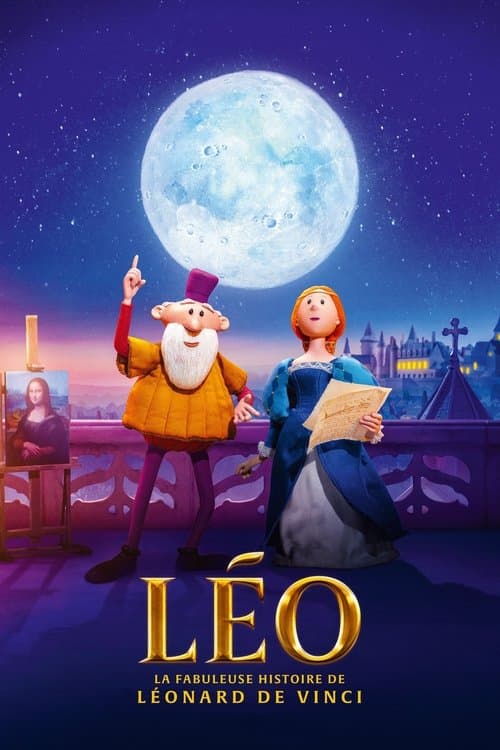
Leo, the fabulous story of Leonardo da Vinci, is an animated film with a lively and whimsical atmosphere, tinged with humour and dreamlike sequences, which traces Leonardo da Vinci's final years at the court of Francis I in France. The plot follows the Florentine genius in his quest for meaning, seeking to understand the purpose of all his inventions and his entire life. Despite its appearance as a children's film, it actually addresses older children and adults more directly, its intellectual density and existential themes far exceeding what a young child can grasp.
Underlying Values
The film builds its central message around a powerful idea: the transmission of knowledge and the awakening of curiosity in others constitute the true legacy of a life. Leonardo finds no meaning in his machines or completed works, but in the seeds of wonder he plants around him. In parallel, the narrative explicitly opposes scientific thought and imagination to military force, presented as crude and sterile. This hierarchy of values is asserted without ambiguity, making it a solid starting point for discussing with a child what it means to leave something behind.
Violence
Violence is present in a stylised and distanced manner, never realistic. Leonardo's sketches of war machines are shown in action in animated sequences, with a scythe-chariot decapitating soldiers and a tank firing a cannon. These images are brief and treated in an illustrative rather than spectacular manner, but they may surprise younger viewers. The figure of Death, skeletal and armed with a scythe, returns several times to threaten Leonardo, notably during his heart attack, in sequences that play on fear without descending into gore. The narrative purpose is clear: these representations serve to show the limits of violence and the fragility of life, not to glorify them.
Sex and Nudity
The film incorporates brief images of Leonardo's historical anatomical sketches, as well as partially nude figures drawn from the Sistine Chapel. These elements are treated with pedagogical naturalness, without any erotic connotation. They may nonetheless warrant a brief explanation for younger children, particularly regarding the distinction between artistic nudity and sexualised nudity.
Discrimination
The film takes a notable stance in its representation of gender: the female characters, Margaret of Navarre and Louise of Savoy, are depicted as intelligent, cultured and politically influential, whilst the male figures of power, beginning with Francis I, are presented as childish, vain or superficial. This reversal is deliberate and constitutes a genuine subject for discussion: it corrects a real historical bias, but in turn creates a symmetrical caricature of courtly men that deserves to be noted with a child or adolescent.
Social Themes
War and its instruments occupy a symbolic place in the narrative, with Leonardo confronted by the contradiction between his military inventions and his humanist ideals. The film also addresses, implicitly, the question of the relationship between political power and intellectual freedom, through Leonardo's relationship with the French royal court. These themes are treated lightly but are sufficiently present to nourish a conversation about the scientist's responsibility in the face of the uses of his discoveries.
Strengths
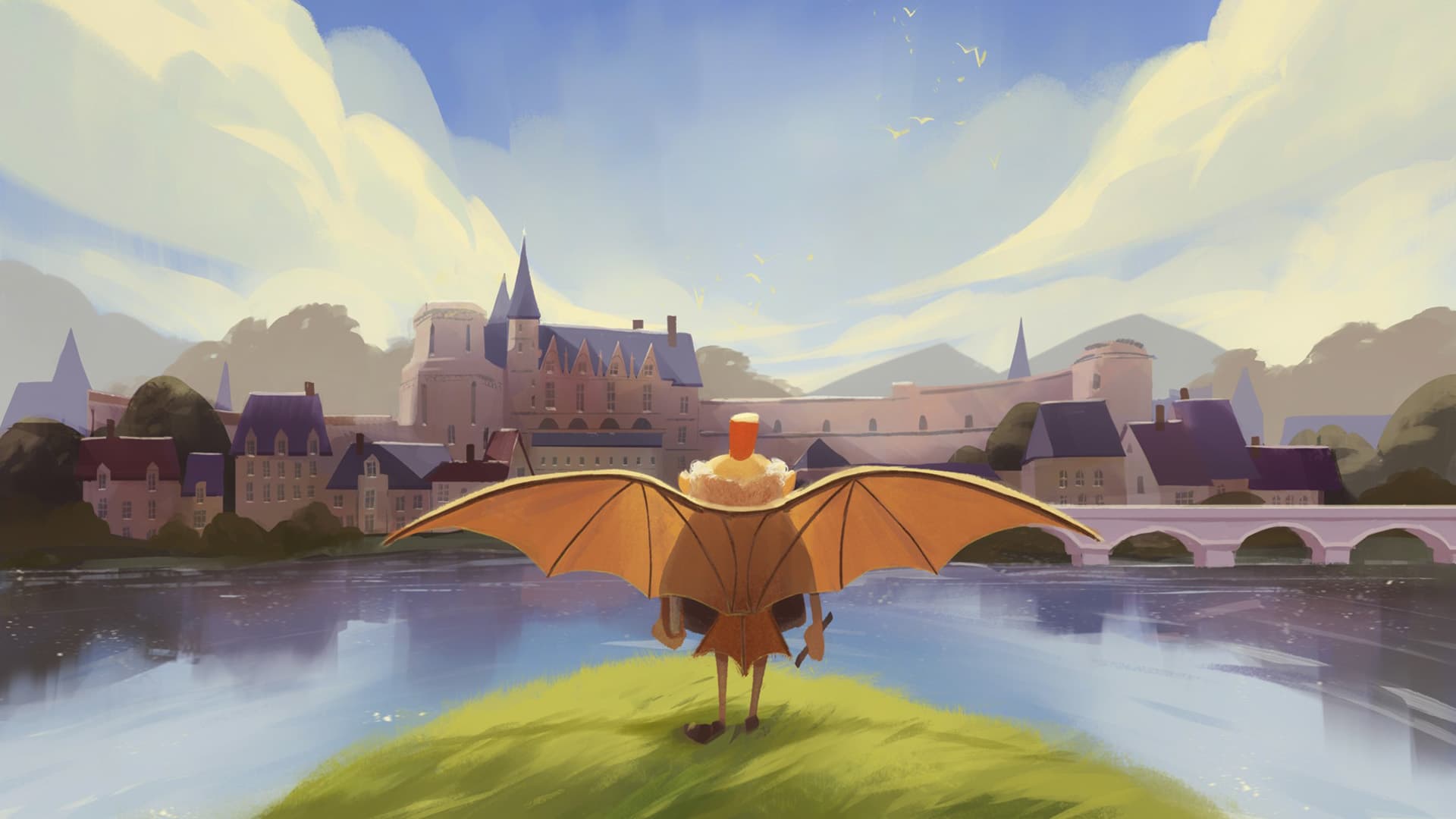
The film offers inventive direction that blends animation, dreamlike sequences and visual representations of Leonardo's notebooks, creating an aesthetic consistent with its subject. Its educational value is genuine: it inspires interest in the Renaissance, anatomy, engineering and the philosophy of knowledge, without ever falling into illustrated documentary. The writing treats Leonardo not as an untouchable genius but as an ageing man, haunted by doubt and the question of meaning, which gives it an emotional depth rare for a family animated film. The figure of Death, far from being a mere device for fear, functions as a philosophical interlocutor that gives the film its singular existential tone.
Age recommendation and discussion points
The film is suitable from age 10 onwards for supervised viewing, and fully accessible from age 12 independently. Two angles of discussion are particularly worthwhile after viewing: ask the child what he or she thinks Leonardo truly accomplished most importantly in his life, and why, then explore together the contradiction between inventing weapons and wanting the good of humanity, a tension that remains strikingly relevant.
Synopsis
The insatiably curious and headstrong inventor Leonardo da Vinci leaves Italy to join the French court, where he can experiment freely, inventing flying contraptions, incredible machines, and study the human body. There, joined in his adventure by the audacious princess Marguerite, Leonardo will uncover the answer to the ultimate question – "What is the meaning of it all?"
About this title
- Format
- Feature film
- Year
- 2023
- Runtime
- 1h 39m
- Countries
- France, Ireland, United States of America, United Kingdom
- Original language
- EN
- Directed by
- Pierre-Luc Granjon, Jim Capobianco
- Main cast
- Stephen Fry, Daisy Ridley, Marion Cotillard, Matt Berry, Natalie Palamides, Jim Capobianco, Ben Stranahan, Jane Osborn, Gauthier Battoue, John Gilkey
- Studios
- Foliascope, Leo & King, Curiosity Studio, Aerial Contrivance Workshop, SIE Films, Blue Fox Entertainment, Former Prodigy Media, Slated, Leveller Media, Tip-Top Productions, Carte Blanche, Moo Studios, Curiosity Rights, The Exchange
Content barometer
- Violence2/5Moderate
- Fear3/5Notable tension
- Sexuality1/5Allusions
- Language0/5None
- Narrative complexity3/5Complex
- Adult themes0/5None
Watch-outs
- Death
- Gender stereotypes
Values conveyed
- Perseverance
- Autonomy
- intellectual curiosity
- friendship
- scientific wonder
- self-transcendence
- freedom of thought
- creativity