
The Incredibles
Does this age rating seem accurate to you?
Detailed parental analysis
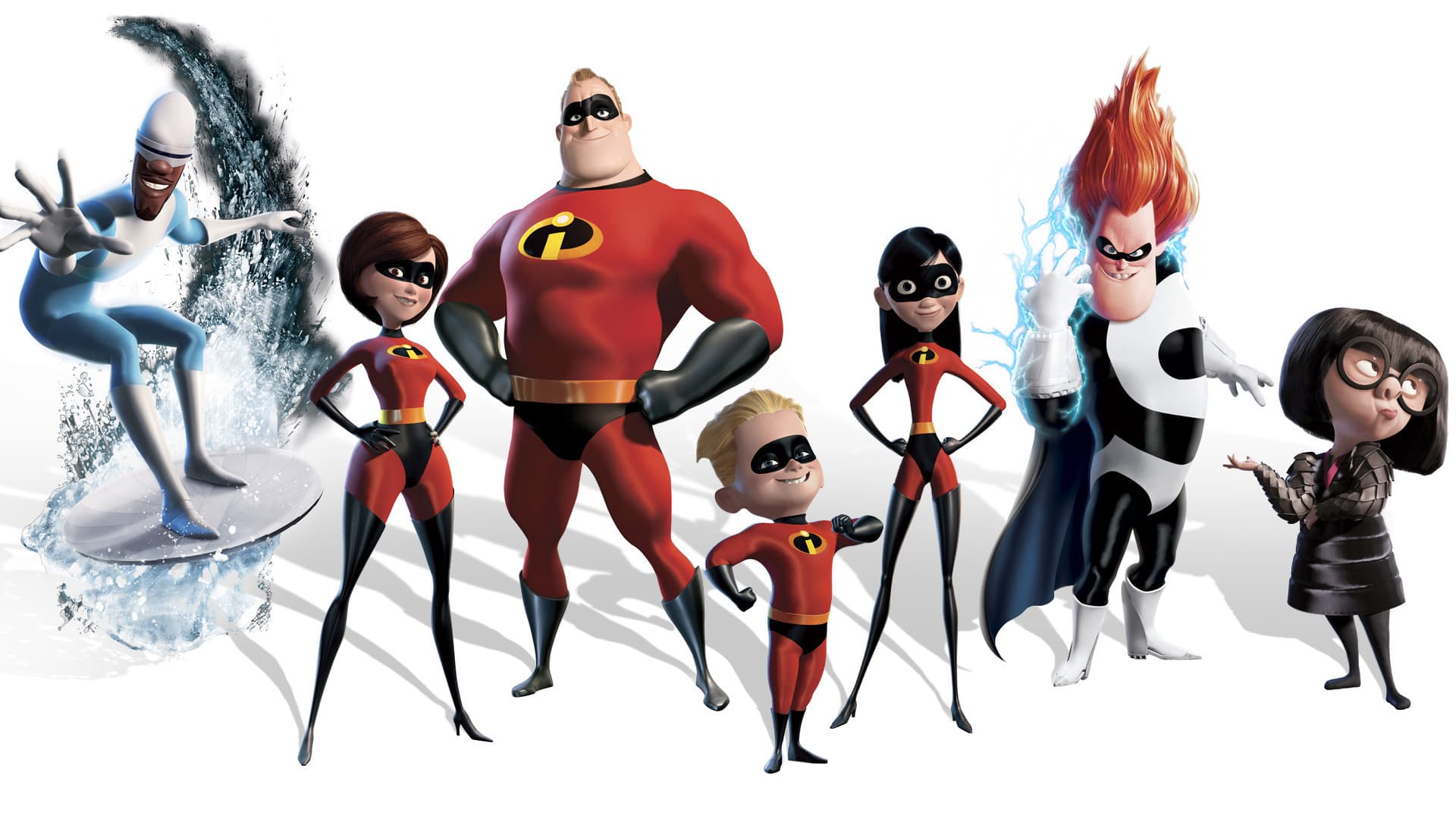
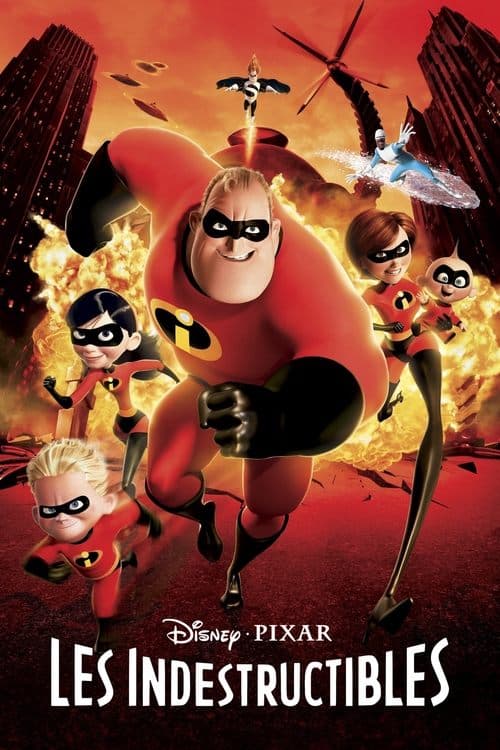
The Incredibles is an animated adventure and action film with a dynamic atmosphere, punctuated by genuinely tense moments and adult humour. The story follows a family of superheroes forced to live hidden in anonymity, until a threat compels them to reveal their powers. Produced by Pixar, the film appeals to parents and children alike, but its dramatic intensity and certain themes place it clearly beyond the very young.
Violence
Violence is the most prominent content in the film and it far exceeds what one would expect from an ordinary family cartoon. A sequence explicitly shows several superheroes killed in varied and sometimes shocking ways, including a visible skeleton in a turbine. An aeroplane carrying the children is destroyed by missiles, the family finds itself in free fall over the ocean and must dodge debris. The children themselves come under direct attack on the ground, sprayed with gunfire from combat robots. Mr. Incredible is subjected to painful electric shocks, accompanied by screams. This violence is narrative-driven and propelled by real stakes, never gratuitous or relished, but it is sustained and sufficiently concrete to impress a child under seven years old. From eight or nine years onwards, the codes of the superhero genre allow its intensity to be put into perspective.
Underlying Values
The film is built on a tension between imposed conformism and authentic self-expression: the superheroes are forced to suppress their abilities in the name of social normalisation, and the narrative demonstrates that this suppression produces frustration, deception and personal disintegration. The central value is that of individual fulfilment in service of the collective, an equation the film defends with consistency. By contrast, the villain's character illustrates what can become of a talent ignored or humiliated: megalomania and destruction. The film also raises, discreetly, the danger of creating weapons without mastering their consequences, the villain ultimately being overwhelmed by his own creation. These themes are accessible to a ten-year-old and offer genuine material for discussion.
Parental and Family Portrayals
Family representation is at the heart of the film and constitutes one of its strengths. The parental couple is shown in its real difficulties: marital routine, deception through omission, emotional absence of a father absorbed by nostalgia for his former life. A scene briefly suggests the possibility of an affair, without confirming it, which surprised some parents who did not anticipate it in this context. The film also shows a mother bearing the household alone for a time, teenagers in an identity crisis directly fed by their family situation, and siblings with well-observed dynamics. Ultimately, the narrative firmly defends unity and communication as conditions for the survival of both couple and family.
Social Themes
The film constructs a legible metaphor on social normalisation and the repression of differences imposed by the State or civil society. Superheroes are placed under legal guardianship, compensated to disappear, and pursued in court when they act. This framework functions as an allegory of imposed conformity, legible to adults, less explicitly to children. The film does not call for blind rebellion but argues for the recognition and public use of individual talents for the benefit of all.
Sex and Nudity
A scene suggests a possible marital infidelity without going beyond a few ambiguous exchanges and a reaction of jealousy. Nothing explicit or visually sexually charged. This adult subtext will pass unnoticed by children but deserves to be known to parents.
Strengths
The film is a rare writing achievement in family animation: it manages to sustain simultaneously an effective action narrative, a comedy of marital manners, and a reflection on identity without these layers neutralising one another. The characters possess genuine psychological depth, particularly the father caught between nostalgia and responsibility, and the teenage girl whose withdrawal into herself finds concrete explanation in her situation. The humour works on multiple levels of reading, with references and adult derision that parents appreciate as much as children. The film conveys, without didacticism, ideas about the value of teamwork, respect for differences within the same family, and the concrete consequences of a lack of communication in a couple.
Age recommendation and discussion points
The film is not recommended before age 6 due to its visual intensity and certain frankly distressing sequences. From 7 or 8 years onwards, it can be watched comfortably by most children. Two angles of discussion are worth exploring after viewing: why the character of Syndrome became a villain, and what this says about the importance of recognising the efforts and talents of others, and why the heroes had to hide what they were and what it feels like not to be able to be oneself.
Synopsis
Bob Parr has given up his superhero days to log in time as an insurance adjuster and raise his three children with his formerly heroic wife in suburbia. But when he receives a mysterious assignment, it's time to get back into costume.
About this title
- Format
- Feature film
- Year
- 2004
- Runtime
- 1h 55m
- Countries
- United States of America
- Original language
- EN
- Studios
- Pixar