The Illusionist
Does this age rating seem accurate to you?
Detailed parental analysis
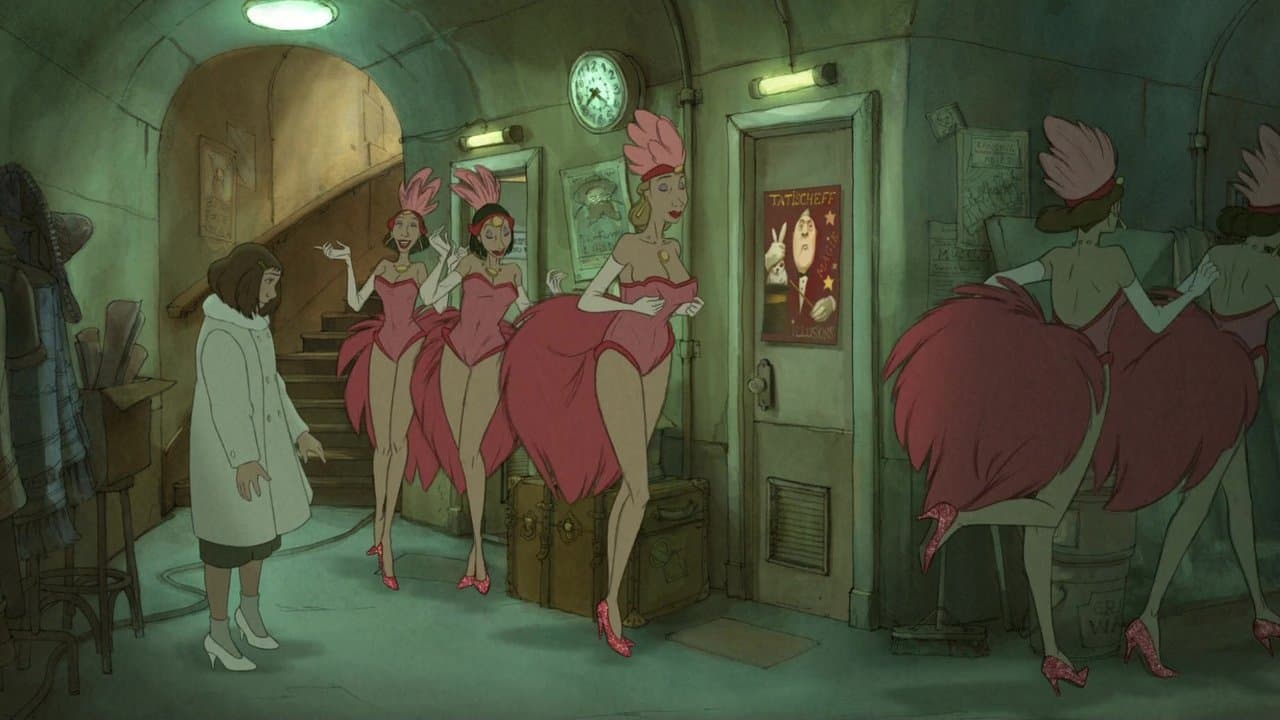
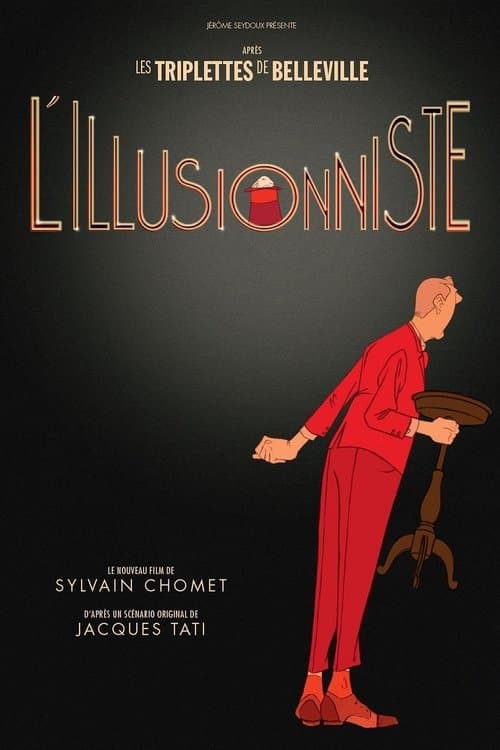
The Illusionist is a contemplative, melancholic and visually poetic animated film set in 1950s Europe during a period of profound cultural change. The story follows an ageing music-hall magician who, in decline as rock and roll rises, meets a naive young girl and attempts to offer her a better life at the cost of his own sacrifice. The film is unambiguously addressed to an adult or older teenage audience: it lacks the pace, lightness and narrative clarity of an animated film made for children.
Underlying Values
The film is entirely structured around the silent sacrifice of a man who effaces himself to protect a young girl from disillusionment. This self-denial is presented as a form of nobility, never questioned or rewarded. Implicitly, the narrative opposes authentic and understated art against triumphant consumer society, embodied by rock and roll and commercial shop windows. The obsolescence of artists from the old generation is treated with a bittersweet sadness, without easy nostalgia. It is a film about dignity in self-erasure, which makes it a rich subject for discussion with a teenager capable of grasping its significance.
Parental and Family Portrayals
The central relationship between the magician and the young girl is father-daughter in nature, platonic and benevolent, but it may appear ambiguous to an uninformed eye, particularly because it is never made explicit through dialogue. The magician plays the role of a protective and sacrificial figure, a substitute father for a young woman without bearings. This dynamic is one of the film's strongest emotional drivers, and deserves to be named before or after viewing to avoid any confusion in a young viewer's mind.
Substances
Tobacco is omnipresent, in keeping with the historical context of the 1950s, without being glorified but equally without being questioned. Alcohol is represented more prominently: a recurring Scottish character appears consistently in an advanced state of intoxication, treated in a comic register. This portrayal of alcoholism as a source of narrative lightness merits mention, even though it remains secondary to the film's overall structure.
Violence
One scene shows a clown attempting to hang himself in his hotel room whilst listening to his circus music. The scene is brief and non-graphic, but it is real and forms part of a broader tableau of characters in distress at their own social disappearance. This moment may surprise or disturb a child or pre-adolescent without prior preparation.
Discrimination
A rock band is depicted with stereotyped visual and behavioural codes that reference a caricatural image of homosexuality. This representation, a product of its time, is not questioned by the narrative and serves essentially to characterise modernity as superficial and affected. This is a point to raise with a teenager in order to contextualise without endorsing.
Sex and Nudity
One scene shows a woman in a low-cut dress entering a hotel room, with an implicit sexual implication. The scene is very brief and contains no visual explicitness. It does not constitute a strong narrative element but should be mentioned to parents of young children.
Strengths
The Illusionist is a work of great visual and emotional refinement, carried by animation with a delicate line and an artistic direction that captures with precision the atmosphere of a Europe in transition. The near-total absence of dialogue is a demanding narrative choice that forces the viewer to read emotions in gestures, glances and settings, making it a rare exercise in attention and sensitivity. The film addresses universal themes with disarming honesty: ageing, a sense of uselessness, generosity without return and dignity in failure. For a mature teenager, it is a valuable introduction to a form of contemplative cinema that does not seek to seduce but to move.
Age recommendation and discussion points
The film is not suitable for children under 12 years old, and a serene and fully understood viewing is better suited to ages 14 and above. Two angles of discussion are worth opening after viewing: why does the magician choose to efface himself without asking for anything in return, and what does this say about the value we place on those who age and disappear in silence; and in what sense does the film judge modernity and youth, and is that judgement fair.
Synopsis
A French illusionist travels to Scotland to work. He meets a young woman in a small village. Their ensuing adventure in Edinburgh changes both their lives forever.
Where to watch
Availability checked on Apr 29, 2026
About this title
- Format
- Feature film
- Year
- 2010
- Runtime
- 1h 16m
- Countries
- France, United Kingdom
- Original language
- FR
- Directed by
- Sylvain Chomet
- Main cast
- Jean-Claude Donda, Eilidh Rankin, Didier Gustin, Jil Aigrot, Jacques Tati, Duncan MacNeil, Raymond Mearns, James T. Muir, Tom Urie, Paul Bandey
- Studios
- Django Films, France 3 Cinéma, Ciné B, Pathé
Content barometer
- Violence2/5Moderate
- Fear2/5A few scenes
- Sexuality1/5Allusions
- Language0/5None
- Narrative complexity2/5Moderate
- Adult themes2/5Present
Values conveyed
- Compassion
- poetic melancholy
- intergenerational transmission
- quiet self-sacrifice
- nostalgia
- human tenderness