The Hunchback of Notre Dame II
Does this age rating seem accurate to you?
Detailed parental analysis
The Hunchback of Notre Dame 2 is a light and colourful sequel with a noticeably softer and more childish tone than its predecessor. The plot follows Quasimodo falling in love with a young woman named Madellaine, whilst a manipulative circus magician devises a theft against the Cathedral of Notre-Dame in Paris. The film is aimed above all at young children, with a family tale atmosphere free of any notable rough edges.
Underlying Values
The central message about inner beauty is omnipresent and hammered home without subtlety: Madellaine must learn to see beyond Quasimodo's appearance, and the film repeats this until the point is exhausted. This lack of nuance does not invalidate the message, but it makes it difficult for a child to absorb naturally, who receives a sermon rather than a lived lesson. In parallel, the narrative promotes courage and generosity without ambiguity, with Quasimodo protecting what he holds dear at the risk of himself. The acceptance of difference is thus truly at the heart of the film, even if the treatment is heavy-handed.
Discrimination
The film systematically associates circus members with deception and theft, making an itinerant travelling community a breeding ground for criminality with almost no exception. This shortcut is narratively convenient but stereotypical. The film partially redeems itself by showing Esmeralda calling out Phoebus when he expresses prejudice towards these same people, introducing an internal critical voice. This moment deserves to be highlighted with a child: the film points out the problem itself, but never truly corrects the image it constructs.
Violence
The dramatic tension rests primarily on the abduction of young Zephyr by the villain Sarousch, used as a hostage, and on chases across the heights of Notre-Dame. These scenes may provoke mild anxiety in very young children, but the intensity remains moderate and characters in danger come through unharmed. There is no graphic violence, no gore, and the tone is far removed from the darkness of the first film.
Parental and Family Portrayals
Sarousch exercises psychological control over Madellaine by reminding her that he rescued her and that she owes him her survival. This dynamic of emotional manipulation and imposed debt is real, even if the film resolves it quickly through Madellaine's emancipation. It is an element that can be raised with a child to discuss relationships of dependency and the difference between gratitude and obligation.
Strengths
The film has no notable artistic qualities: the animation is clearly weaker compared to the first opus, with a visual rendering that evokes a television production more than the big screen. The narrative is predictable, secondary characters are poorly developed, and the songs lack the scope of those that marked the first film. What the film offers that is tangible is a short runtime and a brisk pace that make it easily digestible for a very young audience. The relationship between Quasimodo and Madellaine, although treated without subtlety, gives a concrete and simple illustration of the acceptance theme, usable as a starting point for discussion.
Age recommendation and discussion points
The film is suitable from 5 or 6 years old without major reservation: the few scenes of tension are resolved quickly and the overall tone remains reassuring. Two discussion threads are worth pursuing after viewing: ask the child if all the circus people were really thieves, and why the film gives that impression, then explore why Madellaine found it difficult to see Quasimodo's true personality, and whether that happens in real life.
Synopsis
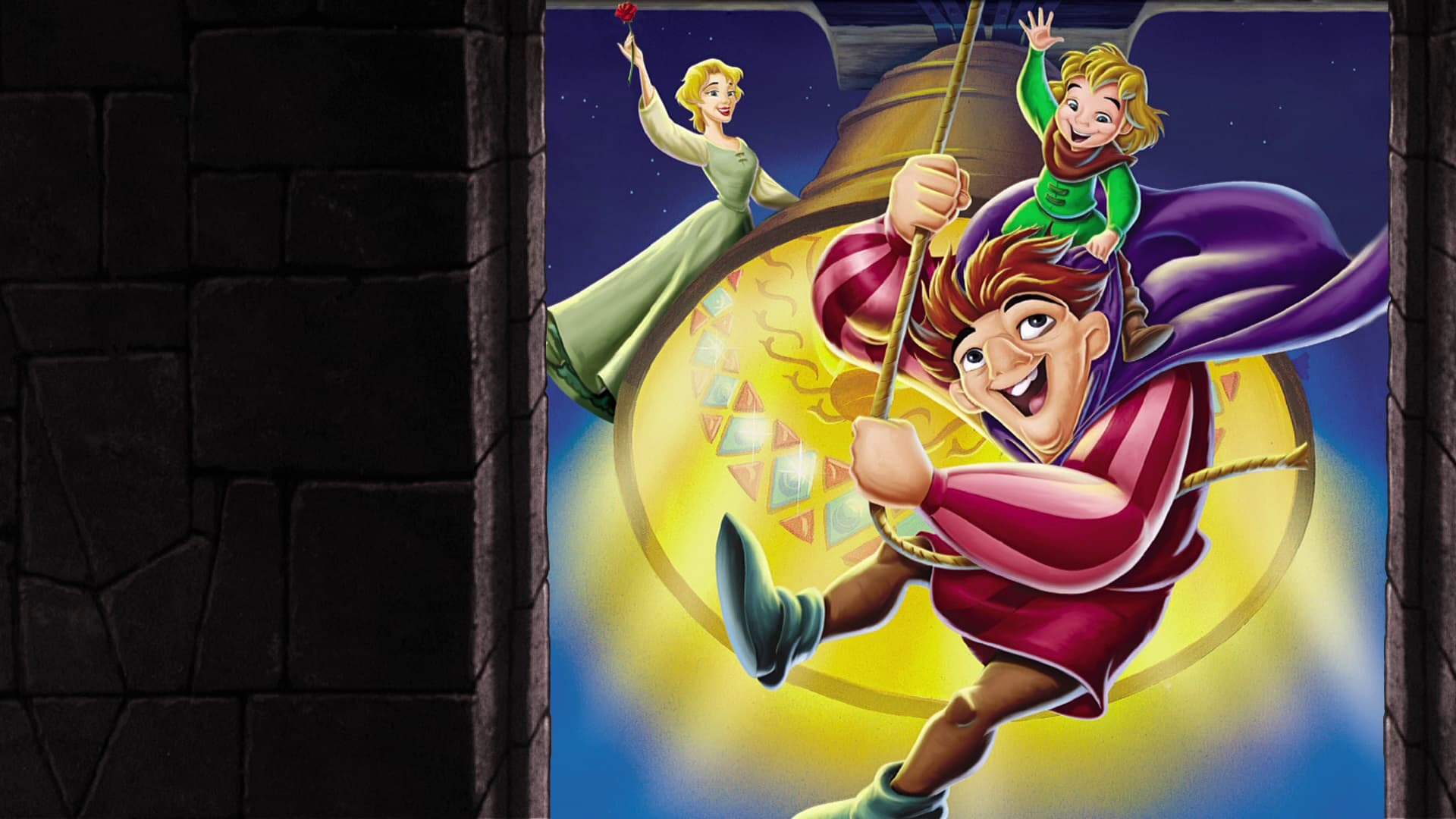
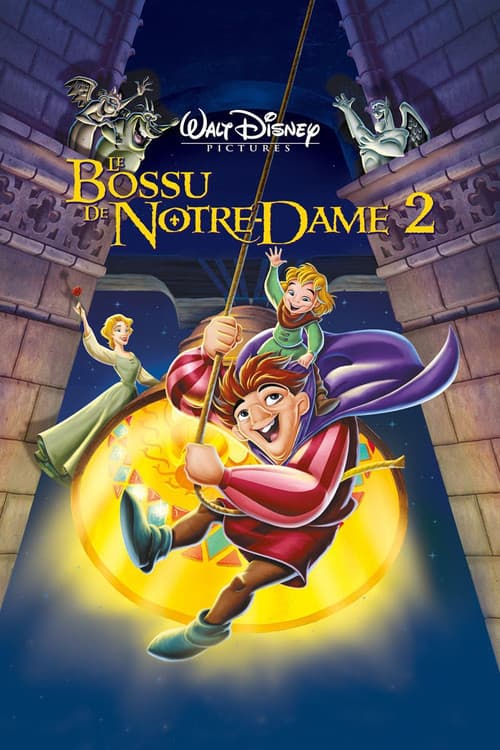
Now that Frollo is gone, Quasimodo rings the bell with the help of his new friend and Esmeralda's and Phoebus' little son, Zephyr. But when Quasi stops by a traveling circus owned by evil magician Sarousch, he falls for Madellaine, Sarouch's assistant.
About this title
- Format
- Feature film
- Year
- 2002
- Runtime
- 1h 8m
- Countries
- United States of America
- Original language
- EN
- Directed by
- Bradley Raymond
- Main cast
- Tom Hulce, Jennifer Love Hewitt, Jason Alexander, Paul Kandel, Charles Kimbrough, Michael McKean, Demi Moore, Kevin Kline, Haley Joel Osment, Jane Withers
- Studios
- Disney Television Animation, Walt Disney Animation Japan, Walt Disney Pictures
Content barometer
- Violence1/5Mild
- Fear1/5Mild
- Sexuality0/5None
- Language0/5None
- Narrative complexity0/5Simple
- Adult themes0/5None
Watch-outs
- Ethnic or racial stereotypes
Values conveyed
- Courage
- Acceptance of difference
- Compassion
- Loyalty
- friendship
- acceptance