The Hunchback of Notre Dame
Does this age rating seem accurate to you?
Detailed parental analysis
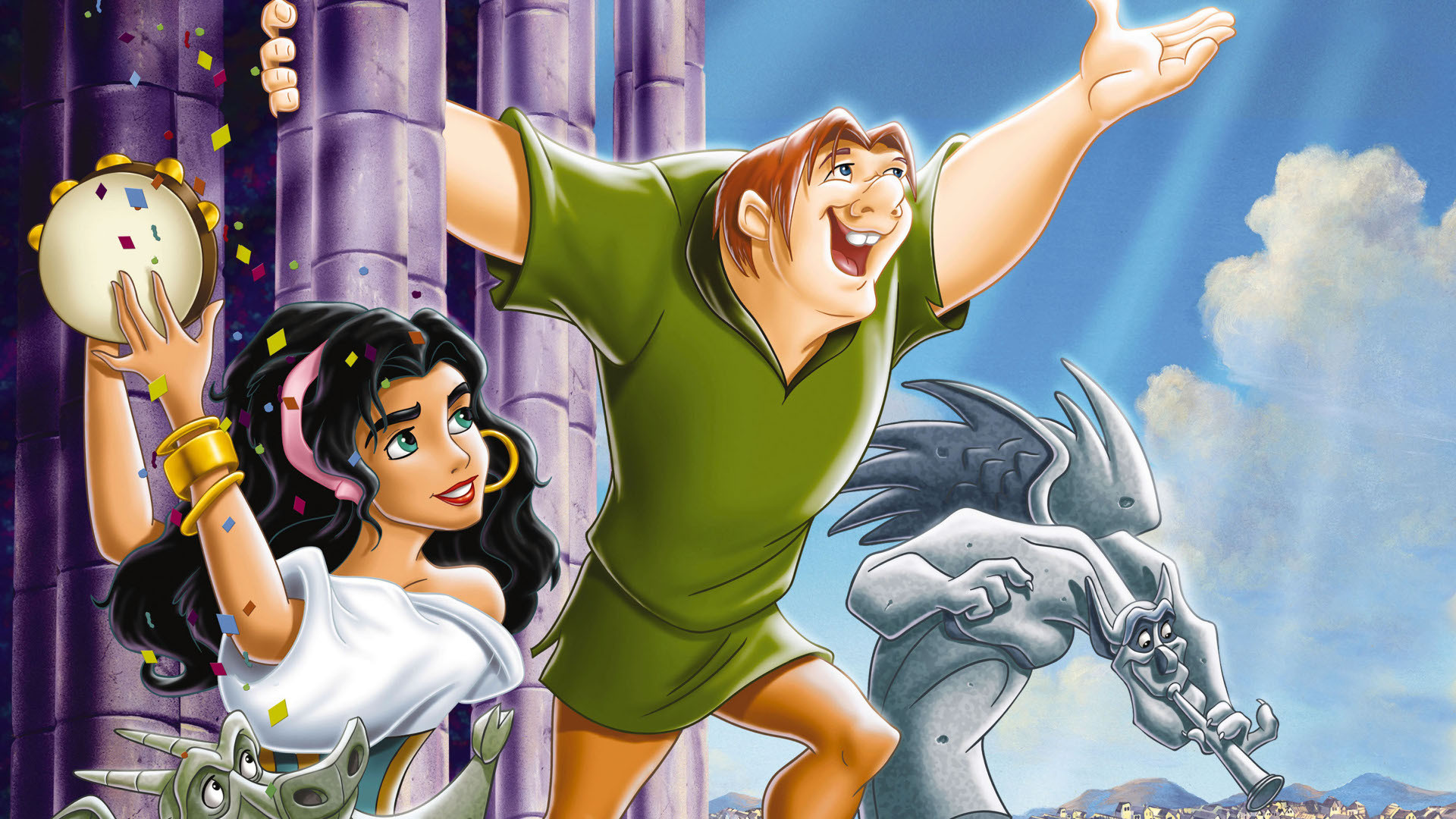
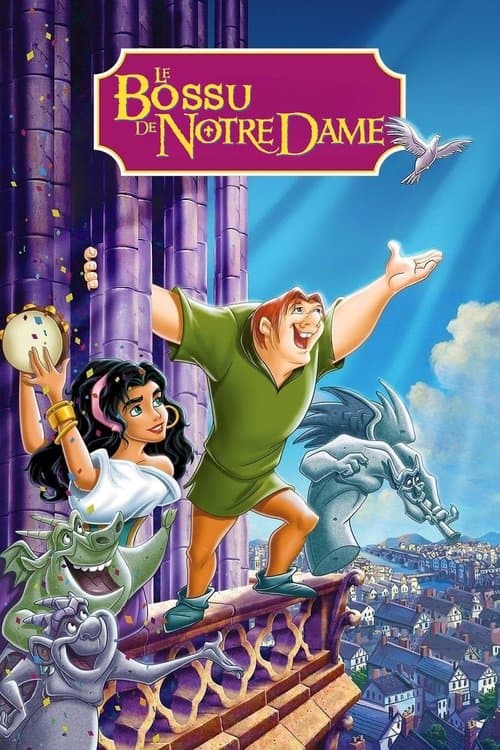
The Hunchback of Notre-Dame is a Disney animated film with a resolutely dark atmosphere, unusual for the studio's output, oscillating between popular musical comedy and moral drama of rare intensity. The plot follows Quasimodo, a disfigured bell-ringer forced to live in seclusion within Paris Cathedral, who yearns for freedom and becomes entangled in Esmeralda's struggle against a fanatical judge. The film is often marketed as family entertainment, but its content is actually better suited to children aged 10 and above, with adult accompaniment recommended for younger viewers in this age range.
Underlying Values
The film rests upon an ambitious and explicit moral architecture. Frollo, the antagonist, is a figure of religious fanaticism who uses faith to legitimise his cruelty, his racism towards Roma and his violence. This critique is coherent and frontal: Frollo is never presented as ambiguous, but the way his religious sincerity renders him all the more dangerous is a complex idea for a young child. As counterpoint, the film advocates acceptance of physical difference, refusal of tyrannical authority and the value of inner courage over beauty or social status. These messages are structuring and solid, but they coexist with representations sufficiently heavy to warrant discussion.
Violence
The film's violence is real and narrative, not gratuitous, but it strikes with intensity for an animated feature. Quasimodo's mother is killed in the opening minutes, hurled by Frollo against the cathedral steps. Infant Quasimodo is then held above a well by Frollo, poised to drop him in. During the final battle, Quasimodo kills several soldiers by pouring molten stone from the towers. These scenes follow clear narrative logic, but their brutality remains high. The public humiliation scene, where Quasimodo is bound and pelted with food before the crowd, is emotionally harrowing and may leave lasting impressions on sensitive children.
Sex and Nudity
Esmeralda's depiction is the most problematic element of the film for families. Her dances are choreographed in explicitly seductive manner, including movements reminiscent of pole dancing. A brief scene shows her from behind, partially naked in her tent. The song Hellfire is entirely constructed around Frollo's obsessive sexual desire for Esmeralda, with metaphors of fire and sin, and contains barely veiled threats to burn her if she refuses to belong to him. The sequence is musically and visually powerful, but it explicitly articulates sexual desire, possession and violence against a woman. This is not a scene one can gloss over with a seven-year-old in the room.
Discrimination
The treatment of Roma is one of the film's central axes. Frollo designates them as vermin, justifies their persecution by their supposed criminal nature, and orchestrates a purge against them. The film never validates this view: Esmeralda and her community are represented with dignity, courage and solidarity. This construction is pedagogically useful because it stages discriminatory discourse in order to denounce it. In parallel, Quasimodo is victim of systematic rejection on account of his physical appearance, and the film treats this theme with consistency and sensitivity.
Parental and Family Portrayals
The father figure is doubly perverted here. Frollo plays the role of Quasimodo's guardian from childhood, but his authority rests entirely on guilt and confinement. He persuades Quasimodo that the outside world will reject him, that his ugliness is a shame, and that disobedience is ingratitude. This dynamic of psychological control is represented with clinical precision, and parents can make it a point of discussion about what benevolent authority means as opposed to toxic authority. Quasimodo's biological mother, meanwhile, is dead within the film's opening minutes.
Social Themes
The film addresses directly the persecution of an ethnic minority, the abuse of institutional power and the legitimisation of violence through religious discourse. These themes are embedded in a medieval narrative but resonate with contemporary realities legible to adolescents. The question of resistance to tyranny and solidarity with the oppressed is posed with clarity that opens real discussion.
Strengths
The film carries a narrative ambition rare for mainstream animated production. Its original score is musically sophisticated, particularly Hellfire, which is a choral composition of extraordinary dramatic intensity within the genre. The construction of Frollo's character is one of the film's most solid achievements: his sincere conviction that he is acting in the name of good makes him far more unsettling than a simple caricatured villain, and this is precisely what makes him pedagogically interesting. Quasimodo's arc, confronted with betrayal, rejection and humiliation before finding his dignity, is treated without sentimental concession and offers genuine emotional intelligence. The film also serves as a serious entry point toward Victor Hugo's novel and toward reflection on the Middle Ages, justice and tolerance.
Age recommendation and discussion points
The film is not recommended before age 8 without active accompaniment, and calm viewing is better situated around 10 to 12 years old. Two angles merit discussion after watching the film: why is Frollo convinced he is right, and what does this say about people who do harm whilst believing themselves just? And why does the film's world reject Quasimodo because of his appearance, when he is the one who acts with the most courage?
Synopsis
Isolated bell-ringer Quasimodo wishes to leave Notre Dame tower against the wishes of Judge Claude Frollo, his stern guardian and Paris' strait-laced Minister of Justice. His first venture to the outside world finds him Esmeralda, a kind-hearted and fearless Romani woman who openly stands up to Frollo's tyranny.
About this title
- Format
- Feature film
- Year
- 1996
- Runtime
- 1h 31m
- Countries
- United States of America
- Original language
- EN
- Studios
- Walt Disney Pictures, Walt Disney Feature Animation
Content barometer
- Violence3/5Notable
- Fear4/5Intense
- Sexuality3/5Moderate
- Language1/5Mild
- Narrative complexity3/5Complex
- Adult themes0/5None
Watch-outs
- Death
- Ethnic or racial stereotypes
- Abuse
Values conveyed
- Courage
- Acceptance of difference
- Compassion
- friendship
- empathy
- justice