The Great Mouse Detective
Does this age rating seem accurate to you?
Detailed parental analysis
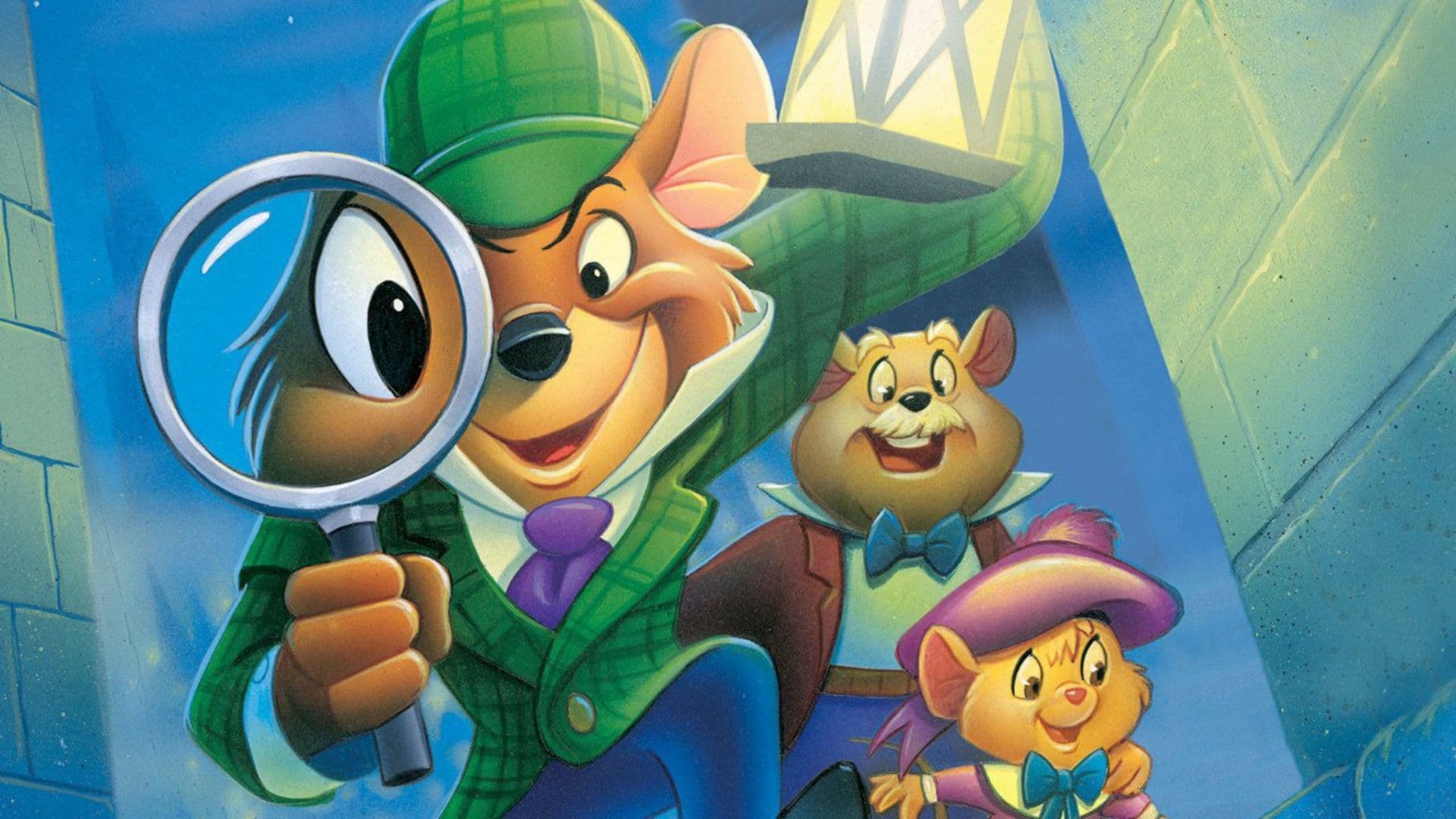
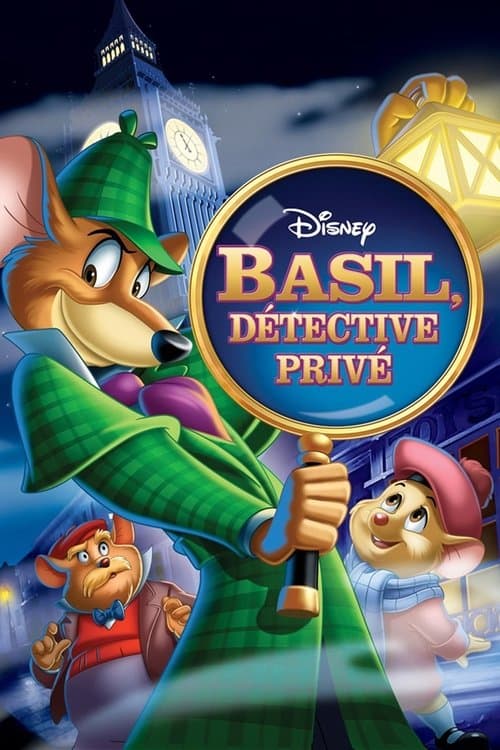
Basil, the Great Mouse Detective is a Disney animated film with a deliberately dark and tense atmosphere, inspired by the world of Sherlock Holmes transposed into a Victorian world of rodents. The plot follows Basil, a brilliant detective, as he seeks to thwart the plans of a ruthless criminal rat whilst attempting to rescue the kidnapped father of a young mouse. The film ostensibly targets young children, but its tone, frightening sequences and the brutality of certain scenes make it considerably more suited to school-age children.
Violence
Violence is the most striking aspect of the film for a parent. Ratigan, the main antagonist, has one of his henchmen devoured by his cat on screen in the earliest scenes, an implicit yet clearly signified death. The climax within Big Ben's mechanism features a brutal physical confrontation between Basil and Ratigan: blows, a vertiginous fall, visible injuries. Two characters fall from the top of the tower in what is presented as probable death. A deadly mechanical trap threatens the main protagonists explicitly and at length. The violence is narrative, never gratuitous in an aesthetic sense, but its intensity far exceeds what an audience accustomed to the Disney comedies of that era might expect.
Underlying Values
The film constructs a clear and unambiguous moral opposition: intelligence, rigour and humility in the face of failure on one side, megalomania, cruelty and thirst for power on the other. Basil is a flawed hero who goes through a phase of discouragement before rallying, which gives him genuine depth. Ratigan possesses no grey areas: he is evil without any possibility of redemption. This moral clarity is a real pedagogical asset, even if it leaves little room for nuance regarding the nature of the villain.
Substances
Tobacco is present continuously: both Basil and Ratigan smoke cigars throughout the film, with this never being signalled as negative. Alcohol appears in two distinct scenes, including a lengthy tavern sequence where several secondary characters are clearly visibly drunk. Consumption is treated lightly and sometimes as comic relief. These elements, innocuous within the production context of the time, deserve to be flagged as they accumulate and are never counterbalanced by a negative portrayal.
Sex and Nudity
The tavern scene includes a burlesque-style musical number featuring a dancer presented as an alluring cabaret character. The treatment remains largely implicit and stylised, with no nudity or explicit content, but the register is that of adult entertainment and stands apart from the rest of the film. For a very young child, this passes unnoticed; for a child aged eight to ten, it is a good opportunity for a conversation about representations of femininity in the media.
Parental and Family Portrayals
The father-daughter relationship between Flaversham and Olivia is the emotional mainspring of the film. The father is benevolent, devoted and protective, but quickly reduced to the role of victim to serve the narrative. Young Olivia is courageous and endearing despite her vulnerability. The film thus offers an affectionate parental model without excessive idealisation, and the family arc provides concrete emotional grounding to the stakes of the plot.
Strengths
The film is one of the most narratively structured of the Disney period in the 1980s, with a story that keeps you on the edge of your seat from start to finish thanks to genuine thriller mechanics. The figure of Basil, an imperfect genius capable of making mistakes and doubting himself, is rare in family animation of that era and offers a more realistic model of intelligence than a triumphant one. The climax inside Big Ben's mechanism is a sequence of remarkably effective, tense and inventive staging. The film naturally introduces children to the figure of Sherlock Holmes and to deductive reasoning, which can spark genuine literary curiosity.
Age recommendation and discussion points
The film is not recommended before age seven due to the violence in certain scenes and moments designed to frighten; from age seven to eight onwards, a child with supervision can certainly watch it. Two subjects merit discussion after viewing: why Basil is allowed to smoke and drink without anyone remarking on it, and what this says about the era in which the film was made; and the question of the villain without redemption, to explore with the child whether truly wicked people resemble Ratigan or whether reality is more complicated.
Synopsis
When the diabolical Professor Ratigan kidnaps London's master toymaker, the brilliant master of disguise Basil of Baker Street and his trusted sidekick Dawson try to elude the ultimate trap and foil the perfect crime.
About this title
- Format
- Feature film
- Year
- 1986
- Runtime
- 1h 17m
- Countries
- United States of America
- Original language
- EN
- Directed by
- Ron Clements, John Musker, Burny Mattinson, David Michener
- Main cast
- Barrie Ingham, Vincent Price, Val Bettin, Susanne Pollatschek, Candy Candido, Diana Chesney, Eve Brenner, Alan Young, Basil Rathbone, Ellen Fitzhugh
- Studios
- Silver Screen Partners II, Walt Disney Pictures
Content barometer
- Violence3/5Notable
- Fear4/5Intense
- Sexuality1/5Allusions
- Language0/5None
- Narrative complexity1/5Accessible
- Adult themes3/5Marked
Values conveyed
- Courage
- Perseverance
- Loyalty
- friendship
- intelligence
- family bonds