
The Good Dinosaur
Does this age rating seem accurate to you?
Detailed parental analysis
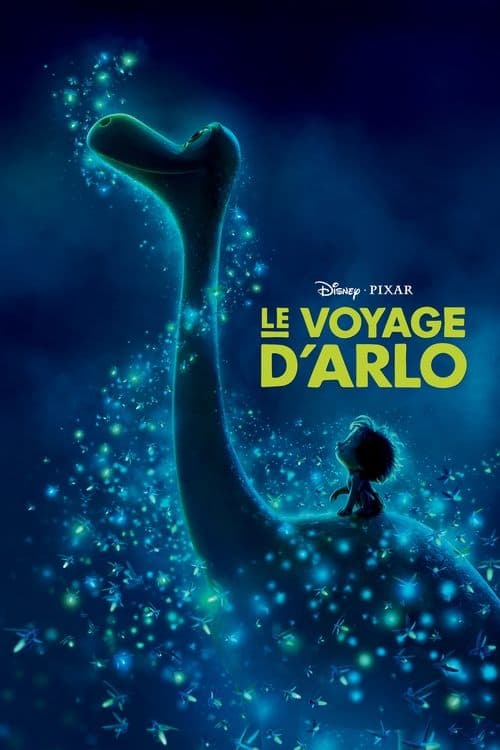
The Good Dinosaur is a Pixar animated film with a contemplative atmosphere and emotionally intense quality, oscillating between the visual beauty of a prehistoric world and an emotional darkness that regularly surprises viewers. The plot follows a young dinosaur separated from his family who must find his way home in the company of a wild human child. The film presents itself as a family tale, but its emotional register actually addresses itself more to school-age children and adults than to very young children.
Violence
The film multiplies sequences of direct threat and animal violence with visual realism unusual for a family animation production. The attacks by pterodactyls and tyrannosauruses are frankly frightening, designed to create genuine tension rather than cartoon-like fear. The father's death occurs on screen, swept away by a swollen river, without mitigation or omission: it is a raw sequence, visually explicit in its emotional consequences. To this are added scenes of submersion, violent waterfalls and simulated drowning of the protagonist, which constitute an accumulation of particularly harrowing aquatic ordeals. The violence is not gratuitous; it serves the purpose regarding fear and resilience, but its cumulative intensity exceeds what many young children can absorb without genuine distress.
Parental and Family Portrayals
The paternal figure is central and his disappearance constitutes the triggering event of the entire narrative. Arlo's father is represented as a benevolent, courageous and loving role model, which makes his death all the more destabilising for young viewers. The film explicitly addresses parental grief, with a particularly moving scene in which the two orphaned protagonists communicate their loss by tracing silhouettes in the sand: a sequence of rare emotional accuracy, but also of adult sadness. Arlo's family, although united, is quickly reduced to his absence, and it is this lack that structures the entire journey.
Underlying Values
The film carries a clear message about overcoming fear as a condition for self-fulfilment, illustrated with solid narrative consistency. The friendship between Arlo and Spot rests on a principle of reciprocity and sacrifice: each gives more than he receives, and it is this mutual generosity that constitutes the moral heart of the narrative. The film also values masculine vulnerability, notably through a main character who cries, doubts and fails repeatedly without this being presented as a weakness to overcome but as a human reality to accept. This positioning is notable and offers a useful angle for discussion with children.
Substances
A scene shows Arlo and Spot consuming fermented fruit, which causes them to experience visual hallucinations and behaviour clearly associated with intoxication. The sequence is played for humour and presented as an amusing moment of complicity between the two characters. It has no serious narrative purpose and never problematises what it depicts. For parents who wish to maintain consistency in their discourse about alcohol and substances, this scene warrants being anticipated and discussed.
Strengths
The film achieves remarkable visual mastery in its representation of natural landscapes, which at times reach a degree of beauty and realism that is striking for animation. The relationship between Arlo and Spot is constructed without explicit dialogue, solely through gesture, gaze and physical proximity, which constitutes an elegant exercise in silent narration and accessible to children. The treatment of grief and fear avoids the usual conveniences of the genre: suffering is shown as enduring, not as an obstacle to resolve in act two. This emotional honesty is a genuine quality, even if it explains why the film can be difficult for younger viewers.
Age recommendation and discussion points
The film is not recommended for children under 6 years old, and attentive parental accompaniment remains advised until 8 or 9 years of age due to emotional intensity and sequences of violence and drowning. From 8 years old for a child without particular sensitivity to themes of death and separation, viewing is generally accessible. After the film, two angles merit being opened with the child: what the father's death makes Arlo feel and how the child themselves would react to such a loss, and why being afraid does not prevent one from being courageous.
Synopsis
An epic journey into the world of dinosaurs where an Apatosaurus named Arlo makes an unlikely human friend.
About this title
- Format
- Feature film
- Year
- 2015
- Runtime
- 1h 34m
- Countries
- United States of America
- Original language
- EN
- Studios
- Pixar
Content barometer
- Violence3/5Notable
- Fear4/5Intense
- Sexuality0/5None
- Language0/5None
- Narrative complexity1/5Accessible
- Adult themes2/5Present
Values conveyed
- Courage
- Friendship
- Acceptance of difference
- Perseverance
- resilience
- family