The Golden Ball
Does this age rating seem accurate to you?
Detailed parental analysis
The Golden Ball is a coming-of-age adventure film rooted in the everyday reality of West Africa, with an atmosphere that is both warm and melancholic. The plot follows Bandian, a young village boy convinced he is destined to become the world's greatest footballer, and his journey fraught with obstacles to realise this dream. The film is primarily aimed at children and pre-adolescents, whilst offering adults a more nuanced reading on dreams, community and destiny.
Underlying Values
The narrative is structured around the conviction that an individual's destiny can be decided by others, notably by parents and a medicine man who shape Bandian's life without asking his opinion. This dimension raises a genuine question about the child's autonomy in the face of adult projections and collective beliefs. In parallel, the film strongly values perseverance, effort and self-belief, which gives the narrative a positive energy. Friendship and forgiveness are also genuine narrative drivers: Bandian learns to trust, to reconcile, to move forward despite betrayals. The tension between imposed destiny and personal desire is not resolved in a simplistic way, which makes it a particularly rich point for discussion.
Parental and Family Portrayals
Parental and community figures play a central but ambiguous role. Bandian's parents act out of love and faith in traditions, but their decision to entrust his future to a medicine man illustrates a form of authority that silences the child's voice. The film does not condemn these figures; it shows them within their own cultural logic, which is honest but deserves to be discussed with a child who might otherwise internalise without question the idea that adults are always right about what is good for him.
Social Themes
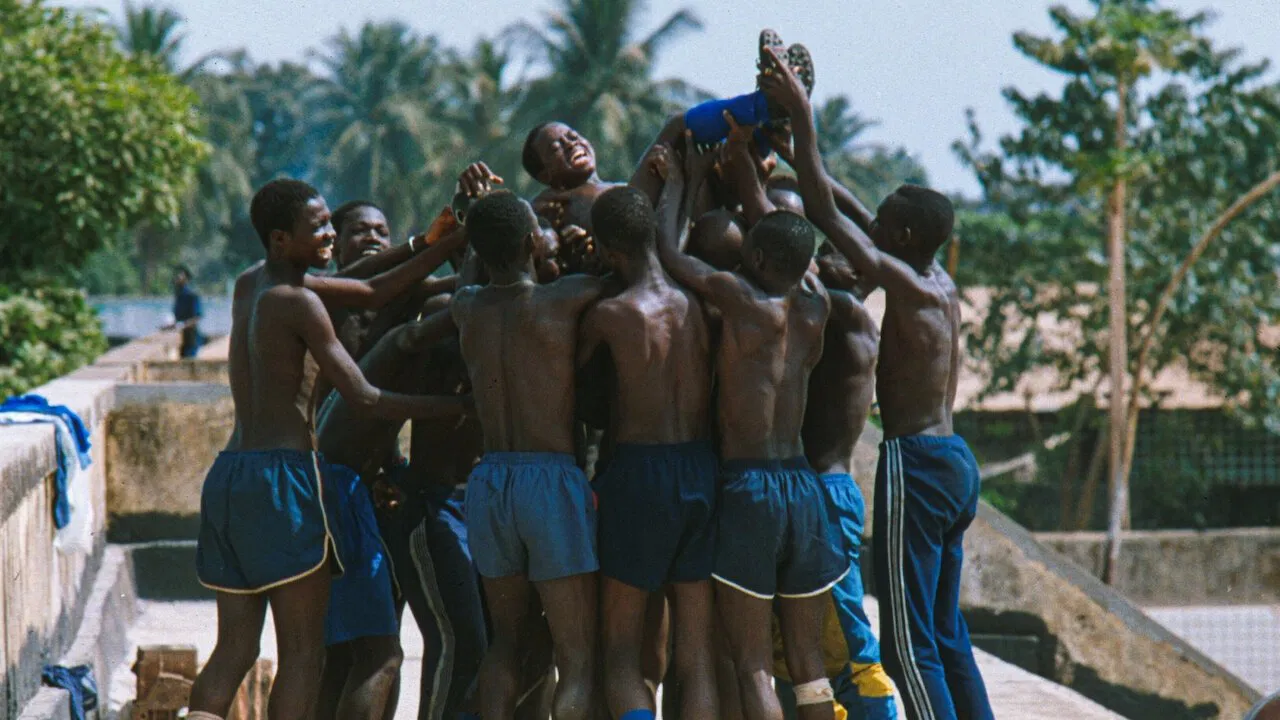
The film offers a documented perspective on daily life in Guinea, conditions of poverty, village structures and the place of football as a vector of social hope. Migration to the city and the dreams of success that accompany it are treated with realism, without misery or idealisation. It is a valuable cultural window for children with little exposure to these realities, and it functions without condescension.
Strengths
The film succeeds in telling a universal story of dream and learning whilst remaining deeply rooted in a specific cultural context, never reducing it to exotic backdrop. The narrative is carried by an endearing and credible child character, whose doubts and enthusiasm ring true. The direction privileges observation of everyday life and human relationships, which gives the film an emotional texture rare in cinema made for young audiences. It is also a living document of a West Africa rarely represented with such intimacy, which gives it lasting pedagogical and cultural value.
Age recommendation and discussion points
The film is accessible from age 8 and particularly suited to children aged 9 to 12, who can identify with Bandian without being troubled by difficult content. Two angles of discussion merit being opened after viewing: first, do adults have the right to decide a child's dream in their place, even with good intentions? Second, what does it mean to believe in one's destiny, and to what extent does this belief help or hinder making one's own choices?
Synopsis
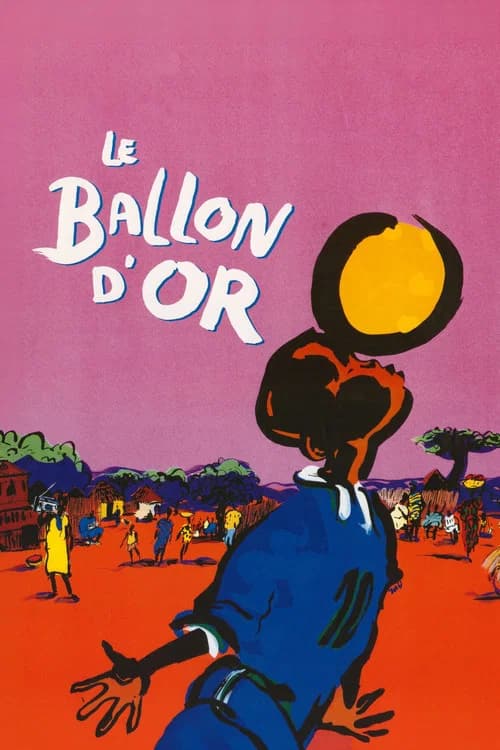
The Golden Ball is a wonderful children's film that tells of a young boy's dream of being a soccer player. Whenever a match is broadcast live in the village of Makono, Bandian and his brother keep their ears to the transistor radio, spinning a picture of the game from the announcer's commentary much as they fantasize themselves on the field. A gift of a real soccer ball, which Bandian paints gold, like a magical object involves him in a series of adventures which bring him in reach of his dream, but which also require him to make difficult choices.
About this title
- Format
- Feature film
- Year
- 1994
- Runtime
- 1h 30m
- Countries
- France, Guinea
- Original language
- FR
- Directed by
- Cheik Doukouré
- Main cast
- Aboubacar Sidiki Sumah, Aboubacar Kolta, Agnès Soral, Habib Hammoud, Mody Sory Barry, Salif Keita, Mariam Kaba, Keita Alama, Lanfia Kouyaté Sara, Sabou Doumbouya
- Studios
- Chrysalide Films, Le Studio Canal+, France 2 Cinéma, Bako Productions, CNC, Ministère Français de la Coopération et du Développement, Agence de la Coopération Culturelle et Technique, Canal+, Canal+ Horizons, PROCIREP
Content barometer
- Violence1/5Mild
- Fear1/5Mild
- Sexuality0/5None
- Language0/5None
- Narrative complexity2/5Moderate
- Adult themes0/5None