The Drifting Guitar
Does this age rating seem accurate to you?
Detailed parental analysis
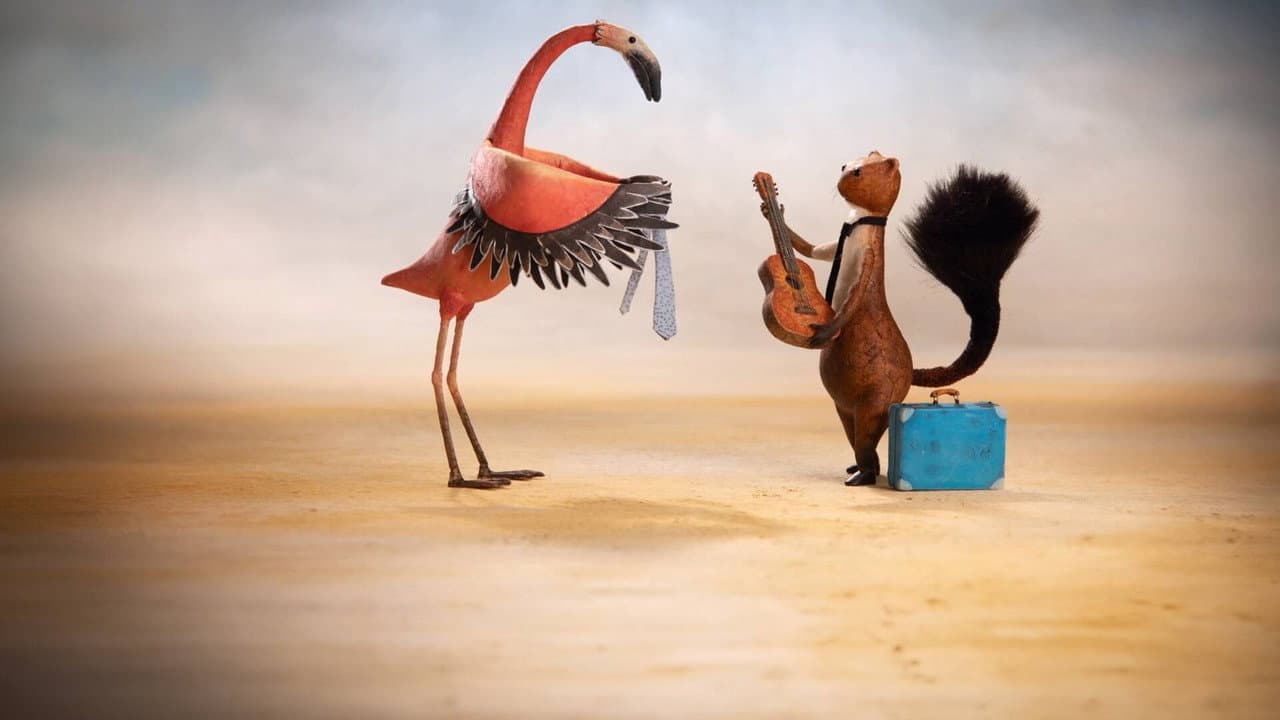
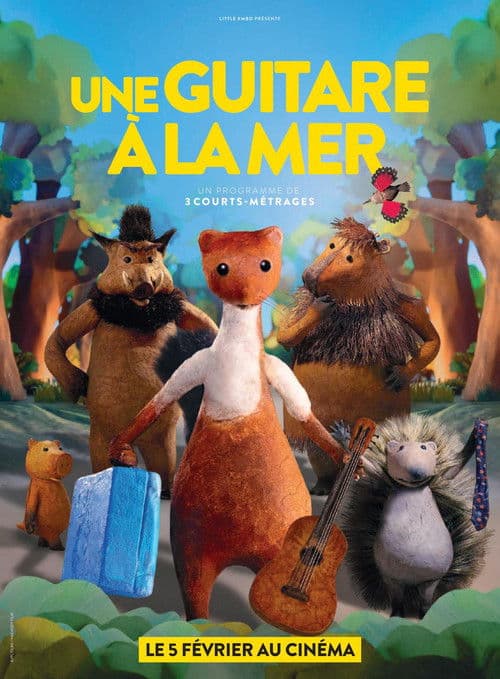
A Guitar by the Sea is a joyful and warm animated film, tinged with a few moments of light tension and wonder. A solitary and musical polecat sets out to meet other animals and discovers, through a series of adventures, what it means to find one's place and one's friends. The film is clearly aimed at very young children, from nursery school onwards, and will suit the whole family without reservation until around ten years old.
Violence
The film contains a few scenes that may surprise the youngest viewers without ever descending into actual violence. A polecat is seized roughly by the collar and held in the air by a rooster, which constitutes the most physically intense moment in the narrative. Animals are swept away by raging currents, and a fall from a great height into the sea occurs in a dream. These sequences remain brief and fit within an adventure logic where danger is always overcome. No violence is gratuitous or aestheticised: it serves to create stakes and to promote solidarity as a response to hardship.
Underlying Values
The narrative builds with coherence a vision of happiness founded on belonging to a chosen group rather than on individual performance. Music occupies a structural place within it: it is not a talent to be displayed but a language that allows initial mistrust to be overcome and connection to be created. The idea that the place where one lives has value only through the beings who inhabit it runs throughout the film and offers rich material for discussion with a child about what it means to feel at home.
Social Themes
The film discreetly addresses the question of rejection and integration: the polecat is initially kept apart by the other animals before being accepted. This pattern, classic in children's animated cinema, is treated here with enough gentleness to avoid causing anxiety in the youngest viewers, whilst remaining clear enough that a child experiencing a similar situation can recognise themselves in it.
Strengths
The film succeeds in weaving together adventure, humour and emotion in a format accessible to very young viewers without ever talking down to them. Music, central to the narrative, is used with narrative intelligence: it advances the story and creates moments of connection between characters that work just as well for children as for the adults accompanying them. The mysterious creature, initially a source of fear, proves to be harmless, which offers a fine lesson on prejudice without the film needing to state it explicitly. The whole exudes a sincere warmth that explains families' enthusiasm for it.
Age recommendation and discussion points
The film is suitable from age 4, and can be watched peacefully from age 5 for children sensitive to scenes of light tension. After viewing, two angles of discussion are worth pursuing: ask the child why the other animals were afraid of the polecat at the beginning, and what changed, then ask them what music allows us to do that words do not always allow.
Synopsis
A weasel, who’s unusual job is to sell ties, roams around the countryside. Considered a pest and constantly on the move, she decides to try her luck in the forest. Her fate is about to change when a hedgehog intervenes.
About this title
- Format
- Short film
- Year
- 2024
- Runtime
- 30m
- Countries
- France, Switzerland
- Original language
- FR
- Directed by
- Sophie Roze
- Studios
- JPL Films, Nadasdy Film
Content barometer
- Violence1/5Mild
- Fear2/5A few scenes
- Sexuality0/5None
- Language0/5None
- Narrative complexity0/5Simple
- Adult themes0/5None
Values conveyed
- Courage
- Friendship
- Acceptance of difference
- difference
- music
- kindness