The Croods: A New Age
Does this age rating seem accurate to you?
Detailed parental analysis
The Croods 2 is a family animated comedy with a colourful, fast-paced atmosphere, driven by constant energy and omnipresent physical humour. The plot follows the Croods family as they discover a more evolved tribe and must navigate differences in their way of life, whilst the relationship between Eep and Guy evolves towards a first teenage romance. The film targets young children with their parents in tow, with a narrative layer sufficiently developed to hold the attention of parents and teenagers.
Parental and Family Portrayals
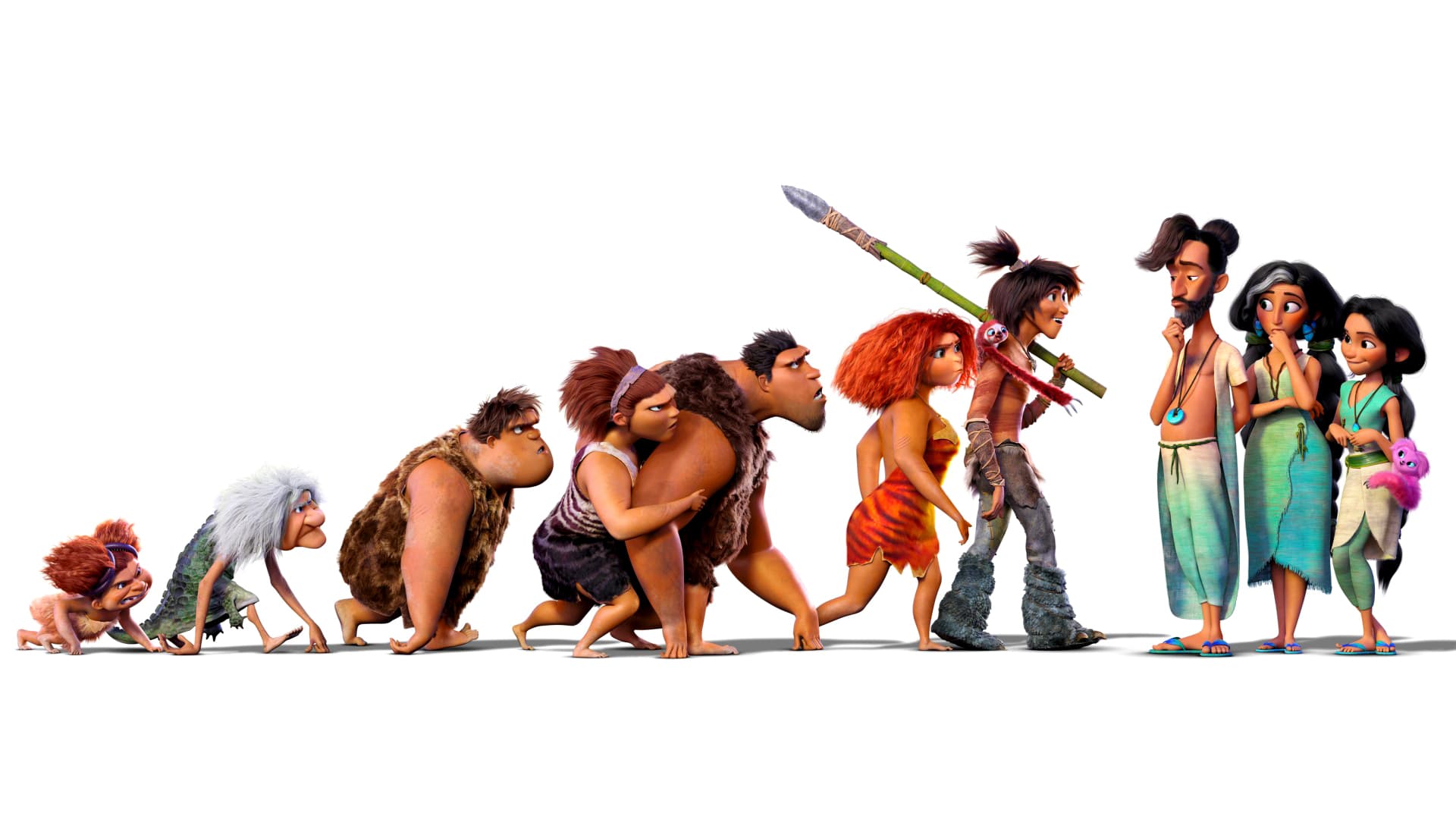
Family dynamics are the true engine of the film. Father Grug is depicted as an overprotective parent, unable to let go in the face of his daughter Eep's desire for independence, and this tension occupies a central place in the narrative. The film does not ridicule him without nuance: his fear of losing his daughter is presented as understandable, even if the narrative ultimately asks him to evolve. The extended family, including the grandmother, is presented as a resource rather than a burden, which gives the family model a warm, collective character. This is a particularly fertile angle to explore with a teenager who may recognise themselves in the tension between family belonging and desire for emancipation.
Violence
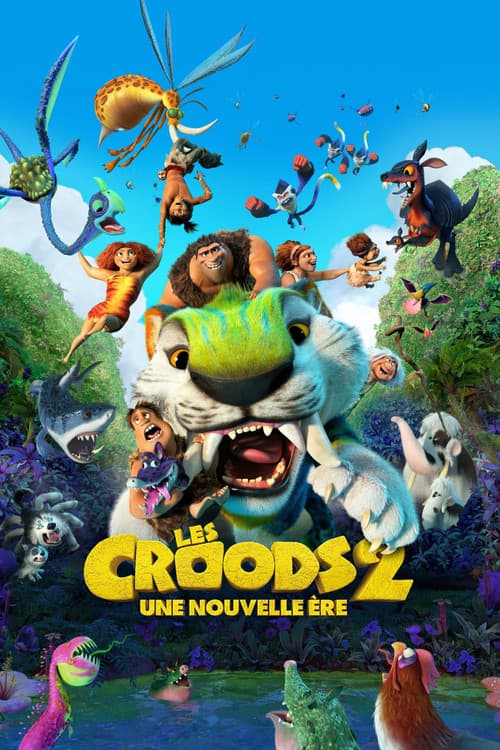
Violence is present repeatedly but remains resolutely comic and without lasting consequences: blows, bites, hurled objects and physical confrontations succeed one another in an avowed cartoon register. A few sequences are more intense, notably chases involving carnivorous creatures, dangerous plants and a giant baboon-monster, liable to unsettle younger children. One scene involves a stick planted in an animal's eye with a cry of pain, and characters are offered as sacrifices, which momentarily breaks with the light tone of the rest of the film. Death is broached from the opening, with Guy's parents disappearing into rivers of tar: it is treated without indulgence but without being softened, and this may surprise very young viewers.
Underlying Values
The film clearly champions collective solidarity over individualism: characters succeed together at what they fail at alone, and this lesson is staged in readable fashion. The acceptance of differing ways of life between the two families is another structuring axis, treated with lightness but genuinely. These messages are delivered without didactic heavyhandedness, woven into the action rather than spelled out. In return, the film scarcely ventures beyond these reassuring certainties and generates no real moral ambiguity.
Substances
A character is stung by a bee and adopts behaviour that explicitly mimics drunkenness, with staggering gait and incoherent speech. The sequence is played for laughs and does not last long, but the analogy with a state of inebriation is sufficiently apparent to merit mention to parents of very young children.
Language
The register remains family-friendly, with a few words such as 'stupid', 'idiot' or 'crotch' that belong to the assumed schoolboy humour embraced by the film. Nothing shocking for a pre-adolescent audience, but these expressions contribute to a recurring lowbrow humour that partly defines the tone of the work.
Strengths
The film works well as physical comedy, with a brisk pace and visual inventiveness in the creatures and settings that maintains children's attention. The relationship between Eep and her father offers real emotional depth for a film of this kind, and the resolution of their tension is honest rather than easy. The warrior grandmother, who leads the battles with overflowing energy, constitutes a successful comic counterpoint to the more conventional dynamics of the rest of the narrative. The film lacks the ambition or density of the best animated productions, but it fulfils its brief with sufficient commitment not to seem lazy.
Age recommendation and discussion points
The film is suitable from age 6 for children who are not sensitive to scary sequences, and fully reassuring from age 7 or 8 onwards. Two angles are worth discussing after viewing: why does the father struggle so much to let his daughter go, and do we understand him, and what does this tell us about ourselves? And also: why do the two families succeed better together than by remaining apart?
Synopsis
Searching for a safer habitat, the prehistoric Crood family discovers an idyllic, walled-in paradise that meets all of its needs. Unfortunately, they must also learn to live with the Bettermans -- a family that's a couple of steps above the Croods on the evolutionary ladder. As tensions between the new neighbors start to rise, a new threat soon propels both clans on an epic adventure that forces them to embrace their differences, draw strength from one another, and survive together.
About this title
- Format
- Feature film
- Year
- 2020
- Runtime
- 1h 28m
- Countries
- United States of America
- Original language
- EN
- Studios
- DreamWorks Animation
Content barometer
- Violence2/5Moderate
- Fear3/5Notable tension
- Sexuality1/5Allusions
- Language1/5Mild
- Narrative complexity1/5Accessible
- Adult themes1/5Mild
Values conveyed
- Courage
- Acceptance of difference
- Perseverance
- Autonomy
- family
- acceptance
- teamwork