The Croods
Does this age rating seem accurate to you?
Detailed parental analysis
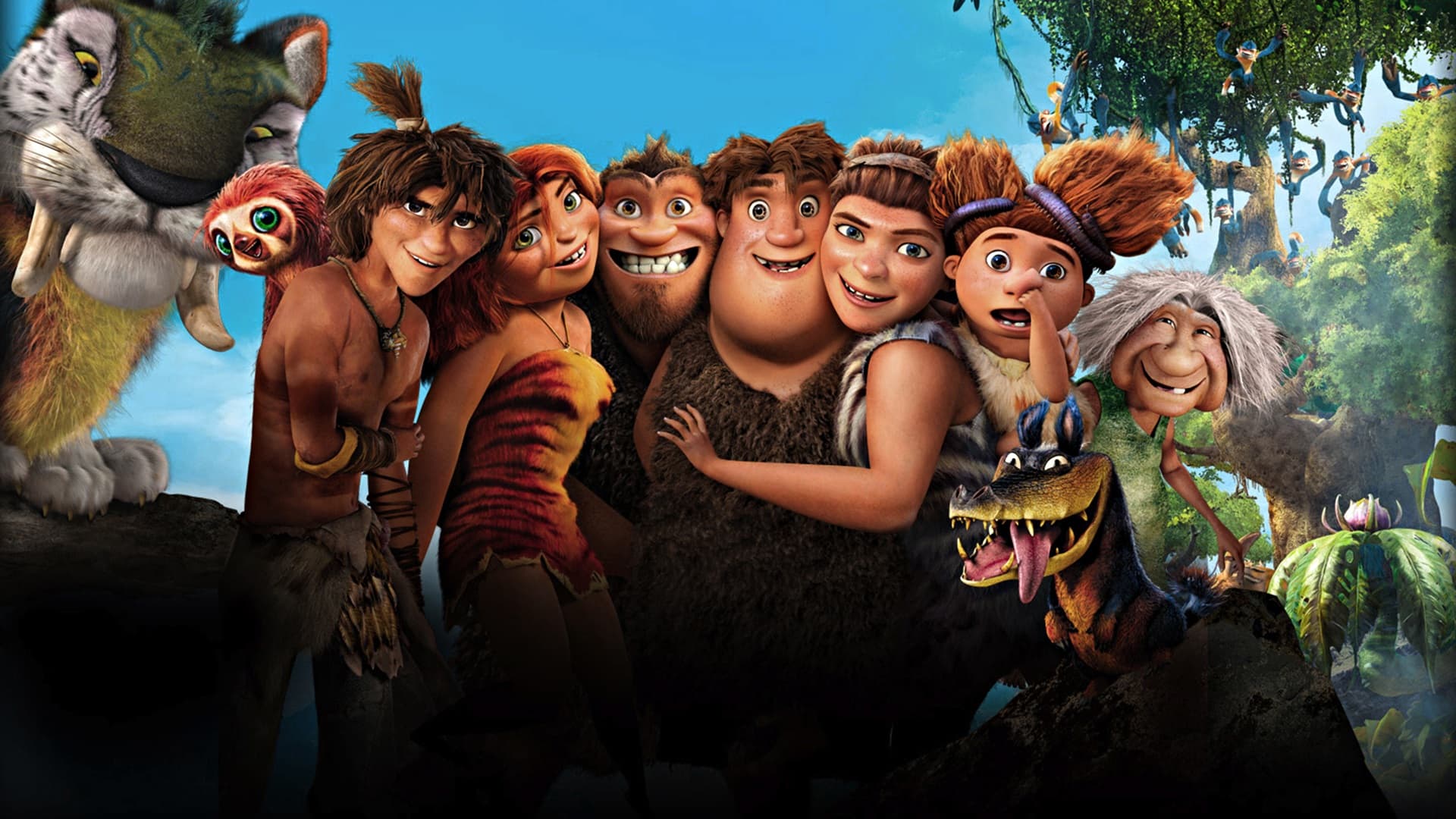
The Croods is an animated adventure film tinged with physical humour and tension, its atmosphere oscillating between family comedy and spectacular anxiety-inducing moments. The plot follows a prehistoric family forced to abandon their cave and traverse an unknown, hostile world to survive cataclysms that are destroying their environment. The film is aimed primarily at children from 7-8 years old and their parents, with sufficient action and emotional stakes to engage pre-adolescents.
Violence
Physical dangers are omnipresent and drive the narrative: frenzied chases, earthquakes, lava, collapsing mountains, menacing hybrid creatures and birds capable of reducing prey to a skeleton in seconds. The violence remains within the register of survival and is never gratuitous or gory, but it is sustained and intensifies progressively. The film clearly plays on mounting adrenaline, and certain scenes, notably the nocturnal chase involving a prowling monster or the owl-bear attacking the whole family, have a pace and intensity that may prove overwhelming for more sensitive children. The physical humour, very much in evidence, serves as a release valve but does not entirely neutralise the accumulated tension.
Parental and Family Portrayals
The father-daughter relationship is at the heart of the film and its evolution constitutes the principal emotional arc. The father, Grug, is initially presented as an authoritarian, anxious, rigid figure whose absolute rule is fear and immobility. His authority is clearly shown as an obstacle to his daughter's development and the group's survival. The film moves him convincingly towards a form of love that accepts letting go, and he ultimately sacrifices himself symbolically for those he loves. The portrayal of family dynamics, with a sharp-tongued grandmother, an effaced mother and a naive youngest son, is stereotypical but delivered with an assured humour. The film explicitly expresses that saying one loves each other is a necessity, which can open a genuine discussion with children.
Underlying Values
The film squarely opposes two visions of the world: survival through fear and immobility on one side, adaptation and intellectual curiosity on the other. The message is clear and repeated: having ideas is better than having brute strength. Family and mutual aid are presented as the foundation of survival, not as a constraint. These values are solid and well constructed narratively. However, death is invoked with humour from the opening minutes, through a list of families that have disappeared in absurd ways, which normalises the subject in a light manner that may prompt questions depending on the child's age and sensitivity.
Discrimination
Eep, the adolescent girl, is presented from the outset as physically strong, curious and bold. Yet the narrative structure places her regularly in a position of dependence on two male figures, her father and Guy, who make the determining decisions and guide her towards safety. The film does not question this gap between what Eep embodies and what the script actually allows her to accomplish. This is an interesting angle to flag to parents of girls, not to criticise the film, but to make it a concrete discussion point about what narratives do or do not do with their female characters.
Social Themes
Without ever using the word, the film recounts a forced migration: a family expelled from their territory by a progressive natural catastrophe must traverse an unknown world to find a place to start again. The metaphor is readable for adults and can be named with older children. The confrontation between a culture of immobility and a culture of exploration also carries an implicit reflection on evolution, transmission and the relationship to change.
Strengths
The film is technically inventive in its construction of creatures and environments, which blend the prehistoric and the fantastical with pleasing visual coherence. The father's emotional arc is written with genuine honesty: his transformation is neither abrupt nor naive, and passes through real humiliation before acceptance. Guy's revelation about the death of his family, treated soberly, introduces authentic gravity into an otherwise highly spectacular narrative. The film succeeds in placing intellectual curiosity and adaptability above physical strength without the message being moralising, which is a difficult balance to strike in this genre.
Age recommendation and discussion points
The film is suitable from 7 years old for children without particular anxiety about intense action scenes, and rather from 8-9 years old for fully serene viewing. Two concrete avenues deserve to be opened after the film: why is the father so afraid of everything, and at what point does protection become a prison for those we love? And in observing Eep, ask the child what they think about the difference between what she is capable of doing and what the film ultimately allows her to do.
Synopsis
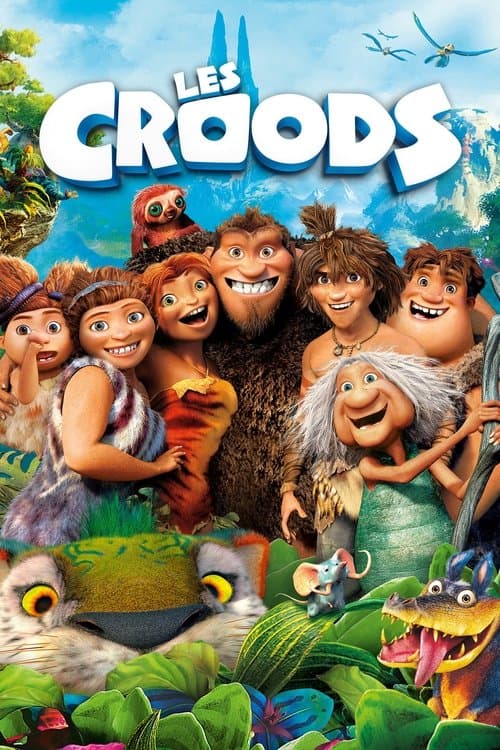
The prehistoric Croods family live in a particularly dangerous moment in time. Patriarch Grug, his mate Ugga, teenage daughter Eep, son Thunk, and feisty Gran gather food by day and huddle together in a cave at night. When a more evolved caveman named Guy arrives on the scene, Grug is distrustful, but it soon becomes apparent that Guy is correct about the impending destruction of their world.
About this title
- Format
- Feature film
- Year
- 2013
- Runtime
- 1h 25m
- Countries
- United States of America
- Original language
- EN
- Studios
- DreamWorks Animation
Content barometer
- Violence3/5Notable
- Fear3/5Notable tension
- Sexuality0/5None
- Language0/5None
- Narrative complexity1/5Accessible
- Adult themes0/5None
Values conveyed
- Courage
- Perseverance
- family
- curiosity
- adaptation