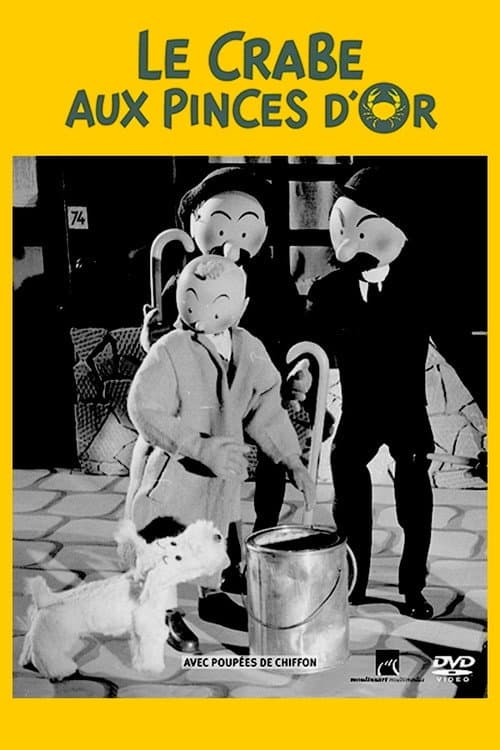
The Crab with the Golden Claws
Does this age rating seem accurate to you?
Detailed parental analysis
Tintin and the Golden Cockerel is an animated adventure with a serious tone, driven by a criminal trafficking plot and the foundational meeting between Tintin and Captain Haddock. The story follows Tintin as he investigates a mysterious smuggling network and finds himself aboard a ship whose captain is in the grip of alcoholism. The film is primarily aimed at children from a certain age onwards and at fans of the original comic book, but its treatment of alcoholism and drug trafficking makes it unsuitable for the very young.
Substances
Captain Haddock's alcoholism is the most prominent subject in the film and occupies a central place in the plot. His dependency is shown explicitly and repeatedly: he drinks to escape, loses control, endangers his crew and himself. This treatment is not glamourised: the film shows the concrete consequences of this state, and the character's arc involves a form of awareness and detoxification, which gives alcoholism real narrative weight rather than being merely incidental. Opium trafficking constitutes the other axis of the narrative: the drug is at the heart of the criminal conspiracy, named and identified as such. These two elements combined make this film particularly rich ground for discussion, but also content that should not be left without adult guidance for the youngest children.
Underlying Values
The film carries solid and clear structural values. Tintin embodies selfless altruism: he takes risks to save people who are hostile to him, including his direct adversaries, without expecting recognition in return. Courage is presented as a natural disposition rather than as heroic performance. Haddock's arc illustrates humanity's capacity to recover from dependency and regain dignity through a bond of trust, which gives the narrative real moral depth. These values are woven into the action without being imposed, which makes them all the more effective.
Discrimination
The film reflects the colonial imagination of its era, notably visible in the representation of the French police with their uniforms and stereotypical attributes specific to the colonial context. These representations are not questioned by the narrative, which treats them as natural backdrop. For a child or adolescent, this context deserves to be made explicit: what the film shows without commenting on it says something about the worldview of the era in which it was made, and it is precisely this kind of gap between past and present that can fuel a useful conversation.
Language
Captain Haddock's oaths are present and constitute a signature of the character. They remain within the inventive and colourful register characteristic of the Tintin universe, without vulgarity in the strict sense. For the youngest children, their repetition may nonetheless draw attention and merits contextualisation.
Strengths
The film has the merit of remaining faithful to the Hergé album from which it is drawn, making it a natural entry point into the Tintin universe for children discovering the comic book. The meeting between Tintin and Haddock, one of the most emblematic duos in French-language children's literature, is treated with enough care that the dynamic between the two characters is credible and engaging. Haddock's redemption arc offers genuine emotional substance, rare in adventures of this kind. The film suffers from some technical weaknesses inherent to its production era, notably uneven animation and occasionally imprecise dubbing, but these limitations do not diminish the work's value as a document of cultural transmission and as an adventure narrative with clear values.
Age recommendation and discussion points
The film is not recommended for children under 7 years old, and can be watched comfortably from 8 or 9 years onwards, with adult accompaniment for the younger end of this range. Two angles of discussion naturally emerge after viewing: why does Haddock drink, and what enables him to overcome it, which opens onto the question of dependency and the role of friendship; and why does Tintin help people who wish him harm, which allows you to explore with the child what it means to act rightly regardless of what one receives in return.
Synopsis
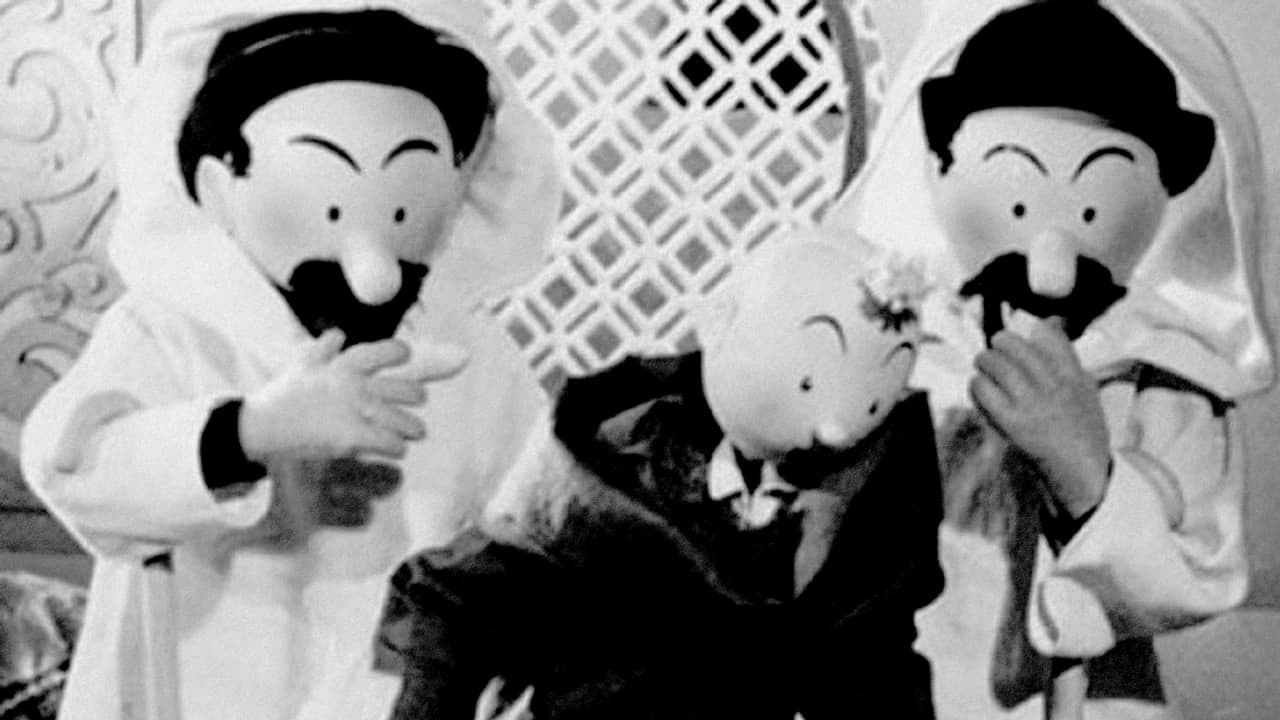
Tintin finds himself involved in a mystery related to a drowned man, a can of crabmeat and a ship called Karaboudjan. After investigating the ship, Tintin discovers that the shipment of cans does not contain exactly crabmeat.
About this title
- Format
- Feature film
- Year
- 1947
- Runtime
- 59m
- Countries
- Belgium
- Original language
- FR
- Directed by
- Claude Misonne
- Main cast
- A. Charles, R. Chrus, R. Darvère, E. David, S. Denolly, S. Etienne, P. Maroy, R. Muray, J. Prim, R. Rency
- Studios
- Wilfried Bouchery & Cie., Studios Claude Misonne
Content barometer
- Violence1/5Mild
- Fear1/5Mild
- Sexuality0/5None
- Language1/5Mild
- Narrative complexity0/5Simple
- Adult themes3/5Marked
Values conveyed
- Courage
- Friendship
- Compassion
- Loyalty
- perseverance