The Colors Within
きみの色
Does this age rating seem accurate to you?
Detailed parental analysis
The Colors Within is a contemplative and luminous animated film, carried by a gentle and introspective atmosphere. The plot follows three teenagers who, each in their own way on the margins of their environment, come together through music and learn to confide in one another. The film targets a teenage audience, but can be watched as a family from secondary school onwards without difficulty.
Underlying Values
The narrative is structured around the quest for personal identity and the tension between family or social expectations and the desire to build oneself freely. The three protagonists each carry a secret, and it is the act of revealing oneself to the other, not of fighting against them, that constitutes the dramatic resolution. Vulnerability is presented as a form of courage, and honesty towards oneself as the condition for any authentic relationship. The film discreetly integrates the Serenity Prayer as a framework for thought, which anchors the characters in measured spirituality, oriented towards acceptance rather than resignation. This is an angle worth exploring with a teenager: accepting what you cannot change is not a defeat, it is a form of maturity.
Parental and Family Portrayals
Parental and institutional figures exert real pressure on the characters, notably through school and family expectations that weigh on their ability to express themselves freely. One of the secondary dynamics explicitly evokes a school rule sanctioning romantic relationships, which illustrates a form of authority that teenagers often perceive as arbitrary. The film does not blame parents but shows the effects of implicit pressure. This is a natural starting point for discussing with a teenager the difference between obeying and understanding rules, and how one negotiates family expectations whilst remaining oneself.
Social Themes
The film addresses the question of the individual's place within a normative school institution, and the social cost of originality or difference. Without making it a political issue, it shows that some teenagers feel invisible or poorly adjusted within structures designed for conformism. This is a direct echo of the experience of many secondary and sixth form students.
Strengths
The film achieves what few works for teenagers manage to do: treating inner conflicts without overplaying them or resolving them artificially. The writing trusts silences, looks and music to express what the characters cannot yet put into words, which gives the narrative a rare emotional maturity. Music is not a backdrop but a true narrative language: the collective creation of the three teenagers functions as a metaphor for the building of self. The film thus offers young viewers a fair representation of what it means to find one's voice, in both the literal and figurative sense.
Age recommendation and discussion points
The film is suitable from age 10 to 11 onwards, and fully appropriate for secondary and sixth form teenagers. Two angles of discussion are worth exploring after viewing: why is it so difficult to be honest with close friends, even when you trust them, and how do you distinguish what you truly choose for yourself from what you do to satisfy others.
Synopsis
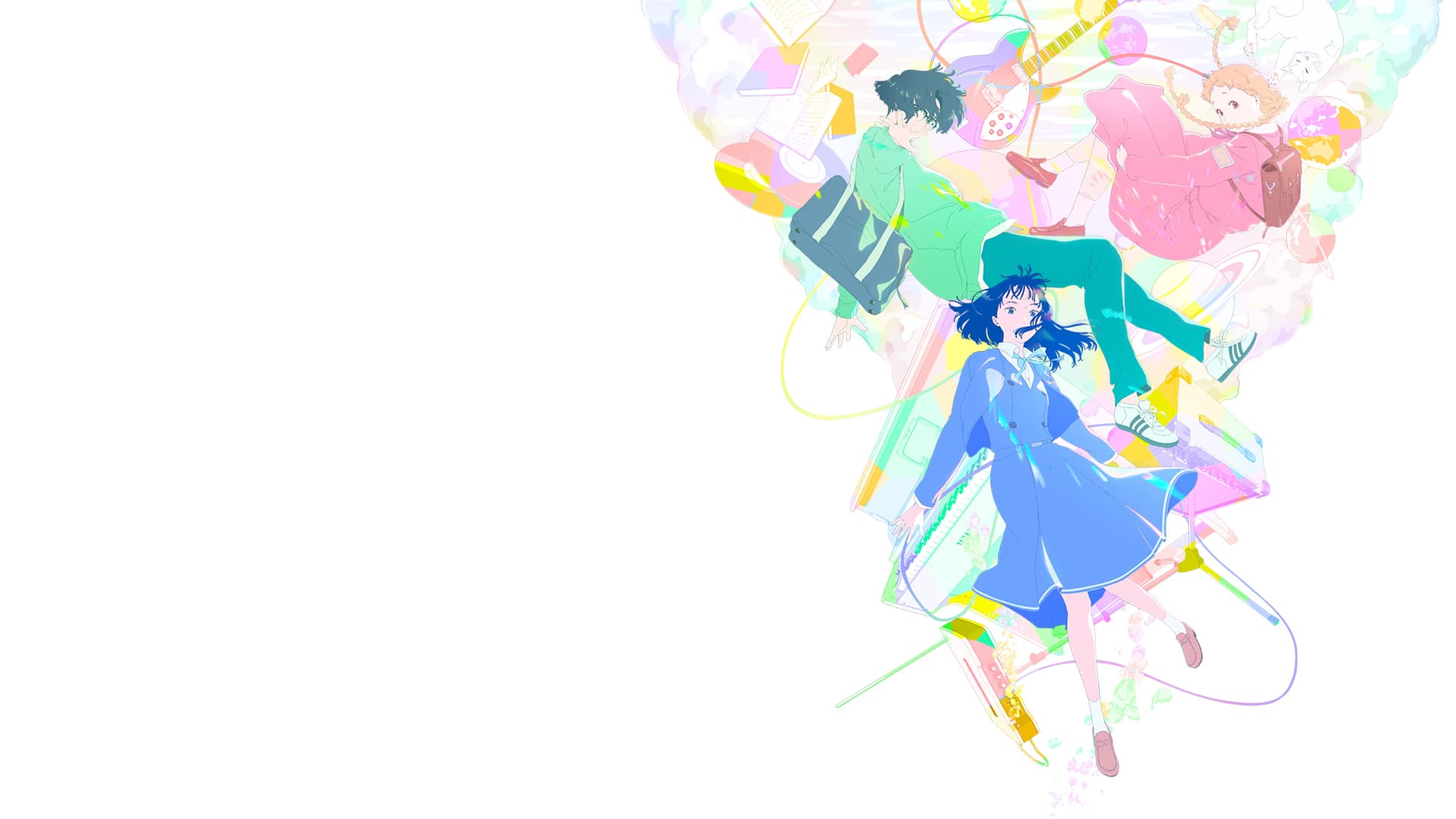
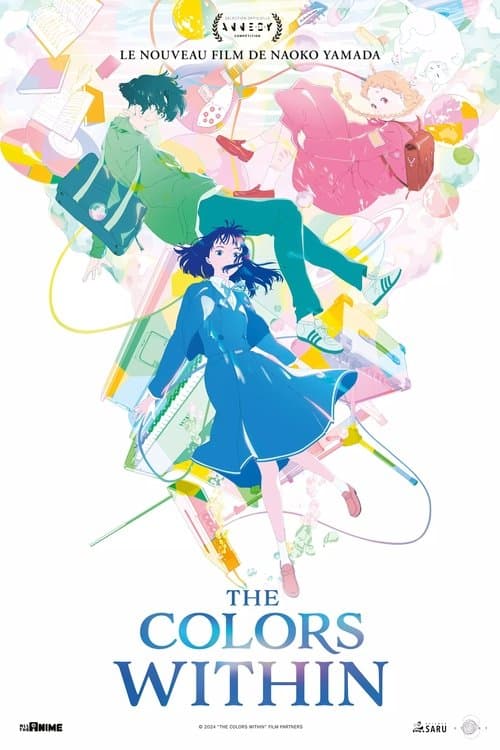
Totsuko is a high school student with the ability to see the 'colors' of others. Colors of bliss, excitement, and serenity, plus a color she treasures as her favorite. Kimi, a classmate at her school, gives off the most beautiful color of all. Although she doesn't play an instrument, Totsuko forms a band with Kimi and Rui, a quiet music enthusiast they meet at a used bookstore in a far corner of town. As they practice at an old church on a remote island, music brings them together, forming friendships and stirring affections.
About this title
- Format
- Feature film
- Year
- 2024
- Runtime
- 1h 40m
- Countries
- Japan
- Original language
- JA
- Directed by
- Naoko Yamada
- Main cast
- Sayu Suzukawa, Akari Takaishi, Taisei Kido, Yui Aragaki, Aoi Yuuki, Yasuko, Minako Kotobuki, Keiko Toda
- Studios
- Story, Science SARU, TOHO, Lawson, jeki
Content barometer
- Violence1/5Mild
- Fear0/5None
- Sexuality0/5None
- Language0/5None
- Narrative complexity3/5Complex
- Adult themes0/5None
Values conveyed
- Friendship
- Acceptance of difference
- Perseverance
- Autonomy
- music
- empathy
- identity