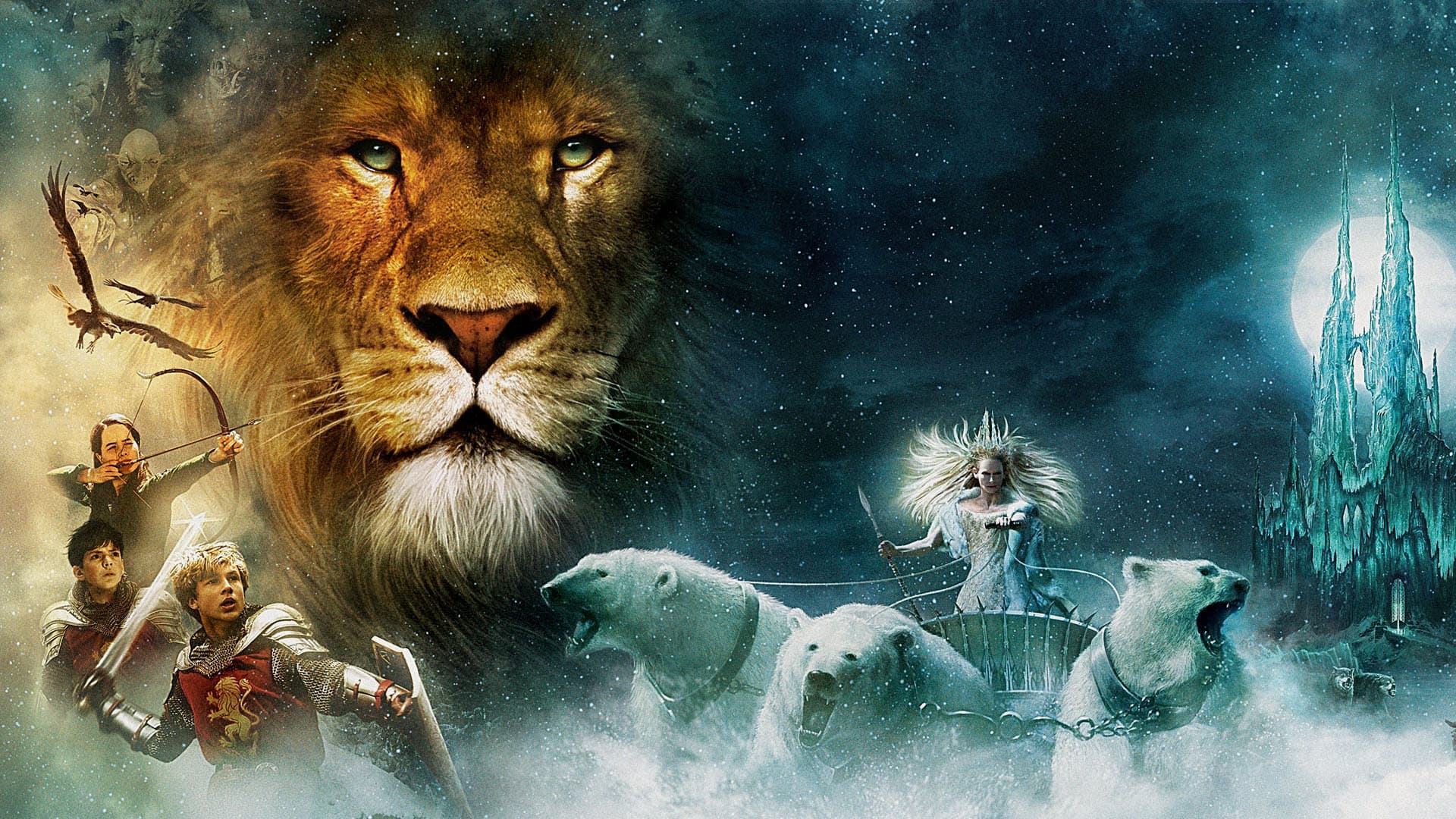
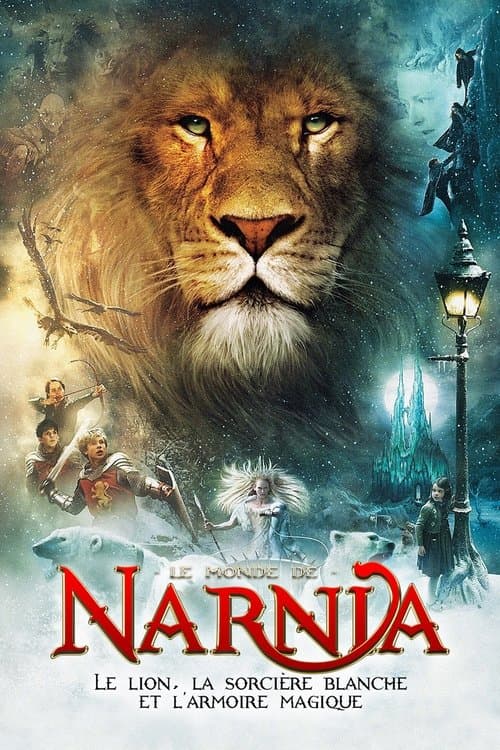
The Chronicles of Narnia: The Lion, the Witch and the Wardrobe
Does this age rating seem accurate to you?
Detailed parental analysis
The Chronicles of Narnia is a fantasy film with an epic atmosphere and at times dark tone, driven by an emotional tension more intense than it first appears. The plot follows four children evacuated from London during the Second World War who discover a magical world populated by creatures and ruled by a tyrannical witch. The film targets a broad family audience, but its dramatic intensity makes it more naturally suited to children from about nine or ten years old and upwards.
Violence
Violence is the principal reason for not exposing a younger child to this film. Battle scenes are extensive and direct: sword combat, mortified creatures, characters wounded or killed before the eyes of the protagonists. The death of a central figure, shown in long shot and observed with distress by two of the children, constitutes the most harrowing moment in the film. This is not gratuitous violence: each violent sequence serves the dramatic progression and moral purpose of the narrative, but the intensity is real and may leave a lasting impression on a sensitive child. The opening with the bombardment of London establishes from the outset a register of war and concrete physical danger.
Underlying Values
The film rests on a dense and coherent moral framework, which makes it a particularly rich object for discussion. The willing self-sacrifice of a benevolent figure to save a guilty child forms the heart of the narrative and is explicitly situated within the tradition of Christian allegory: death, resurrection, redemption through love. This theological substrate is present but never didactic, making it accessible to families of all beliefs without imposing a single interpretation. The values of courage, loyalty and collective responsibility against evil are affirmed with conviction. The relationship to authority merits attention: the narrative fully justifies obedience to benevolent authority figures as a condition of survival and victory, something that can be discussed with a teenager without constituting a weakness in the film.
Social Themes
War occupies a structuring place in the film, on two levels. The historical context of the Second World War establishes from the outset family separation, fear and the exile of the children as basic givens, without aestheticising them. In Narnia, the armed conflict between the free peoples and the witch's forces reproduces a logic of resistance against tyranny that can open a conversation about just war, collective mobilisation and the human cost of combat.
Parental and Family Portrayals
Parents are physically absent for most of the film, with the children evacuated far from their mother and their father mobilised. This absence is not dramatised in a negative light but it places the four children in a situation of forced independence that drives their moral development. The substitute authority figure is the Professor, a discrete but benevolent character, and more fundamentally Aslan, whose symbolic parental role is central.
Discrimination
The main cast is entirely composed of white human characters, in a way that the narrative does not question. This choice, consistent with the adaptation of a literary work from the 1950s, results in no active caricature but may be noted with a teenager as part of a broader conversation about representation in fantasy cinema.
Substances
The Professor smokes a pipe in one scene, without this gesture being commented upon, valorised or repeated. The trace is incidental but visible, worth noting for parents particularly attentive to this point.
Language
A few mild insults are exchanged between the children in scenes of sibling quarrel. The register remains very restrained and the verbal conflicts serve to show the initial tensions that will be overcome.
Strengths
The film adapts a classic literary narrative with care, preserving its emotional depth and moral ambition. The construction of the world of Narnia is visually inventive and coherent, with a palette of mythological creatures that gives form to the imagination of the book without betraying it. Edmund's arc of redemption is particularly well written: betrayal, shame and forgiveness are treated without sentimental shortcuts, making it rare pedagogical material for discussing mistake, responsibility and second chances with a child. The musical score effectively supports moments of tension and emotion. For families interested in the history of ideas, the film also offers a gateway into the literary tradition of allegory and into the work of C.S. Lewis.
Age recommendation and discussion points
The film is suitable from about nine or ten years old for an emotionally resilient child, and without major reservations from twelve years old. Below eight years, the intensity of the combat scenes, Aslan's death and explicit threats against the children make viewing inadvisable. After the film, two conversations are worthwhile: why is Edmund forgiven despite his betrayal, and what does this tell us about how we treat those who have made a serious mistake? And, for older children, what does Aslan's sacrifice remind us of in other narratives or beliefs that the child already knows?
Synopsis
Siblings Lucy, Edmund, Susan and Peter step through a magical wardrobe and find the land of Narnia. There, they discover a charming, once peaceful kingdom that has been plunged into eternal winter by the evil White Witch, Jadis. Aided by the wise and magnificent lion, Aslan, the children lead Narnia into a spectacular, climactic battle to be free of the Witch's glacial powers forever.
About this title
- Format
- Feature film
- Year
- 2005
- Runtime
- 2h 20m
- Countries
- United Kingdom, United States of America
- Original language
- EN
- Directed by
- Andrew Adamson
- Main cast
- William Moseley, Anna Popplewell, Skandar Keynes, Georgie Henley, Liam Neeson, Tilda Swinton, James McAvoy, Jim Broadbent, Ray Winstone, Dawn French
- Studios
- Walt Disney Pictures, Walden Media, C.S. Lewis Company
Content barometer
- Violence3/5Notable
- Fear4/5Intense
- Sexuality0/5None
- Language1/5Mild
- Narrative complexity2/5Moderate
- Adult themes1/5Mild
Watch-outs
Values conveyed
- Courage
- Loyalty
- Autonomy
- Forgiveness
- sibling bonds
- sacrifice