The Cat in the Hat
The Cat in the Hat
Your feedback improves this guide
Your feedback highlights guides that need a second look and keeps the rating trustworthy.
Does this age rating seem accurate to you?
Sign in to vote
Watch-outs
What this film brings
Content barometer
Violence
1/5
Mild
Fear
2/5
A few scenes
Sexuality
0/5
None
Language
1/5
Mild
Narrative complexity
0/5
Simple
Adult themes
0/5
None
Expert review
This fantasy comedy for children leans heavily into loud cartoon chaos, silly humor, and high energy as two children are visited by an unpredictable magical cat. The main sensitive elements are large scale destruction inside the home, frantic chases, a few hostile adult behaviors, and several tense scenes where the house turns strange and unsettling without becoming true horror. The intensity stays moderate and highly stylized, with frequent visual gags, little realistic consequence, and a threatening presence that is mostly played for comedy, although very young viewers may still be unsettled by the surreal transformations, the manipulative villain, and the relentless pace. For most children, the film feels more overstimulating than scary, but it can be tiring or confusing before age 6. Parents may want to watch alongside younger kids, explain that the story celebrates imagination without endorsing unsafe disobedience, and prepare sensitive viewers for scenes of escalating mess, conflict, and unreliable adults.
Synopsis
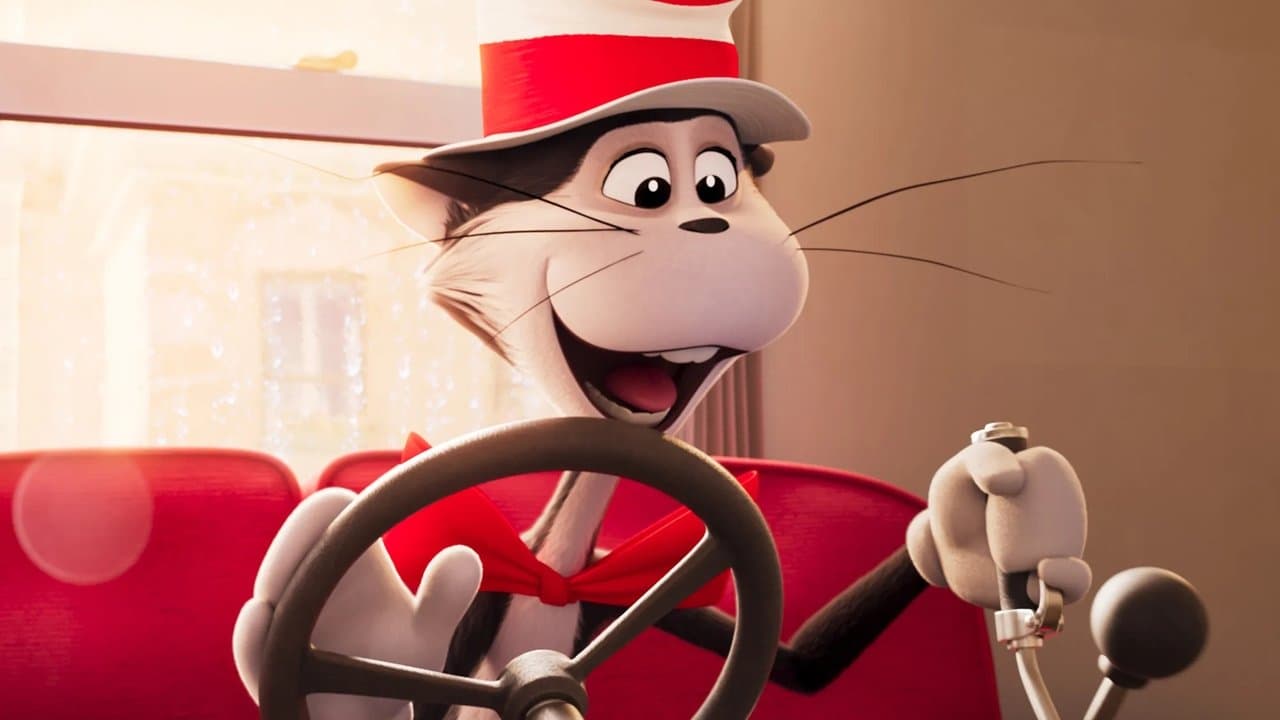
Doing what he does best, the Cat spreads joy to kids in his hilarious, signature, and singularly irreverent way, transporting them and audiences on a fantastical journey through a world they've never seen before. Our hero takes on his toughest assignment yet for the I.I.I.I. (Institute for the Institution of Imagination and Inspiration, LLC) to cheer up Gabby and Sebastian, a pair of siblings struggling to move to a new town. Known for taking things too far, this could be this agent of chaos' last chance to prove himself...or lose his magical hat!
Difficult scenes
The Cat enters the house while the mother is away and quickly draws the children into a string of increasingly disruptive antics. This can unsettle younger viewers because a chaotic adult figure takes over the home, ignores boundaries, and turns a familiar safe place into something unstable and unpredictable. A large part of the story centers on the house being trashed, with damaged furniture, gross food, broken objects, and mess spreading everywhere. This is not realistic violence, but the buildup of noise, visual chaos, and the idea of a child’s home becoming unrecognizable may be distressing for viewers who are sensitive to disorder and loss of control. The adult antagonist is dishonest, motivated by money, dismissive toward the boy, and willing to push him aside for selfish reasons. There is no severe physical harm, but his manipulative and belittling behavior may feel uncomfortable, especially for children who react strongly to unfair adults or family conflict. During the most surreal section, the house transforms into a bizarre space with goo, distorted proportions, and a much tenser atmosphere. The sequence remains fantastical rather than horrific, but it may frighten younger children because the environment becomes completely out of control and briefly feels dangerous.
Where to watch
No verified platform for the US market yet. We keep this section updated as availability changes.
Availability checked on Apr 01, 2026
About this title
- Format
- Feature film
- Year
- 2026
- Countries
- United Kingdom, United States of America
- Original language
- EN
- Directed by
- Erica Rivinoja, Alessandro Carloni
- Main cast
- Bill Hader, Xochitl Gomez, Quinta Brunson, Bowen Yang, Matt Berry, America Ferrera, Paula Pell, Tiago Martinez, Tituss Burgess, Giancarlo Esposito
- Studios
- DNEG, Dr. Seuss Enterprises, Warner Bros. Pictures Animation, Warner Bros. Pictures, A Stern Talking To
Content barometer
Violence
1/5
Mild
Fear
2/5
A few scenes
Sexuality
0/5
None
Language
1/5
Mild
Narrative complexity
0/5
Simple
Adult themes
0/5
None
Expert review
This fantasy comedy for children leans heavily into loud cartoon chaos, silly humor, and high energy as two children are visited by an unpredictable magical cat. The main sensitive elements are large scale destruction inside the home, frantic chases, a few hostile adult behaviors, and several tense scenes where the house turns strange and unsettling without becoming true horror. The intensity stays moderate and highly stylized, with frequent visual gags, little realistic consequence, and a threatening presence that is mostly played for comedy, although very young viewers may still be unsettled by the surreal transformations, the manipulative villain, and the relentless pace. For most children, the film feels more overstimulating than scary, but it can be tiring or confusing before age 6. Parents may want to watch alongside younger kids, explain that the story celebrates imagination without endorsing unsafe disobedience, and prepare sensitive viewers for scenes of escalating mess, conflict, and unreliable adults.
Synopsis
Doing what he does best, the Cat spreads joy to kids in his hilarious, signature, and singularly irreverent way, transporting them and audiences on a fantastical journey through a world they've never seen before. Our hero takes on his toughest assignment yet for the I.I.I.I. (Institute for the Institution of Imagination and Inspiration, LLC) to cheer up Gabby and Sebastian, a pair of siblings struggling to move to a new town. Known for taking things too far, this could be this agent of chaos' last chance to prove himself...or lose his magical hat!
Difficult scenes
The Cat enters the house while the mother is away and quickly draws the children into a string of increasingly disruptive antics. This can unsettle younger viewers because a chaotic adult figure takes over the home, ignores boundaries, and turns a familiar safe place into something unstable and unpredictable. A large part of the story centers on the house being trashed, with damaged furniture, gross food, broken objects, and mess spreading everywhere. This is not realistic violence, but the buildup of noise, visual chaos, and the idea of a child’s home becoming unrecognizable may be distressing for viewers who are sensitive to disorder and loss of control. The adult antagonist is dishonest, motivated by money, dismissive toward the boy, and willing to push him aside for selfish reasons. There is no severe physical harm, but his manipulative and belittling behavior may feel uncomfortable, especially for children who react strongly to unfair adults or family conflict. During the most surreal section, the house transforms into a bizarre space with goo, distorted proportions, and a much tenser atmosphere. The sequence remains fantastical rather than horrific, but it may frighten younger children because the environment becomes completely out of control and briefly feels dangerous.