The Boy and the Heron
君たちはどう生きるか
Does this age rating seem accurate to you?
Detailed parental analysis
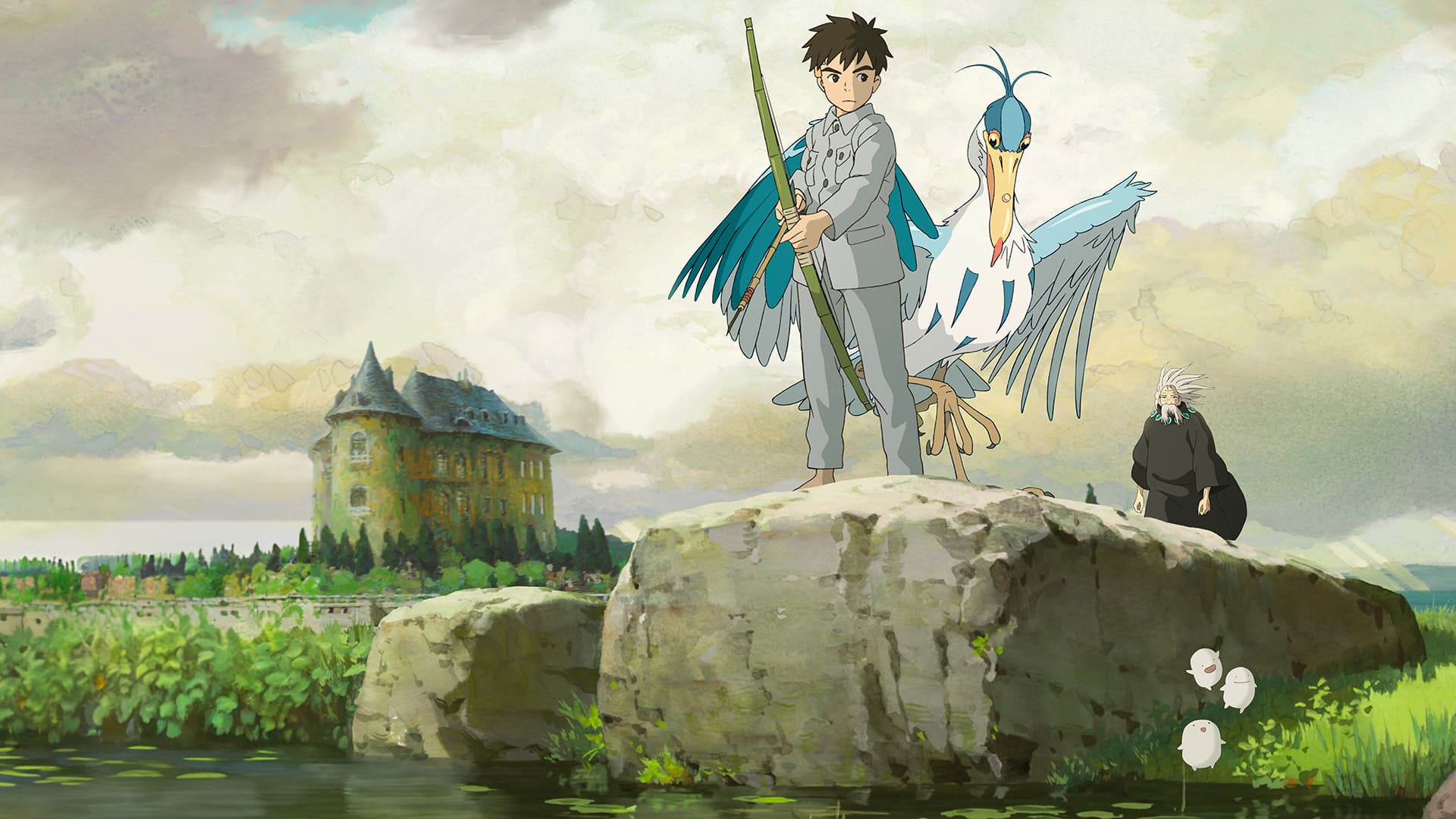
The Boy and the Heron is a contemplative and dreamlike animated film with a dense and often unsettling atmosphere, produced by Studio Ghibli. A twelve-year-old boy, grieving the death of his mother, is drawn into a fantastic and threatening world in the wake of a mysterious heron. The film is intended for teenagers and adults: its narrative complexity, length and emotional weight place it well beyond a story for young children.
Violence
Several scenes are visually striking and warrant being anticipated. The boy deliberately hits his head with a stone to wound himself, with blood in abundance. A large fish is butchered with pronounced intestinal realism. A wounded pelican begs to be put out of its misery, then dies spitting blood. An arrow passes through a bird's beak as it struggles to pull it free. The fantastical world is traversed by misshapen creatures and grotesque imagery, including a heron that reveals itself to be a man with deformed morphology and visible human teeth in his beak. None of these scenes is gratuitous: each serves a narrative logic linked to grief, suffering and the acceptance of death. They remain nonetheless intense and may trouble a sensitive or too-young child for some time.
Parental and Family Portrayals
The mother's death is the emotional engine of the narrative and is introduced in the very first scene, with the image of a hospital on fire during wartime. The father remarries quickly to the deceased woman's sister, who is already pregnant, which places the boy in a position of rejection towards his stepmother. The central arc of the film consists precisely in transforming this rejection into acceptance, and the stepmother figure is treated with nuance and kindness. It is solid ground for discussing with a child about blended families, grief and the time needed to welcome a new maternal figure.
Underlying Values
The film constructs a coherent and adult reflection on the imperfection of the real world in the face of the temptation to escape it. The protagonist is confronted with a choice between remaining in a controlled fantastical world and returning to live in imperfect, painful and uncertain reality. He chooses the real world. This structure of values is rare and precious: it refuses both fatalism and escape, and affirms that attachment, even painful, is what gives life meaning. The acceptance of loss, the capacity to trust a new parental figure and the courage to live without certainty are the moral pillars of the narrative.
Substances
Adults smoke cigarettes and pipes, without this being glamorised or central. More notably: an eleven-year-old character steals cigarettes to obtain favours from adults, which constitutes a minor but concrete scene worth flagging to parents of young pre-adolescents.
Social Themes
The film takes place in Second World War Japan, and war constitutes the immediate backdrop to the initial grief. It is not treated politically but as the setting for an ordinary and irremediable violence imposed on civilians and children. This historical frame can be a starting point for discussing with an adolescent the relationship between war, loss and individual resilience.
Strengths
The film deploys a visual imagination of rare density, constructing a coherent fantastical world whose internal logic, deliberately opaque, reflects that of grief and the unconscious. The narration refuses any easy explanation and treats its young audience with an unusual respect for ambiguity. The soundtrack supports the atmosphere with constant emotional precision. From an educational perspective, the film offers exceptional material for addressing difficult subjects with an adolescent: loss, family recomposition, the temptation to flee reality and the courage to return to it. It is one of the rare animated films that does not resolve pain but integrates it as a condition of adult life.
Age recommendation and discussion points
The film is not recommended for children under ten years old due to its violent imagery, emotional weight and narrative complexity. From ten or eleven years old for a mature child, and without major reservations from thirteen years old. Two angles of discussion impose themselves after viewing: why does the boy choose to return to an imperfect world rather than remain in a fantastical world where anything would be possible, and how does one come to accept a new person in one's family when one has lost someone one loved.
Synopsis
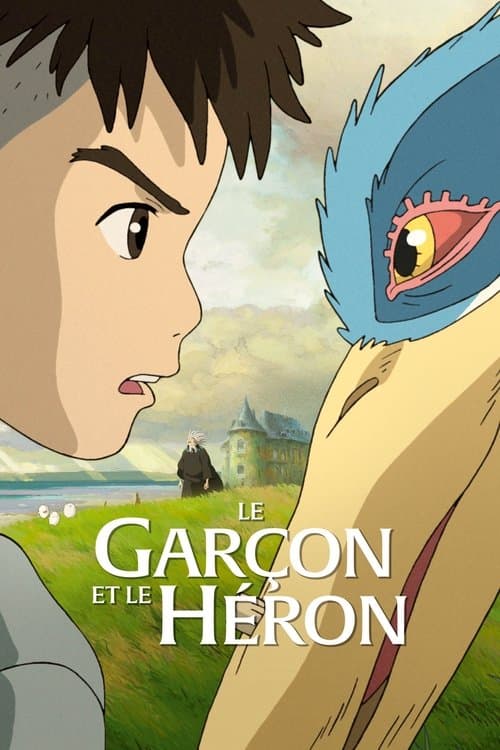
While the Second World War rages, the teenage Mahito, haunted by his mother's tragic death, is relocated from Tokyo to the serene rural home of his new stepmother Natsuko, a woman who bears a striking resemblance to the boy's mother. As he tries to adjust, this strange new world grows even stranger following the appearance of a persistent gray heron, who perplexes and bedevils Mahito, dubbing him the "long-awaited one."
About this title
- Format
- Feature film
- Year
- 2023
- Runtime
- 1h 59m
- Countries
- Japan
- Original language
- JA
- Studios
- Studio Ghibli
Content barometer
- Violence3/5Notable
- Fear4/5Intense
- Sexuality0/5None
- Language0/5None
- Narrative complexity3/5Complex
- Adult themes1/5Mild
Values conveyed
- Courage
- Acceptance of difference
- Forgiveness
- grief and acceptance of loss
- courage in the face of the unknown
- resilience
- maternal love
- coming of age
- acceptance of a blended family