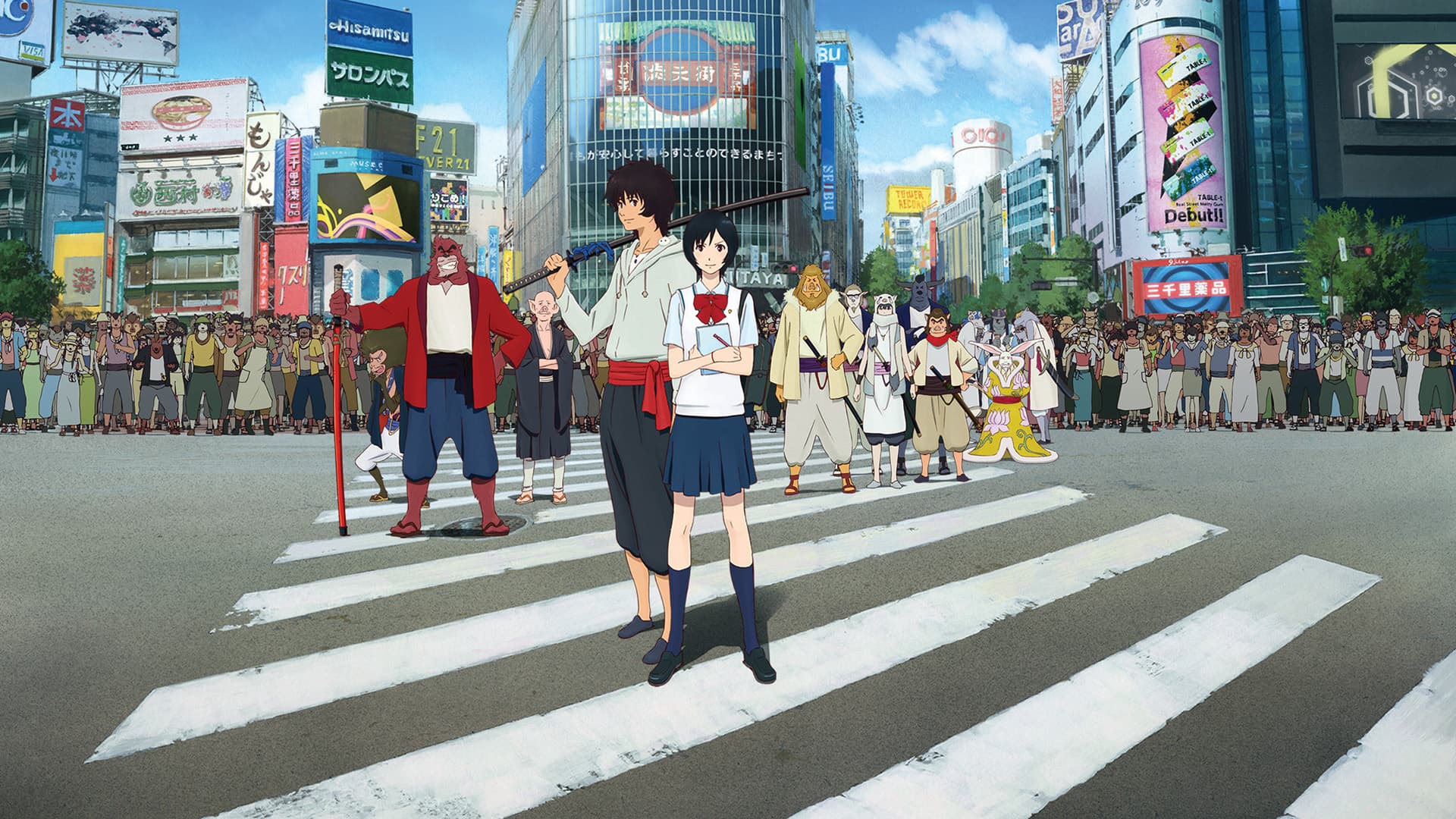

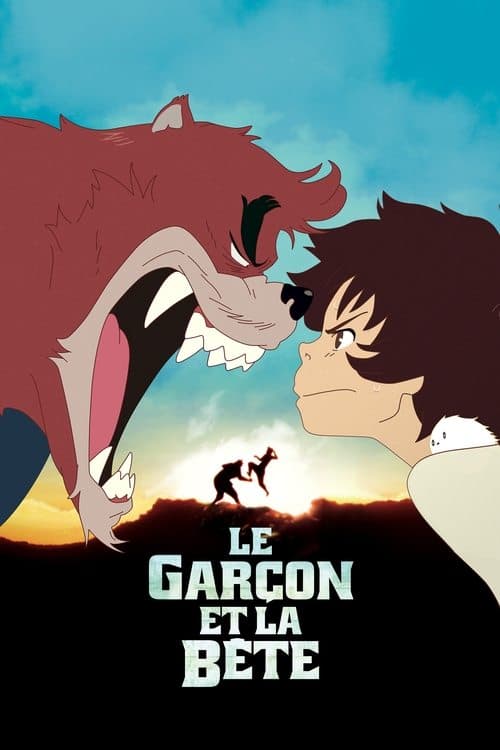
The Boy and the Beast
バケモノの子
Does this age rating seem accurate to you?
Detailed parental analysis
The Boy and the Beast is an adventure and coming-of-age animation film with an atmosphere that shifts between epic and intimate, threaded through with genuine emotional weight. A nine-year-old orphaned child, wandering alone in Tokyo, finds himself drawn into a parallel world populated by creatures and unwillingly becomes the disciple of a brutal yet charismatic warrior. The film targets young teenagers and adults, not young children.
Underlying Values
The film constructs its entire narrative architecture around a powerful idea: family is chosen, not endured. The bond between the protagonist and his master is forged through time, friction and shared effort, without idealisation. The film values listening to those older than us, perseverance in the face of failure and the capacity to accept help, without ever slipping into preaching. Against the grain of a certain heroic individualism, it shows that inner strength does not develop alone. It is a solid foundation for discussion about what growing up means and about the figures who have truly shaped us.
Violence
Violence is present and physical: sword fights, blows struck with visible blood on faces, and at least one impalement scene with bloodshed. It is not gratuitous in the strict sense, as it is embedded within a logic of tournament and self-mastery that lies at the heart of the narrative, but its intensity clearly exceeds the usual standards of family animation. The climactic scene involves spectacular urban destruction and an existential threat treated with muted violence. For a child under ten years old, certain sequences are genuinely distressing. For a teenager, the violence remains comprehensible in its narrative purpose and is not aestheticised as pure gratification.
Parental and Family Portrayals
The film places parenthood at the heart of its drama. The protagonist's mother is dead, his biological father is absent and reappears only late in the film, carrying an ambivalence that the film treats with honesty rather than indulgence. The master-disciple relationship is openly constructed as an assumed paternal substitute, with its roughness and affective clumsiness. This portrayal of an imperfect but sincere substitute father is one of the film's most interesting aspects: it avoids the omniscient mentor template and shows an adult who is learning to love as well. For a child who has experienced parental separation or bereavement, certain passages may stir powerful emotions.
Language
The voice acting contains mild but repeated profanities of everyday register. The overall tone between master and disciple is deliberately brusque, even disrespectful on the surface, which is consistent with the narrative dynamic but may surprise viewers in an animated film. Crude language remains moderate on the scale of teen cinema, without heavy insults or systematic offensive register.
Strengths
The film offers emotional writing of genuine depth, particularly in the way it handles grief and childhood anger without resolving them too quickly. The passage between the human world and the world of beasts creates narrative tension sustained throughout, and the building of the bond between the two main protagonists is progressively credible, which is rare in mentor-apprentice narratives. The film also poses a sober philosophical question about the origins of inner violence, and this questioning is embodied in the narrative rather than simply stated. On a visual level, the animation is generous, the environments of the beast world are inventive, and the combat sequences are choreographed with a clarity not always found in the genre.
Age recommendation and discussion points
The film is not recommended for children under ten due to combat scenes with blood, the emotional weight of orphanhood and a final sacrifice scene that can leave a deep mark. From eleven or twelve years old, the viewing experience works well for the vast majority of children. Two angles of discussion are worth pursuing after the film: what makes a person become your family, even without blood ties, and where does the anger the hero feels at the beginning of the story come from, can we understand it without necessarily excusing it.
Synopsis
Kyuta, a boy living in Shibuya, and Kumatetsu, a lonesome beast from Jutengai, an imaginary world. One day, Kyuta forays into the imaginary world and, as he's looking for his way back, meets Kumatetsu who becomes his spirit guide. That encounter leads them to many adventures.
About this title
- Format
- Feature film
- Year
- 2015
- Runtime
- 1h 59m
- Countries
- Japan
- Original language
- JA
- Directed by
- Mamoru Hosoda
- Main cast
- Koji Yakusho, Aoi Miyazaki, Shota Sometani, Suzu Hirose, Lily Franky, Yo Oizumi, Kazuhiro Yamaji, Mamoru Miyano, Kappei Yamaguchi, Haru Kuroki
- Studios
- Nippon Television Network Corporation, Studio Chizu, TOHO, VAP, dentsu, Yomiuri Telecasting Corporation, D.N. Dream Partners, Sapporo Television Broadcasting Company, Miyagi Television Broadcasting, Shizuoka Daiichi Television, Hiroshima Telecasting, Fukuoka Broadcasting System, KADOKAWA, Chukyo TV Broadcasting Company
Content barometer
- Violence3/5Notable
- Fear3/5Notable tension
- Sexuality0/5None
- Language2/5Moderate
- Narrative complexity3/5Complex
- Adult themes0/5None
Watch-outs
- Death
- Grief
- Strong language
- Violence
Values conveyed
- Courage
- Perseverance
- Forgiveness
- friendship
- resilience
- mentorship
- identity