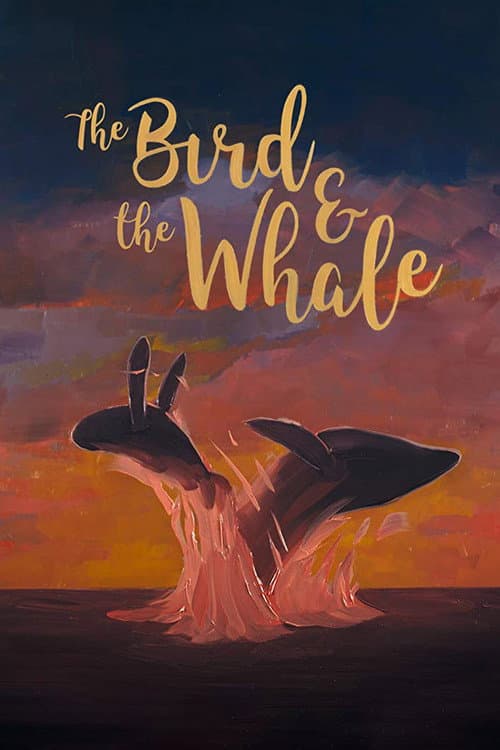
The Bird & The Whale
Does this age rating seem accurate to you?
Detailed parental analysis
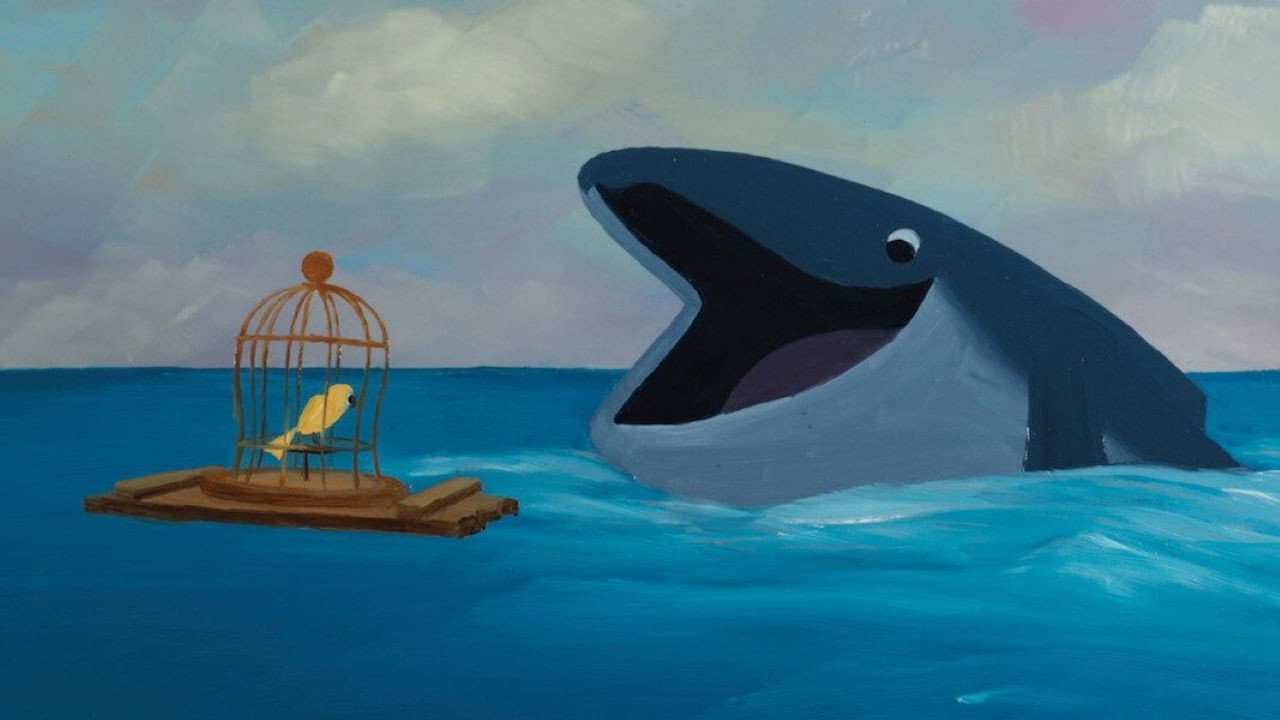
The Bird and the Whale is a contemplative animated short film with a bittersweet atmosphere, punctuated by moments of tension and melancholy. The story follows an unlikely friendship between a lonely whale calf and a small caged bird, both searching for belonging in the face of the ocean's dangers. The film is primarily aimed at school-age children, but its emotional depth and themes around death make it an experience that should be watched with younger viewers.
Underlying Values
The film builds its narrative around two central themes: acceptance of difference and the meaning of death. The whale calf, rejected by his pod because he cannot sing, finds his place through the bird, which gives the film a powerful resonance about exclusion and the value of unconditional friendship. The bittersweet ending poses a question that few children's films dare to ask so directly: what remains of a bond when one of the two disappears? The film's answer, symbolised by the bird's ghost entering the whale, offers a vision of death as transformation and persistence rather than as final rupture. It is a comforting message but one that deserves to be discussed, as it can also blur a very young child's understanding of death.
Violence
The film contains no violence between characters, but it exposes the child to several sequences of intense danger: a storm with large waves that separates the characters, a large shark with a threatening appearance accompanied by dark music, and a shipwreck with visible destruction. These scenes are designed to create narrative tension rather than to shock, but their emotional impact can be strong for sensitive children or those under five. The bird's death, shown explicitly with the ghost leaving the lifeless body, is the film's most harrowing sequence and constitutes its most striking moment of emotional violence.
Social Themes
The whale calf's rejection by his pod because he does not conform to the collective norm opens up an accessible reflection on social exclusion and the pressure to conform. The film does not moralise, but the situation speaks for itself to a child who has already experienced some form of being left out. This is one of the most fertile angles for conversation after viewing.
Strengths
The film possesses genuine emotional coherence: it does not seek to reassure at all costs and embraces an ending that leaves a mark. This narrative honesty is rare in animation made for children and gives it real pedagogical value in managing grief and loss. The building of friendship between the two characters is understated and effective, without superfluous dialogue, which leaves ample room for the young viewer's sensitivity. The film can serve as a natural entry point for addressing death with a child in a safe setting, which is one of its most concrete qualities for a parent.
Age recommendation and discussion points
The film is not recommended for children under five due to the explicit death of a character and sequences of intense danger; from age six onwards, it lends itself well to accompanied viewing. Two angles of discussion are worth opening after the film: why was the whale calf rejected by the others, and does this resemble something experienced at school or elsewhere? And on the ending: what does it mean that the bird continues to live in the whale, do the people we love stay with us in some way when they disappear?
Synopsis
A baby whale separated from his family discovers a caged bird, the sole survivor of a shipwreck. Together they struggle to survive, lost at sea.
About this title
- Format
- Short film
- Year
- 2018
- Runtime
- 7m
- Countries
- Ireland
- Original language
- EN
- Directed by
- Carol Freeman
Content barometer
- Violence2/5Moderate
- Fear3/5Notable tension
- Sexuality0/5None
- Language0/5None
- Narrative complexity0/5Simple
- Adult themes0/5None
Values conveyed
- Courage
- Friendship
- Acceptance of difference
- Compassion
- helpfulness
- difference