The Apothecary Diaries
薬屋のひとりごと
Does this age rating seem accurate to you?
Detailed parental analysis
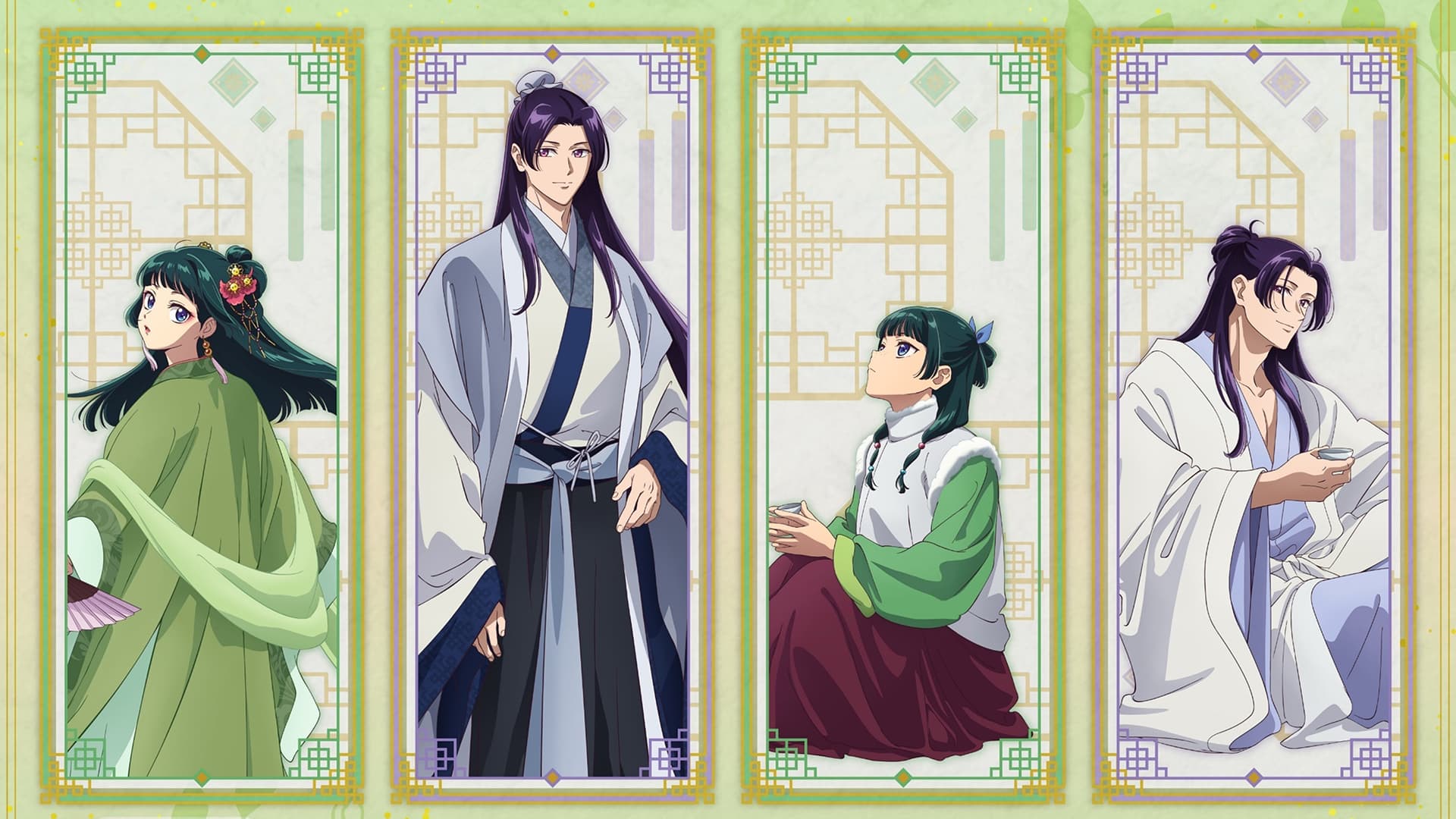
The Apothecary Diaries is a Japanese animated series with a muted and intriguing atmosphere, blending medical investigation, imperial court intrigue and the portrait of an extraordinary young woman. The plot follows Maomao, a teenage expert in pharmacology, who is kidnapped and sold as a servant in the imperial palace, where she finds herself reluctantly solving cases of poisoning and suspicious death. The narrative is aimed at a teenage and adult audience, with a more mature and darker tone than typical mainstream Japanese animation.
Social Themes
The narrative is entirely rooted in a system of servitude, court hierarchy and the commerce of women. Maomao is kidnapped and sold within the first minutes, and the pleasure district where she grew up is described with documentary precision: prostitution, concubinage, the economic dependence of women on their bodies. These realities are not softened, but they are treated with analytical distance rather than voyeuristic indulgence. The series thus offers a concrete entry point for discussing with a teenager the exploitation of women in hierarchical societies, the market value attributed to bodies, and what it means to survive in a system one cannot choose to leave.
Violence
Violence is present recurrently but never gratuitously. Children die from poisoning, a courtesan commits suicide, characters are wounded in blade combat, and blood is visible on bandages and wounds. The overall tone remains sober: death is shown as a grave reality, not as spectacle. Maomao's fascination with poisons and toxic substances is treated with humour and distance, but it constitutes a constant narrative thread that deserves to be flagged, particularly for younger viewers who might see it as a form of glamourisation.
Sex and Nudity
The narrative is steeped in a world where sexuality is omnipresent as a social reality, yet never shown explicitly. References to prostitution, aphrodisiacs and the practices of the pleasure district are verbal and contextual. Bathing scenes present partially obscured female nudity, and certain costumes emphasise the breasts of female characters. The relationship between Jinshi and Maomao includes kisses, some of them emphatic, in a progressively romantic context. The overall tone remains suggestive rather than explicit, but the density of references to sexuality as an instrument of power or survival is real and deserves to be anticipated.
Underlying Values
The narrative strongly valorises intelligence, expertise and intellectual independence as forms of resistance to an oppressive system. Maomao does not seek to overturn the established order, but she refuses to dissolve into it: she observes, analyses, acts according to her own criteria, and draws her dignity from her competence rather than from conformity. Solidarity between women, despite hierarchies and rivalries, is a recurring motif. As a counterpoint, the narrative does not frontally question the power structures it describes: the imperial court, concubinage and servitude are accepted settings, which may warrant discussion about the difference between describing a system and endorsing it.
Parental and Family Portrayals
Maomao's parental figure is that of a loving but absent apothecary father, whose presence manifests mainly through the intellectual legacy he passed on to her. Her mother is a courtesan whose social status has conditioned Maomao's entire trajectory. These fragmented and socially constrained parental figures give the character an early autonomy that is both her strength and her solitude.
Language
The language includes a few mild swear words and occasional insults, without excess. Nothing that exceeds the usual register of an adventure narrative for teenagers.
Strengths
The series stands out for the construction of its main character, rare in Japanese animation: Maomao is eccentric, emotionally distant, intellectually dominant, and her relationship with the world is mediated through observation and analysis rather than emotion or combat. This narrative choice gives the story an unusual texture, close to the historical detective novel, where the resolution of mysteries rests on rigour and curiosity rather than strength or fate. The imperial court world is rendered with such attention to detail that it opens avenues of curiosity about traditional medicine, the social hierarchies of ancient Asia and the mechanisms of power. For a teenager who reads or is curious about history, it is a stimulating gateway to complex questions dressed in an accessible narrative.
Age recommendation and discussion points
The series is not recommended before the age of 14 due to the density of themes addressed: servitude, death, prostitution, poisoning. From 15 or 16 years old, viewing is straightforward for a mature teenager. Two angles of discussion are worth opening after viewing: first, what it means to be competent in a system that does not recognise your rights, and how Maomao uses her knowledge as a form of inner freedom; secondly, the difference between a narrative that describes an unequal society and one that endorses it, and how the viewer can maintain a critical perspective on a world they find otherwise fascinating.
Synopsis
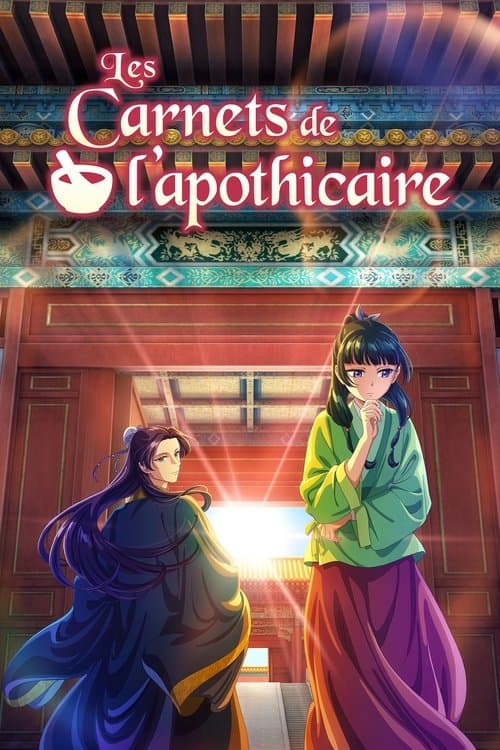
Maomao lived a peaceful life with her apothecary father. Until one day, she's sold as a lowly servant to the emperor's palace. But she wasn't meant for a compliant life among royalty. So when imperial heirs fall ill, she decides to step in and find a cure! This catches the eye of Jinshi, a handsome palace official who promotes her. Now, she's making a name for herself solving medical mysteries!
Where to watch
Availability checked on May 25, 2026
About this title
- Format
- TV series
- Year
- 2023
- Runtime
- 23m
- Countries
- Japan
- Original language
- JA
- Main cast
- Aoi Yuuki, Takeo Otsuka, Katsuyuki Konishi
- Studios
- OLM, TOHO animation STUDIO, TOHO, Nippon Television Network Corporation, Imagica Infos, dentsu, Shogakukan, Square Enix