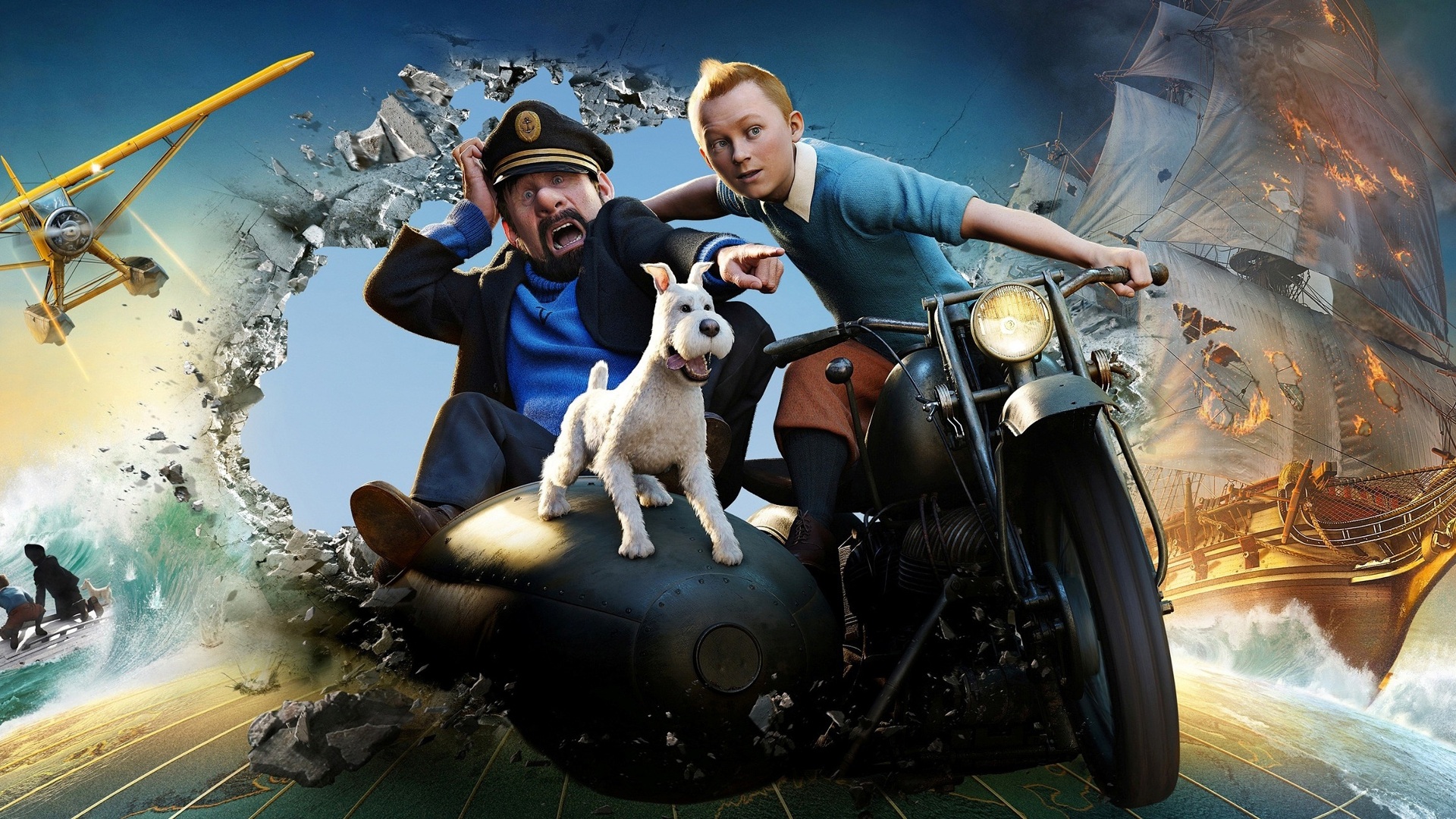


The Adventures of Tintin
Does this age rating seem accurate to you?
Detailed parental analysis
The Adventures of Tintin: The Secret of the Unicorn is an adventure and action film with sustained atmosphere, alternating frenetic sequences and moments of dramatic tension heightened by often dark cinematography. The plot follows Tintin, a young reporter, who becomes entangled in an ancestral treasure hunt after purchasing a mysterious model ship. The film primarily targets children from 8 years old and adults who are fans of the comic books, but it assumes a certain maturity so as not to be overwhelmed by the pace and violence of the action sequences.
Substances
Captain Haddock's alcoholism is a thread running throughout the entire film: he is rarely sober, demands whisky in the worst situations, and his excesses make him both comic and dangerous to himself and others. The film does not trivialise this dependency, however: Haddock is explicitly portrayed as pathetic when he drinks, his blunders have direct consequences for how the adventure unfolds, and his occasional sobriety coincides with moments of genuine bravery. This ambivalent treatment, between mockery and affection, deserves a conversation with the child: alcohol is clearly associated with loss of control, but the figure of the alcoholic adult remains nonetheless endearing, which can muddy the message.
Violence
Violence is frequent and of variable intensity. A character is shot dead on screen with realistic impacts on a door, sword fights involve pirates, characters are thrown overboard a ship, and several sequences expose Tintin to immediate mortal threats including firearms, knives and explosions. The film strings these moments together without real pause, which produces an accumulation of tension that can be difficult for a child under 8 years old to absorb. Violence nonetheless remains in service of adventure and is never gratuitous or gory: it is stylised, swift, and physical consequences are never lingered upon. Darkness and flashes that punctuate certain scenes reinforce the sense of danger without tipping into horror.
Underlying Values
The narrative carries solid values: Tintin's intellectual curiosity, his perseverance in the face of adversity, and his unbreakable bond with his dog Snowy are constant narrative drivers. The budding friendship between Tintin and Haddock, forged through hardship, constitutes the true emotional heart of the film. On the other hand, the plot rests largely on the logic of treasure-hunting, which places wealth and material discovery as the primary horizons. No real moral questioning emerges on this point, which is not problematic in itself but leaves little room for deeper reflection on the characters' motivations.
Parental and Family Portrayals
The adult figures in the film are either absent or failing. Tintin evolves in a world without parents, which is constitutive of the comic book universe, and the adults around him are either adversaries or imperfect allies such as Haddock. The latter occupies a position of guardian figure without having the authority or reliability for it, since it is often Tintin who saves him and guides him. This inversion of adult-child roles is a classical motif of the genre but merits mention: the child viewer systematically sees a boy of his own age making decisions that adults are incapable of making.
Strengths
The film is carried by real visual energy and some remarkably constructed action sequences, notably an extended chase that plays with space and movement in inventive ways. The world of Tintin, with its iconic characters and its blend of mystery and humour, offers a fine introduction to Hergé's work for children unfamiliar with it. The bond between Tintin and Snowy, represented with genuine tenderness, brings welcome emotional warmth to an otherwise highly paced film. For parents who are fans of the comic books, the film offers an opportunity to share this universe with their children, even if the liberties taken with the original albums may fuel a useful conversation about adaptation and faithfulness to a work.
Age recommendation and discussion points
The film is suitable from 8 years old, with parental accompaniment recommended for ages 8-10 due to the accumulation of intense action scenes and the death of a character on screen. Two discussion angles stand out after viewing: the figure of Captain Haddock, to speak concretely about what alcohol does to an adult and why it makes him less capable of protecting those who depend on him; and the question of courage, by asking the child what distinguishes Tintin's recklessness from genuine thoughtful risk-taking.
Synopsis
Intrepid young reporter, Tintin, and his loyal dog, Snowy, are thrust into a world of high adventure when they discover a ship carrying an explosive secret. As Tintin is drawn into a centuries-old mystery, Ivan Ivanovitch Sakharine suspects him of stealing a priceless treasure. Tintin and Snowy, with the help of salty, cantankerous Captain Haddock and bumbling detectives, Thompson and Thomson, travel half the world, one step ahead of their enemies, as Tintin endeavors to find the Unicorn, a sunken ship that may hold a vast fortune, but also an ancient curse.
About this title
- Format
- Feature film
- Year
- 2011
- Runtime
- 1h 46m
- Countries
- New Zealand, United States of America
- Original language
- EN
- Studios
- Paramount Pictures, Columbia Pictures, Hemisphere Media Capital, Nickelodeon Movies, Amblin Entertainment, WingNut Films, The Kennedy/Marshall Company
Content barometer
- Violence3/5Notable
- Fear3/5Notable tension
- Sexuality0/5None
- Language1/5Mild
- Narrative complexity2/5Moderate
- Adult themes3/5Marked