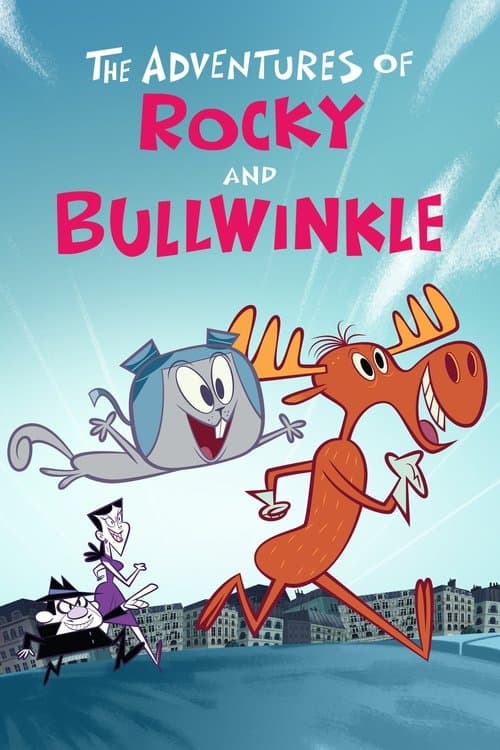
The Adventures of Rocky and Bullwinkle
Does this age rating seem accurate to you?
Detailed parental analysis
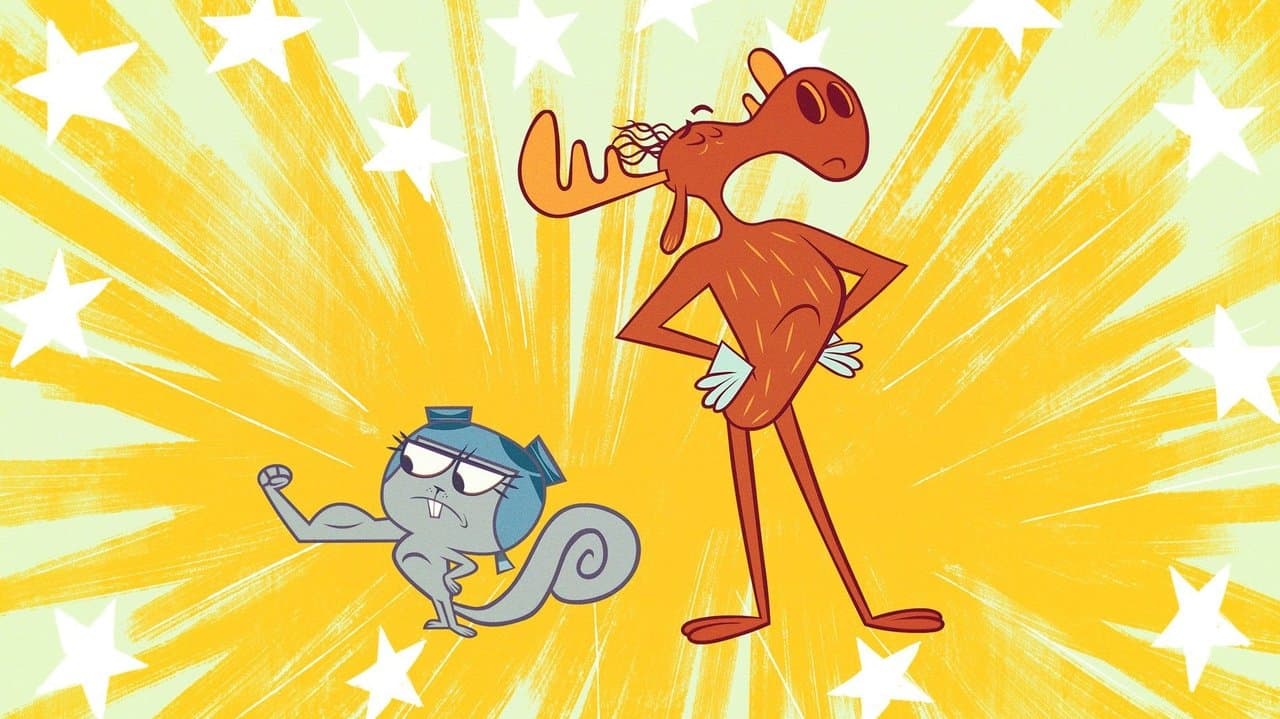
The Adventures of Rocky and Bullwinkle is an animated series with a light, zany and deliberately absurd atmosphere, a reboot of an American classic from the 1960s. Flying squirrel Rocky and his moose friend Bullwinkle face bumbling spies in adventures divided into episodes linked by continuous narration. The series primarily targets school-age children, but its multi-layered humour and cultural references make it more enjoyable for parents and older children watching together.
Violence
Violence is omnipresent but entirely rooted in the tradition of slapstick cartoon humour: falls, crushes, collisions and blows to the head follow in quick succession, never resulting in lasting injury or realistic consequence. This use of violence is purely comedic and codified, in the direct line of Tom and Jerry or Looney Tunes. For very young children, the frequency of loud and hectic sequences may be surprising at the start of the series, but the register remains one of burlesque without cruelty. No psychological violence or gore is present.
Discrimination
Boris and Natasha, the two antagonistic spies, are heavy-handed caricatures of Eastern European characters, with exaggerated accents and stereotypical behaviour intended for comic effect. This comedic device is inherited from the original 1960s series and its Cold War context, but it remains present in the reboot without being questioned or distanced. Other secondary characters also display caricatural traits linked to their appearance or manner of speech. This is a concrete point to discuss with an inquisitive child: why do we laugh at an accent, and what does that say about the way we represent foreigners.
Underlying Values
The narrative rests on an unshakeable friendship between the two protagonists, presented as the primary resource in the face of adversity. Rocky and Bullwinkle go through disasters together, never separating or betraying one another, and their collective optimism is the true driving force of each adventure. The antagonists, incompetent and transparent in their evil intentions, mainly serve to illustrate that the stupidity of evil is its own punishment. The series has no explicit moral ambition, but it naturally conveys values of loyalty and joyful perseverance.
Strengths
The series derives its main value from its multi-layered humour: children laugh at visual gags and absurd situations, whilst adults catch the wordplay, cultural references and narrative irony carried by the narrator. This format, rare in contemporary children's animation, makes it a genuinely functional shared viewing experience between generations. The serialised narration, which links episodes together, develops in the child an attention to narrative continuity more demanding than most self-contained cartoon episodes. The series has no particular artistic pretension, but it honestly fulfils its contract as family entertainment.
Age recommendation and discussion points
The series is accessible from age 5 or 6 for the visual gags, but it truly comes into its own from age 7 or 8, when the child can follow the continuous narration and begin to perceive second-degree humour. Two angles of discussion are worth exploring after viewing: why do Boris and Natasha make us laugh when they are villains, and is making fun of an accent always innocent? And also: what is it that makes Rocky and Bullwinkle remain friends even when everything goes wrong?
Synopsis
The world-famous talking moose and flying squirrel are back in The Adventures of Rocky and Bullwinkle, a comedy about two goofball friends who end up in harrowing situations but end up saving the day time and again. As their silly ambitions dovetail with Fearless Leader's sinister plans to take over the world, they are set on a collision course with his notorious super spies Boris and Natasha.
About this title
- Format
- TV series
- Year
- 2018
- Runtime
- 30m
- Countries
- United States of America
- Original language
- EN
- Directed by
- Marco Schnabel, David P. Smith
- Main cast
- Tara Strong, Brad Norman, Ben Diskin, Rachel Butera, Piotr Michael, Daran Norris
- Studios
- DreamWorks Animation Television, Jay Ward Productions
Content barometer
- Violence2/5Moderate
- Fear1/5Mild
- Sexuality0/5None
- Language0/5None
- Narrative complexity1/5Accessible
- Adult themes0/5None
Watch-outs
- Ethnic or racial stereotypes
- Violence